Professional Development Plan Template: Craft Your Career Roadmap Today
Download the professional development plan template to map your career growth with clear, actionable steps and upskilling goals.
Feeling a bit stuck in your career, or maybe just overwhelmed by all the possibilities? That’s where a Professional Development Plan (PDP) comes in. Think of it less as a formal document and more as your personal roadmap, turning those big, vague ambitions into a clear, step-by-step guide to get you where you want to go.
Why A Development Plan Is Your Career Superpower
Let's be honest, "winging it" only gets you so far. A PDP is like a GPS for your career. Instead of just drifting along and grabbing whatever opportunity pops up, you get to be the one in the driver's seat, intentionally steering towards a future that you've actually designed.
Putting a plan on paper forces you to hit pause, do some real thinking, and map out exactly what you need to do to level up.
It’s a simple but powerful tool that helps you:
- Spot Your Skill Gaps: Get crystal clear on the exact skills you're missing for that next promotion or career change. This is where you can pinpoint whether you need a specific online course, some hands-on project experience, or maybe a mentor.
- Build Real Momentum: Big goals can be intimidating. A plan helps you break them down into smaller, bite-sized tasks. Suddenly, that huge career leap feels way more achievable, which keeps motivation high.
- Actually Track Your Wins: You'll have a tangible record of everything you've accomplished. This is absolute gold when it comes time for a performance review or when you're updating your CV for a new role.
From Ambition to Action
Without a concrete plan, even the best intentions can stay as just that - intentions. A PDP is the bridge between dreaming and doing. You stop vaguely saying, "I want a promotion," and start creating actionable steps like, "I will complete a Certificate IV in Project Management within nine months to qualify for that team lead role I’ve been eyeing."
This kind of structured approach gives you the confidence to navigate Australia’s competitive job market. It's especially crucial for anyone wanting to demonstrate leadership skills and get on the fast track. A plan shows any employer that you're proactive, dedicated, and serious about your growth - and those are qualities every company wants.
If you're looking for more tips on this, our guide on https://getcourse.com.au/blog/unlock-your-potential-how-to-pursue-your-career-goals-with-study-and-education is a great place to start.
Key Elements of an Effective Professional Development Plan
So, what actually goes into a plan that works? I've found that the best PDPs always include a few core components. They're what transform a simple to-do list into a powerful tool for career growth.
Each of these pieces works together to give you a living document that guides your decisions and keeps you moving forward.
Navigating Australia’s Skills Landscape
The proof is in the numbers. Australia's training market is set to boom, projected to hit USD 2.71 billion by 2032. With chronic skills shortages in key areas - like manufacturing, which holds a massive 21.6% market share - having a personal development plan is more important than ever.
By creating your own PDP, you're not just planning for personal growth; you're strategically aligning your skills with what the Australian economy desperately needs.
A PDP isn't just another piece of paper; it’s a commitment to yourself. It’s the difference between hoping for a better career and actively building one, one milestone at a time. This plan is your declaration that you are in control of your professional journey.
Getting Started With Your Free PDP Template
Taking charge of your career path doesn't have to be complicated. It really just starts with a single, well-thought-out step. To help you get moving, we've put together a practical professional development plan template that's designed to turn those big career ambitions into a real, actionable strategy. Think of it less like a form and more like your personal career playbook.
You can grab your free template right here and start mapping things out today.
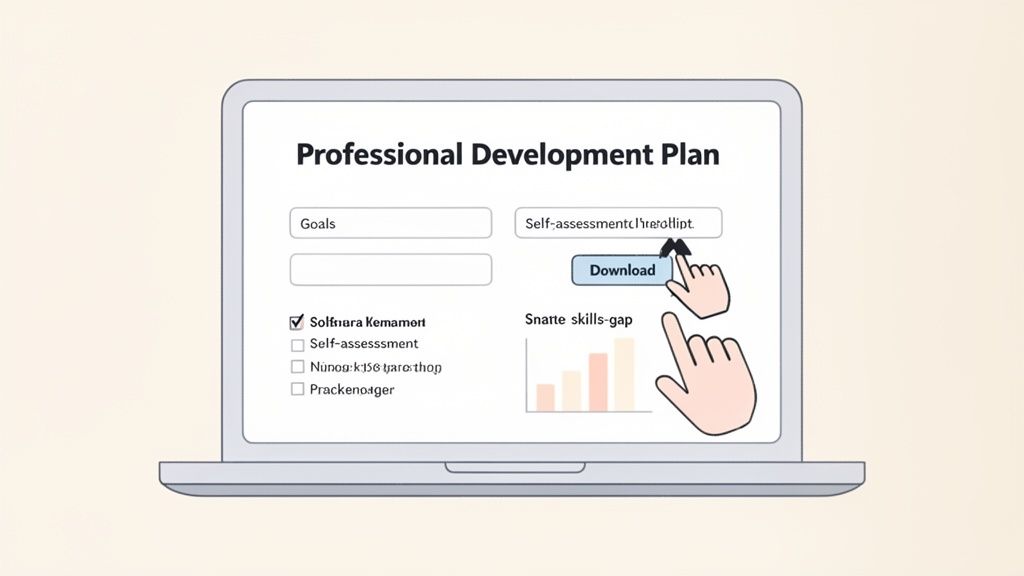
Once you’ve got it open, you'll see it’s split into a few key sections. Let's walk through what each part is for, so you can fill it out with total confidence.
Start With an Honest Self-Assessment
Before you can figure out where you’re headed, you need to be really clear on where you’re standing right now. This first part of the template is all about taking a good, hard look at your current professional self.
I always tell people to approach this like a personal SWOT analysis:
- Strengths: What are you genuinely great at? Don't be shy. This could be a technical skill like coding in Python or a soft skill, like being the person everyone comes to for resolving team conflicts.
- Weaknesses (or Areas for Growth): Where do you know you could be better? Maybe public speaking gives you knots in your stomach, or you know your data analysis skills aren't quite up to scratch for the roles you want.
- Opportunities: Look outside yourself. What’s happening in your industry that you could jump on? Think new technologies, growing market demands, or even just local networking events.
- Threats: What might get in your way? This could be anything from fierce competition for jobs to realising a core part of your skillset is slowly becoming obsolete.
The key here is brutal honesty. This document is for you, so give yourself a truthful appraisal. Getting this foundation right makes every other step so much more powerful.
Brainstorm Where You Want to Be
Okay, now for the exciting bit. This section is your space to dream big. Forget the "how" for a moment and just focus on the "what." Where do you genuinely see yourself in one year? What about three, or even five years down the track?
Jot down job titles that sound interesting, industries you're drawn to, or even specific companies you admire. Maybe you dream of moving from a customer service role into UX design within the tech world. Or perhaps you're a nurse with your sights set on a clinic management position.
This isn't about locking yourself into one rigid path. It's about giving your ambition a name and a direction - creating a 'North Star' to guide all the smaller steps you'll take along the way.
Do a Clear-Eyed Skills Gap Analysis
Right, you have your starting point and you have your destination. Now it's time to work out the journey between them. A skills gap analysis is just a straightforward way of comparing the skills you already have with the skills you actually need to land that dream role.
The best way to do this is to pull up a few job descriptions for the roles you just brainstormed. What specific tools, qualifications, or experiences pop up again and again? Make a simple two-column list: "Skills I Have" vs. "Skills I Need."
Here's a quick example for an aspiring Project Coordinator:
- Required Skill: Advanced knowledge of project management tools like Asana or Jira.
- Current Skill: I've used Trello for a few personal projects.
- The Gap: I need proper training on industry-standard software to be a credible candidate.
See how that works? It takes a vague idea like "I need to get better at project management" and turns it into a concrete, measurable action. This simple exercise points you exactly where you need to focus your energy, ensuring you don’t waste time on things that won’t actually help you get ahead. This is how your template transforms from a document into a truly personal roadmap.
Setting SMART Goals That Actually Drive Results
Goals are the engine of your professional development plan, but vague ambitions like "get a better job" or "learn a new skill" aren't going to get you very far. To make real progress, your goals need to be sharp, focused, and - most importantly - written down.
This is where the SMART framework comes in. You’ve probably heard the acronym before, but let's look at what it actually means for your career. It’s not just business jargon; it's a practical filter that turns fuzzy wishes into a concrete plan.
- Specific: Pinpoint exactly what you want to achieve. Instead of "get better at marketing," a specific goal would be "master Google Analytics 4 to improve campaign tracking."
- Measurable: How will you know when you’ve succeeded? "Complete a certification" or "build a portfolio with five new projects" are tangible outcomes you can track.
- Achievable: Be realistic. Aiming to become a CEO in six months from an entry-level job isn't achievable. Aiming for a team leader position within two years is a much stronger, more realistic goal.
- Relevant: Does this goal actually line up with your bigger career vision? If you want to work in aged care, a goal focused on coding probably isn't the best use of your time right now.
- Time-bound: Give yourself a deadline. "Within 12 months" or "by the end of this quarter" creates urgency and stops your goals from stretching on forever.
This framework forces you to think through all the details, turning a passive wish into an active pursuit.
From Vague Ideas to Actionable Targets
Let's see this in action. A common goal we hear is, "I want to change careers and get a job in community services." It’s a fantastic ambition, but as a goal, it's too broad to act on.
Now, let's run it through the SMART filter.
A much more powerful version would be: "Complete a Certificate IV in Community Services online within 12 months (Specific, Time-bound) to qualify for coordinator-level roles (Relevant), by dedicating 10 hours per week to study and securing 100 hours of volunteer experience by the third quarter (Measurable, Achievable)."
See the difference? This revised goal gives you a clear roadmap. You know the exact qualification you need, the timeframe you're working with, and the smaller milestones you need to hit along the way.
Why This Matters in Australia Today
Setting clear, qualification-focused goals has never been more important. Recent data shows that 2.3 million Australians aged 15-74 (12%) are actively studying for non-school qualifications.
A massive 455,300 of these learners are enrolled in Certificate III or IV level courses - the exact kind of job-ready training that helps people upskill quickly. You can dive deeper into these trends in the full ABS report on education and work.
With so many people investing in their skills, a professional development plan is what will help you stand out.
To make sure your goals are truly targeted, a great first step is a skills gap analysis. This helps you pinpoint exactly where you need to grow, ensuring you’re strategically filling the gaps between you and your dream job. It’s also incredibly helpful to know what you’re naturally good at. For some practical tips, check out our guide on how to figure out your strengths.
A goal without a plan is just a wish. The SMART framework is the tool that helps you build that plan, ensuring every action you take is a deliberate step toward your ultimate career vision.
SMART Goal Examples for Different Career Paths
The beauty of the SMART framework is its versatility; it works for any industry or career stage. Here are a few examples to show how the SMART framework applies to various professions our students pursue.
As you can see, a well-defined goal immediately gives you a starting point and a clear finish line. It moves you from thinking about your future to actively building it.
Building an Actionable Plan and Timeline
A powerful SMART goal is a great starting point, but it's the action plan that really brings it to life. This is where you shift from the "what" and "why" to the nitty-gritty "how" and "when." The secret to making real, consistent progress without getting swamped is breaking down those big, ambitious goals into smaller, more manageable tasks with realistic deadlines.
Think of it like building a house. You wouldn't just start laying bricks randomly; you'd have a detailed blueprint that maps out every single step, from pouring the foundation to painting the walls. Your action plan is that blueprint for your career. It gives you structure, clarity, and a clear path forward, making sure every move you make is a deliberate one.
Deconstructing Your Goals into Milestones
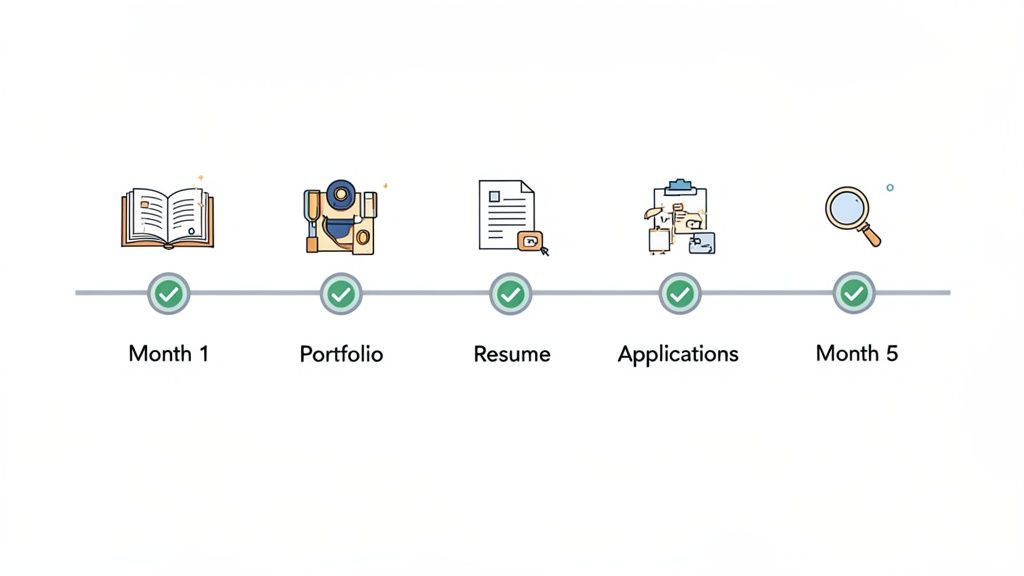
Alright, let's get practical. Say your SMART goal is to switch careers and land a graphic design role. That end goal can feel massive and a bit intimidating. The key is to break it down into a series of smaller, sequential milestones. Each one becomes a mini-goal, complete with its own bite-sized tasks.
Here’s a rough idea of how you could map that out:
- Months 1-3: Learning the Fundamentals. Your first milestone is all about getting the core skills under your belt. This phase could involve enrolling in a targeted online course, like a Certificate in Graphic Design, and carving out dedicated time for coursework and hands-on exercises.
- Month 4: Building Your Portfolio. Now it's time to create tangible proof of what you can do. The goal here is to develop a portfolio with, say, five unique, high-quality projects that show off your range and design flair.
- Month 5: Polishing Your Professional Brand. With your skills and portfolio ready, the focus shifts to getting job-ready. This milestone is about updating your LinkedIn profile, tailoring your resume to scream "graphic designer," and practising how you'll talk about your work in an interview.
- Month 6: The Job Search. With all your ducks in a row, the final milestone is to get out there. It’s time to actively apply for junior designer positions and start networking with people already working in the industry.
This methodical approach turns a daunting ambition into a clear, month-by-month checklist. It keeps you focused on what’s right in front of you, which is far less intimidating and way more motivating.
The most effective professional development plan templates don't just list goals; they map out the journey. By breaking your main objective into a logical sequence, you create a clear timeline that prevents procrastination and builds unstoppable momentum.
Identifying the Resources You Need
Once your milestones are set, the next job is to figure out exactly what you’ll need to tick them off. A common pitfall is thinking only about formal training, but a truly solid plan pulls from a mix of different resources.
Go through each milestone and ask yourself, "What tools, people, or information do I need to make this happen?"
Your resource list might look something like this:
- Formal Education: Pinpointing specific online courses or certifications from providers like Upskilled or Open Colleges that directly fill your skill gaps.
- Mentorship: Finding an experienced pro in your target field who can offer guidance, give feedback on your work, and share invaluable industry insights.
- Networking Opportunities: Identifying industry meetups, online forums, or LinkedIn groups where you can connect with peers and, crucially, potential employers.
- Essential Tools: This could be anything from software subscriptions (like Adobe Creative Cloud for a designer) to specific books or access to online learning platforms.
- Time Commitment: This is a big one. You need to realistically block out time in your calendar for study, projects, and networking. Get specific - "two hours every Tuesday and Thursday evening" is much more effective than a vague "a few hours a week."
Jotting these resources down in your professional development plan template makes the whole thing feel real and concrete. It shifts from being a simple wish list to a fully-fledged project plan, complete with a budget, a schedule, and a support system.
Setting Up a Rhythm for Accountability
Look, a plan is only useful if you actually follow it. That's why building in regular check-ins isn’t just a good idea - it’s non-negotiable. These sessions aren't about judging yourself. They’re about staying connected to your goals, celebrating the small wins, and tweaking your approach when life inevitably happens.
Your plan should be a living document, not something you write once and shove in a drawer.
Here’s a simple but incredibly effective review schedule you can adopt:
This rhythm of review keeps you accountable to the most important person: yourself. It helps you spot potential roadblocks early and adapt your strategy before you lose momentum. By making this a regular habit, you ensure your professional development plan stays a powerful, relevant tool that actually guides you all the way to your career goal.
How to Track Progress and Stay Motivated
You've done the hard work of creating your professional development plan, which is a massive step. But let's be honest, the real work starts now. A plan that just sits in a folder gathering digital dust isn’t going to get you anywhere. The secret to making it all happen is turning that plan into a living, breathing guide you actually use.
Think of it less like a rigid contract and more like a map for your career journey. It’s there to keep you on track, but it also has to be flexible enough to handle detours. Consistent check-ins are what turn those goals you wrote down into real-world achievements, especially when you're juggling study, work, and everything else life throws at you.
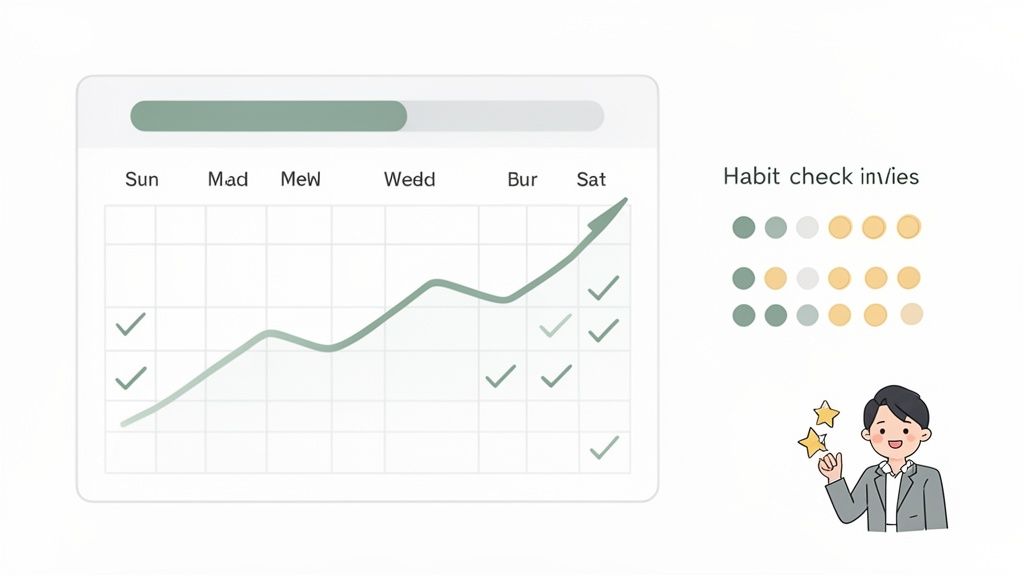
This is all about building a sustainable habit of growth, not just sprinting towards one big finish line. Let's dig into a few proven ways to stay on track and keep that fire lit.
Establish a Regular Check-In Cadence
Momentum is everything. Without a regular routine for reviewing your progress, it’s just too easy for that initial burst of excitement to fizzle out. The best way I’ve seen people stay connected to their goals is by setting up a simple, non-negotiable check-in schedule.
A tiered approach tends to work best, as it keeps you focused on the small stuff without losing sight of the big picture:
- Weekly Pulse Check (5-10 minutes): At the start of each week, just glance at your plan. What’s the one crucial thing you need to get done this week to move forward? This keeps your goals right at the front of your mind.
- Monthly Milestone Review (30 minutes): Set aside a bit more time at the end of the month. Did you hit the key milestone you aimed for? Take a moment to celebrate what you accomplished and pinpoint any roadblocks you might face next month.
- Quarterly Strategy Session (1 hour): Every three months, it’s time to zoom out. Are your goals still the right ones? Has anything changed in your career or personal life that means you need to adjust your timeline? This is your chance to pivot if you need to.
This rhythm stops your professional development plan template from becoming just another static file and ensures it evolves right along with you.
Make Your Progress Visual and Tangible
Sometimes the biggest motivator is just seeing how far you've come. Progress can feel a bit abstract, so finding ways to make your achievements visible creates a powerful feedback loop that pushes you to keep going.
It could be a simple spreadsheet where cells turn green as you tick off tasks. Or, if you're a more tactile person, a physical Kanban board on your wall with sticky notes moving from a "To Do" column to "Done" can be incredibly satisfying. Digital tools like Trello or Asana are great for this too, giving you a clear visual overview of your progress.
The whole point is to create a clear, visual record of your wins. When you’re having a tough week and feel like you're getting nowhere, looking back at a trail of completed tasks is a powerful reminder of what you're capable of.
Celebrate the Small Wins
If you wait until you land that dream job to celebrate, you're setting yourself up for burnout. The journey towards a major career goal is paved with dozens of smaller steps, and every single one deserves a pat on the back.
Finishing a tough course module, submitting a project you’re proud of, or even just sticking to your study schedule for a solid month - these are all victories.
Your celebrations don't need to be huge. It could be as simple as:
- Ordering your favourite takeaway after a long week of study.
- Taking a whole afternoon off on the weekend to do something you love, completely guilt-free.
- Sharing your progress with a mentor, partner, or friend who gets it.
Acknowledging these little wins reinforces the positive habits you're building, making you far more likely to stick with the plan. For more on this, our article on 10 tips for succeeding in your career has some fantastic insights.
Learn to Adapt and Overcome Setbacks
Finally, you have to accept that no plan is perfect because life is messy and unpredictable. You might fail an exam, a work project might suddenly eat up all your time, or you might just have a week where you feel totally unmotivated. These aren't failures; they're just data points.
When you hit a roadblock, don't throw the plan out. Instead, analyse it. Ask what went wrong and what you can learn from it. Maybe your timeline was a bit too ambitious, or perhaps you need to try a different study technique.
Use that new information to adjust your plan. Building resilience and learning to adapt are two of the most valuable skills you'll ever develop, turning those unexpected hurdles into your greatest learning opportunities.
Got Questions About Professional Development Plans?
It’s completely normal to have a few questions when you first start thinking about a professional development plan. It’s a powerful tool for your career, but like any tool, you get the best results when you know how to use it properly.
We’ve pulled together some of the most common questions we hear. Think of this as your go-to guide for clearing up any confusion so you can get on with building a plan that actually works for you.
What Should a Professional Development Plan Template Actually Include?
A great template doesn't need to be complicated. In fact, the simpler and clearer it is, the more likely you are to stick with it. It’s all about creating a straightforward framework that takes you from big-picture thinking to concrete action.
To be truly effective, your plan should have a few core parts:
- A Self-Assessment: This is your starting line. It’s where you take an honest look at your current skills, recognise your strengths, and pinpoint the areas you want to improve.
- Clear Goals: What do you want your career to look like? This is where you map out your short-term ambitions (the next 6-12 months) and your longer-term vision (the next 3-5 years).
- SMART Objectives: This part turns a vague wish into a real target. For every goal, you need to break it down into specific, measurable, achievable, relevant, and time-bound (SMART) objectives.
- Action Steps and Resources: This is the "how-to" section. Here, you’ll list the exact steps you'll take - like online courses, finding a mentor, or taking on a specific project - and what you need to get them done.
- Timelines and Milestones: Deadlines keep you accountable. Assign realistic timeframes to your actions to create a schedule you can track your progress against.
- Success Metrics: How will you know when you’ve made it? Define what success looks like, whether it’s earning a certificate, getting a glowing performance review, or landing that new role.
These pieces all work together to give you a roadmap, making sure every effort you put in is pushing you closer to where you want to be.
How Often Should I Review My Plan?
Your professional development plan is a living document, not a "set and forget" task. A plan that’s gathering dust is a plan that isn't working. To keep it relevant and useful, you need to check in with it regularly.
A good rhythm looks something like this:
Giving your plan a proper look-over every three to six months is crucial. This is your chance to celebrate what you’ve achieved, learn from any setbacks, and adapt to new opportunities or challenges that have come your way. Life is unpredictable, and a good plan is flexible enough to move with you.
Can a PDP Help Me Change Careers?
Absolutely. A professional development plan is probably one of the most valuable assets you can have when navigating a career change. It gives you a clear, structured path through what can otherwise feel like a huge and daunting process.
When you're switching careers, your plan becomes your blueprint for reinvention. It helps you systematically:
- Pinpoint Skill Gaps: You can map out the exact skills you need for your target career and see how they stack up against your current abilities.
- Create a Learning Roadmap: The plan will show you which courses, certifications, or even volunteer experiences you need to become a strong candidate in your new field.
- Build Your Credibility: It acts as a tangible record of your commitment. That’s an incredibly powerful story to tell potential employers or people in your network.
For anyone changing careers, a well-thought-out PDP shows you're serious. It proves you’re not just daydreaming about a new role - you’re strategically building the bridge to get there, one skill at a time.
What If I Don't Have a Specific Career Goal Yet?
That’s totally fine. In fact, a professional development plan can be a brilliant tool for exploration if you’re not quite sure what’s next. You don't need a detailed five-year vision to start making progress.
If you're in a discovery phase, just shift your focus to building versatile, transferable skills that will be valuable no matter where you end up.
So, instead of a destination-focused goal like, "Become a Senior Data Analyst," you could set a skill-focused goal like one of these:
- "Develop a solid foundation in data analysis by completing an introductory online course in SQL and Power BI within six months."
- "Get more comfortable with public speaking by volunteering to lead two team meetings this quarter."
This approach helps you build momentum and gain new competencies that will open doors down the road. As you learn and try new things, your long-term goals will naturally become clearer, and you can then update your plan with more specific aims. The most important thing is simply to get started.
Ready to map out your own career journey? At Get Course Australia, we connect you with flexible, job-ready online courses to help you achieve your professional goals. Find the right qualification to power your development plan today.
Find Your Course
Compare courses across every field we write about, and enquire in under a minute.