Short Human Resources Courses to Fast-Track Your HR Career
Discover how short human resources courses can accelerate your career. Get practical skills, find flexible online options, and become job-ready faster.
Staring at the HR career ladder and wondering how to get a leg up, fast? You're definitely not alone. Short human resources courses are designed to be intensive, practical programs that arm you with job-ready skills quickly. Think of them as a powerful career accelerator, without the long-term commitment of a full university degree.
Your Fast Track into Human Resources
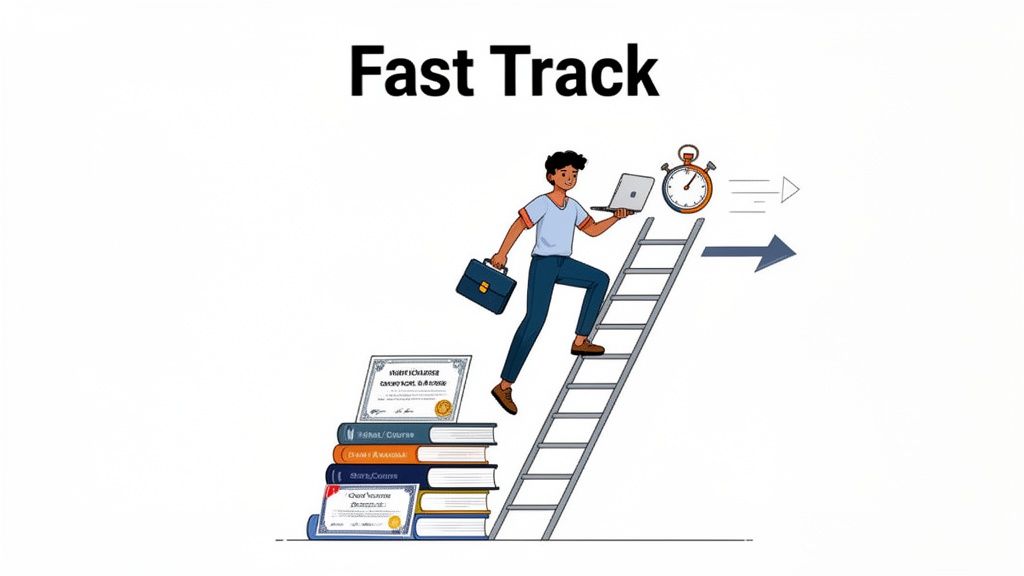
It’s a common misconception that you need a long and expensive university degree to break into human resources. While that’s one way to do it, it’s far from the only path. Short HR courses have become a popular and strategic alternative, offering a much more direct route to gaining the specific skills employers are crying out for right now.
Think of these courses less like a broad, theoretical library and more like a specialised toolkit. Instead of spending years on abstract concepts, you jump straight into the practical, day-to-day tasks that make up a modern HR role. This targeted approach is perfect for a whole range of people looking to make their next career move.
Who Are These Courses For?
This flexible way of learning is particularly effective for a few key groups:
- Career Changers: Professionals from other industries who need to get up to speed with foundational HR knowledge for a smooth transition.
- Aspiring Managers: Team leaders and supervisors who need to sharpen their people management and compliance skills.
- Existing HR Professionals: People already in the field who want to specialise in a specific area, like workplace relations or recruitment.
- Small Business Owners: Entrepreneurs juggling their own HR who need to get a handle on their legal and practical obligations.
The demand for these qualifications is really taking off across Australia. In a tight labour market, enrolments in related skills hit 156,000 nationally in 2023, which is a massive 24% jump since 2020. With Australia's unemployment rate sitting at a low 3.7% in mid-2024, employers are all-in on rapid training to find and keep good people. You can dive deeper into these educational trends in Australia.
In short, these courses are the bridge between your career ambition and a genuine opportunity. They offer a structured, affordable, and efficient way to earn credentials that make you a much more competitive candidate in the job market. This guide is your roadmap to figuring it all out.
What Exactly Are Short HR Courses?
When you hear someone mention short human resources courses, don't think of a dusty, theory-laden textbook. Picture something more like a specialised toolkit, designed to help you solve specific workplace problems and build practical, in-demand skills - fast.
Unlike a multi-year degree that dives deep into the entire history and theory of HR, these courses are much more focused. They're intensive, targeted programs designed to give you skills you can take back to your desk and use almost immediately. This is what makes them such a great fit for busy adults trying to make a real impact on their career without putting their life on hold.
These programs cover everything from nationally recognised skill sets to professional development certificates, all built for flexibility. If you're weighing up your study options, getting a feel for the broader world of online short courses in Australia can give you a better sense of how this style of learning works across different fields.
Who Are These Courses For?
One of the best things about short HR courses is just how many different people they can help. They aren't just for aspiring HR managers; they're valuable for a wide range of professionals with different career goals.
For many, a short HR course is the perfect stepping stone. For others, it’s a way to fill a specific knowledge gap or add a new skill to their professional arsenal.
Here's a quick look at who tends to benefit the most.
Ultimately, these courses are designed for anyone whose job involves managing, hiring, or developing people. They provide the confidence and competence to handle those responsibilities well.
Essentially, if your role involves managing, hiring, or developing people in any capacity, a short HR course provides the job-ready skills needed to perform with confidence and competence.
Key Features of Short HR Courses
What really makes these courses work for so many people is how they’re structured. They’re built with the understanding that you’re likely juggling work, family, and a dozen other commitments, so flexibility and practical results are baked into the design.
Most quality short human resources courses share a few common traits:
- Online Delivery: You can study from anywhere in Australia, whether you're in a capital city or a regional town. No need to commute to a campus.
- Self-Paced Learning: You're in the driver's seat. You can work through the material at a pace that fits your schedule, speeding up or slowing down as needed.
- Practical Content: The curriculum is laser-focused on the skills and knowledge that employers are actually looking for, making sure what you learn is useful from day one.
The Practical Skills You Will Actually Learn
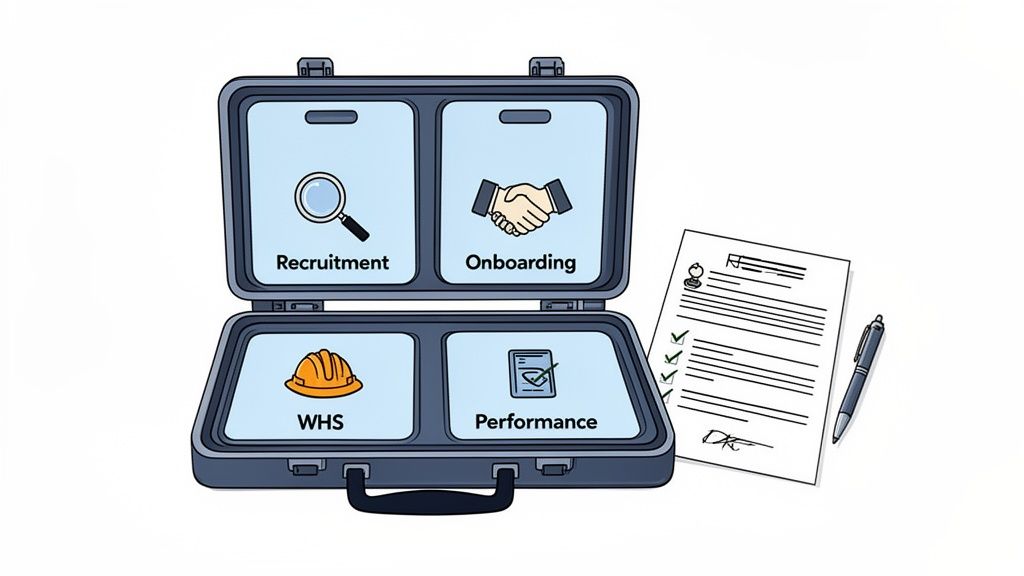
Theory is one thing, but what will you actually be able to do once you’ve finished one of these courses? The real value of short human resources courses is their tight focus on practical, day-one skills. You’re not just memorising concepts; you’re learning tangible tasks that employers are crying out for.
These courses are specifically designed to bridge the gap between knowing and doing. Every module connects directly to the kind of work you'll handle in a real HR role. Think of it as the difference between knowing the Fair Work Act exists and knowing how to write a job ad that won't land your employer in legal hot water.
Core Skills You Will Master
Most introductory courses give you a solid grounding across the essential pillars of HR. You should expect to get your hands dirty with units that cover the entire employee journey, from the moment they're hired to the day they leave.
Here are a few of the key areas you’ll dig into:
- Recruitment and Onboarding: You'll learn the nuts and bolts of writing job ads that attract the right people, screening CVs without bias, running structured interviews, and creating an onboarding process that makes new starters feel welcome and ready to contribute.
- Employee and Industrial Relations: This is where you gain the confidence to manage workplace disagreements, navigate modern awards, and handle tricky performance conversations in a way that’s both fair and legally sound. For example, many courses cover specialised skills like effective workplace harassment training for managers.
- Workplace Health and Safety (WHS): A non-negotiable in any Aussie business. You’ll learn how to spot hazards, carry out risk assessments, and play your part in maintaining a safe and compliant workplace.
Getting these fundamentals right means you'll have a clear picture of what an HR professional actually does day-to-day, preparing you for the reality of the job.
The goal here is to give you a practical toolkit. So, instead of just reading about performance management theories, you'll learn exactly how to structure and run a performance review that actually helps and motivates an employee.
From Knowledge to Application
Beyond these core functions, a good course will constantly push you to apply what you've learned. You'll learn to find your way through the maze of Australian workplace law, making sure every decision you make is not only compliant but also ethical.
For instance, a unit on pay and benefits won't just list different salary structures. It will teach you how to process a payroll run, understand superannuation obligations, and confidently answer an employee's questions about their payslip. It's this hands-on approach that builds real confidence and makes you a valuable team member from day one.
Building Your Career with Stackable Credentials
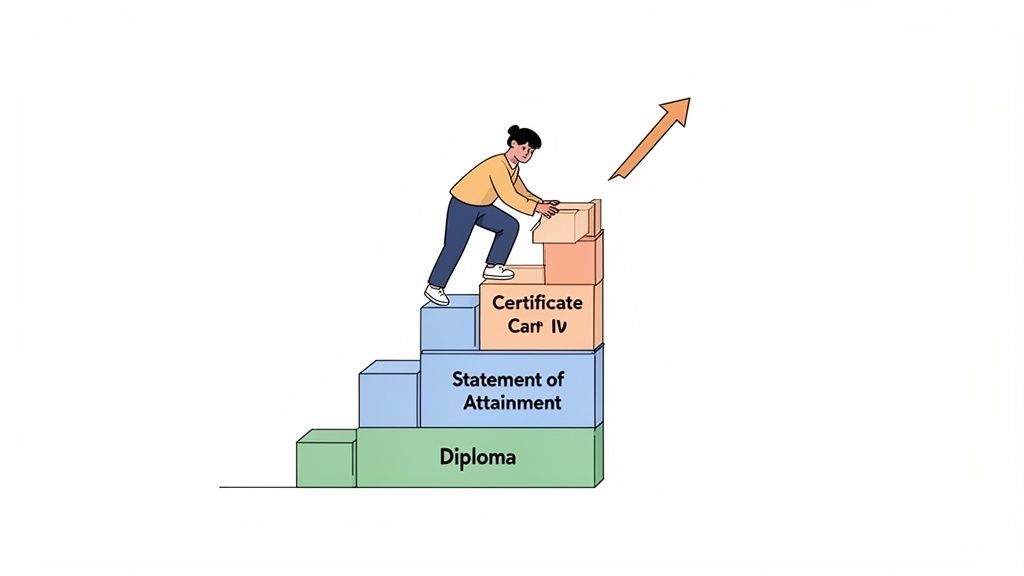
Breaking into human resources doesn't mean you have to take a single, giant leap. It's much more like climbing a set of stairs, where each step represents a new skill and a new qualification. Short HR courses are designed to be those individual steps, helping you build a solid career one manageable piece at a time.
This is where the concept of stackable credentials really shines. Here in Australia, our vocational education system is clever; it's set up to let you build your qualifications progressively. A short course that earns you a Statement of Attainment isn't just a one-off tick on your resume - it's a foundational building block for your next move.
Your Progressive Pathway in HR
This step-by-step approach is brilliant because you don't have to commit to a long, expensive qualification from day one. You can start with a specific, high-demand skill, get a credential for it, and put it to use at work almost immediately. It’s a fantastic way to build momentum and grow your expertise in a way that fits your life.
A typical journey might look something like this:
- Start with a Skill Set: You could begin with a short course in a specific area, like WHS or recruitment, and walk away with a Statement of Attainment.
- Build Towards a Certificate: The units from that short course can then count as credit towards a nationally recognised qualification, like a Certificate IV in Human Resource Management.
- Advance to a Diploma: From there, you can keep stacking your credentials and aim even higher. You can explore a Diploma of Human Resource Management pathway to get a clear picture of how these qualifications link together.
The beauty of this model is that you can earn while you learn. Every credential you gain doesn't just look good on paper; it can also give you credit towards your next qualification, making your long-term career goals feel much more achievable.
Why This Model Works So Well
This flexible pathway isn't just a nice idea; it's backed by serious industry demand. The Australian government’s $1.2 billion investment in skills programs in 2024 shows just how much focus there is on this kind of training. Projections also show a need for 25,600 new HR professionals by 2027, a massive 14.5% growth spurt driven by constantly changing workplace laws.
It’s no surprise that so many people are choosing this route. In today's fast-moving job market, the value of continuous employee up-skilling and re-skilling is undeniable. By taking small, strategic steps, you can steadily build your skills and advance your career without putting a huge strain on your time or your wallet.
Connecting Your Skills to In-Demand HR Jobs
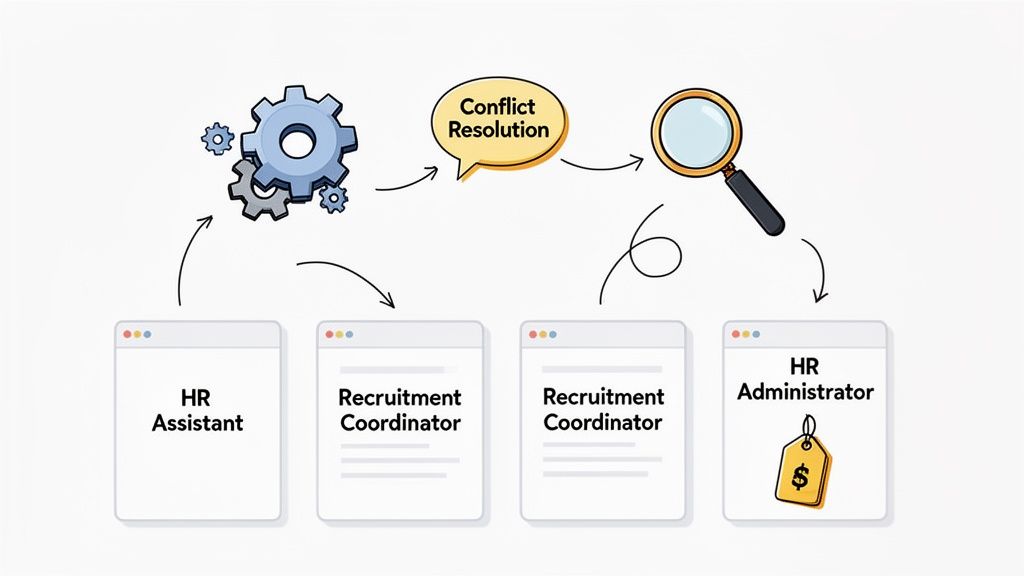
Finishing a course is a great feeling, but let's be honest, the real question on your mind is: what job can I actually get? The great news is that short human resources courses are built to funnel you directly into the kinds of roles that Australian businesses are actively trying to fill.
Think of your new qualification as a key. It doesn't just open one door; it opens several doors to foundational HR positions. It’s a clear signal to employers that you have the practical, hands-on skills to contribute from your very first day. You’re not just bringing theory; you’re bringing a toolkit of abilities that directly match what they’re asking for in their job ads.
This isn’t just wishful thinking - the data shows these courses work. A huge 85% of learners who completed short courses in HR-related fields found employment after finishing their studies. Even more telling, 29% landed a new job specifically because of their training, which shows just how much weight these qualifications carry in the job market.
From Course Modules to Job Titles
The skills you pick up in your course aren't abstract concepts; they translate directly into the day-to-day duties of crucial entry-level and coordinator roles. Businesses need reliable people to handle the engine room of a busy HR department, and your training makes you that person.
You’ll find that the skills you’ve learned are a perfect fit for jobs like:
- HR Assistant: You’ll be the person holding the HR team together, managing admin, scheduling interviews, and helping new starters feel welcome during their onboarding.
- Recruitment Coordinator: With your new understanding of the hiring lifecycle, you’ll be screening applications, liaising with hiring managers, and making sure the entire process is a positive one for candidates.
- HR Administrator: This role is all about detail. You'll be maintaining employee files, working with HR software (HRIS), and ensuring all the essential paperwork is accurate and compliant.
These roles aren't just a foot in the door; they are the first, solid steps on a very rewarding career path. For a closer look at what the future could hold, check out our guide on the most in-demand human resource jobs in Australia.
A short course gives you more than a piece of paper. It gives you the language and practical know-how to walk into an interview and confidently talk about recruitment, WHS, and employee relations.
The Skills Employers Are Really Looking For
Beyond specific job titles, employers want candidates who have a healthy mix of technical know-how and strong people skills. A good short course is designed to build both, making you a well-rounded and appealing applicant.
Technical Skills You’ll Gain:
- Using HR Information Systems (HRIS): You’ll get comfortable with the kinds of software platforms that businesses use to manage everything from employee data to payroll and recruitment.
- Understanding Australian Workplace Law: This is a big one. You’ll learn the essentials of the Fair Work Act, modern awards, and WHS legislation - all non-negotiable knowledge for any HR professional in Australia.
Soft Skills You’ll Develop:
- Conflict Resolution: You’ll be taught practical methods for navigating workplace disagreements in a professional and constructive way.
- Clear Communication: So much of HR is about explaining complex policies or procedures clearly and simply. Strong communication isn't just a bonus; it's essential.
By the time you finish your course, you won’t just have a qualification; you’ll have the confidence to show you can handle the real-world challenges that come up in any modern HR team.
How to Choose the Right HR Course for You
With so many short HR courses out there, picking the right one can feel a bit overwhelming. But it doesn't have to be. The trick is to break it down and find a program that genuinely lines up with your career ambitions, how you like to learn, and what you can afford.
First things first, check for national recognition. In Australia, this is a non-negotiable. You need to make sure the provider is a Registered Training Organisation (RTO). A qualification from an RTO is respected across the country, which means it actually adds value to your CV and guarantees you're getting a certain standard of education.
Evaluate Course Delivery and Support
Think about how you study best. Most short HR courses are online these days, but the experience can be worlds apart from one provider to the next.
A couple of key questions to ask yourself:
- Do I need total flexibility? If you're juggling work, family, and everything in between, a self-paced course lets you study whenever and wherever you can.
- Or do I need a bit more structure? Some people find that scheduled virtual classes and deadlines are exactly what they need to stay motivated and on track.
Look past the glossy brochures and find out what kind of real support is on offer. Can you actually talk to a tutor when you get stuck? Is there a dedicated student support team you can call for help? Having that safety net can make all the difference between struggling through and finishing with confidence.
Your learning style is just as important as the course content. Choosing a format that keeps you engaged and motivated is crucial for successfully completing your qualification and getting the most out of it.
Dig Deeper Before You Enrol
Once you've got a shortlist based on recognition and delivery style, it's time to do some real digging. Don't just take the provider's website at face value; a little extra research now can save you a lot of headaches later.
Hunt down genuine, unedited student reviews on independent sites to get a feel for what it's really like to study with them. Get clear on the assessment methods too - are you doing practical, hands-on projects or sitting formal exams? And finally, always ask about payment options. Most good providers offer interest-free payment plans to help spread the cost and make your studies more manageable.
Frequently Asked Questions
Jumping into a new course always comes with a few questions. It's completely normal. To help you feel confident about taking the next step, here are some straightforward answers to the questions we hear most often about studying short HR courses here in Australia.
Do I Need Previous Experience to Enrol?
For most introductory HR courses, the short answer is no. They’re built for people who are just starting out.
These courses are designed to welcome everyone, whether you're a complete beginner or making a career change from a totally different industry. They start with the absolute basics and build your knowledge from there, so you won't be left behind.
Of course, if you’re looking at something more advanced, like a Diploma, some providers might suggest you have a bit of experience or a lower-level certificate first. It’s always best to double-check the specific prerequisites on the provider's website before you sign up.
How Are Online HR Courses Assessed?
You can forget about stressful, supervised exams. Assessments in these courses are all about practical, real-world tasks that you'd actually do in an HR job.
You'll likely come across a mix of assessment types, such as:
- Written assignments asking you to apply a concept to a real problem.
- Case study analyses where you'll need to sort out a tricky workplace scenario.
- Simple online quizzes to make sure you've grasped the key ideas.
This hands-on approach means you'll finish the course knowing how to do the job, not just talk about it.
The focus is always on competency, not just memorisation. The goal is to make sure you are confident and capable of performing essential HR functions from day one in a new job.
Are Flexible Payment Plans Available?
Yes, absolutely. Most reputable Australian training providers know that everyone has a budget to stick to. That's why they offer flexible payment options to make studying more manageable.
You'll usually find things like weekly or fortnightly interest-free payment plans. This lets you spread the cost over several months, so you can get started without having to pay a large lump sum upfront. It really helps break down that financial barrier.
How Long Does a Short Course Take?
The timeline really depends on the qualification you choose. A quick professional development workshop might only take a few weeks. On the other hand, a nationally recognised qualification like a Certificate IV in Human Resource Management usually gives you between 6 to 12 months to complete it.
The great thing about most of these short human resources courses is that they're self-paced, putting you in the driver's seat. If you can dedicate a good chunk of time each week, you could easily finish your qualification well before the official deadline.
Ready to find a course that fits your career goals and schedule? At Get Course Australia, we connect you with leading online providers across the country. Explore flexible, job-ready HR courses today and take the next step in your career.
Find Your Course
Compare courses across every field we write about, and enquire in under a minute.