Your Guide to the Diploma of Community Services Online
Discover how a diploma of community services online can launch your career. Explore courses, career paths, and enrolment steps in Australia.
A diploma of community services online is your ticket to a leadership or case management role in the field. It’s a nationally recognised qualification, coded as CHC52021, designed for people who either want to step into meaningful work for the first time or are already in the sector and ready for a bigger role.
What a Community Services Diploma Truly Prepares You For
Getting a diploma of community services online isn't just about ticking a box or adding a line to your CV. Think of it as a practical apprenticeship for a career that genuinely matters. It's the qualification that takes you from hands-on support work to coordinating services, managing complex client cases, and being a voice for vulnerable people.
You’ll be equipped to handle the real-world challenges that come up every day in this line of work. It’s all about learning how to navigate tricky ethical situations, create support plans that put the client first, and work within the legal system to protect the people you serve. In short, it builds your confidence to lead, your skills to manage, and your ability to connect.
Who Is This Online Diploma Designed For?
The beauty of the online format is that it makes this career path accessible to almost anyone, no matter what their life looks like right now. It's a great fit for a few key groups of people.
- Career Changers: Feeling stuck in a job that lacks meaning? This diploma is a direct and practical route into the community services sector where you can see the impact of your work every day.
- Existing Support Workers: If you're already working in aged care or disability support, this is your next logical step up. It's the qualification you need to move into roles like team leader, coordinator, or case manager.
- Parents Returning to Work: The flexibility to study from home means you can upskill and get ready for a new career without having to sacrifice family commitments.
- Recent School Leavers: For those who want a job-focused qualification without the long-term commitment of a university degree, this diploma gets you skilled up and into the workforce much faster.
The Growing Demand for Online Study
The move to studying a diploma of community services online isn't surprising. It reflects what’s happening in both education and the Australian workforce right now. People need flexible study options, especially if they’re already juggling a job.
The numbers back this up. National data reveals that enrolments in online community services courses jumped by a massive 67% between 2015 and 2022. This boom is fuelled by a sector that's crying out for qualified staff, with community roles growing by 22% in just five years.
The modern community services professional needs a blend of empathy, practical skill, and strategic thinking. An online diploma delivers the knowledge you need, while work placements provide the hands-on experience to tie it all together.
This diploma positions you to become a key player in an industry that’s only getting bigger. To learn more about how it fits with different career goals, you can find insights into the diploma of community services and see where it could take you. It’s not just about what you learn—it’s about the professional you become and the difference you’re prepared to make.
Turning Course Units Into Real-World Skills
Let's be honest, staring at a long list of unit codes can feel a bit disconnected from the real work of helping people. But the true value of a Diploma of Community Services online is how it bridges that gap, turning academic learning into the practical, day-to-day skills you’ll actually use to manage complex cases and support your clients.
Think of it less like a textbook and more like a series of hands-on workshops. Each unit is designed to build a specific capability, so you’re not just memorising theories—you’re building a professional toolkit you can depend on from day one.
This is all about translating those course requirements into genuine, on-the-job confidence.
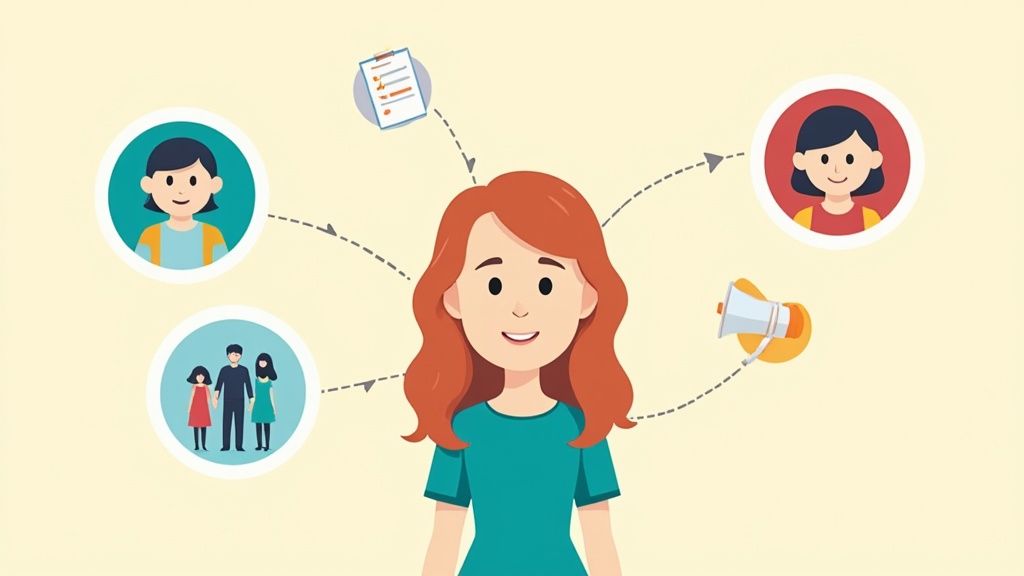
This infographic shows how the diploma acts as a central pathway for people from all walks of life—whether you're changing careers, upskilling from a support worker role, or just need a flexible way to study.

The key takeaway? The qualification is designed to be accessible, attracting a diverse range of students who bring their unique life experiences into the community services sector.
Building Your Ethical and Legal Foundation
One of the first and most critical pillars of your training is learning to navigate the legal and ethical landscape of community services. This goes way beyond just following rules; it’s about protecting your clients, your organisation, and yourself.
You’ll learn to operate within a strict framework that puts client safety and rights first. This means getting to grips with concepts like duty of care—your legal and moral obligation to prevent harm. You'll also master client confidentiality and informed consent, ensuring every piece of sensitive information is handled with absolute integrity.
The core principles you'll follow are often guided by codes like the Australian Community Workers Association's Code of Ethics, which emphasises service, social justice, and the inherent dignity of every person. Your diploma embeds these values into every unit.
Ultimately, this part of your study gives you the confidence to make sound judgements in high-stakes situations, turning complex legal requirements into clear, actionable steps.
Mastering Case Management and Client Advocacy
At the heart of almost every community services role is effective case management. This is the nuts and bolts of assessing a client's needs, creating a solid support plan, coordinating with other services, and tracking progress along the way. Your online diploma dedicates a huge amount of time to building these crucial skills.
You'll learn how to:
- Conduct Client Assessments: Move beyond just listening and learn structured methods to identify a client’s strengths, challenges, and personal goals.
- Develop Support Plans: Practise creating person-centred plans that are realistic, collaborative, and genuinely tailored to the individual.
- Advocate for Clients: Find your voice to effectively represent a client's interests and make sure they’re heard by agencies, government bodies, or the justice system.
These units are what turn you from a support person into a strategic coordinator. You’ll be ready to manage a full caseload, document everything meticulously, and work with other professionals to get the best possible outcomes for the people you help.
The table below gives you a clear picture of how specific course units connect directly to these real-world job functions.
Mapping Core Units to Real-World Community Services Tasks
This table shows how key units in the Diploma of Community Services directly translate into practical skills and responsibilities you will use in your career.
As you can see, there’s a direct line from what you learn in the virtual classroom to the impactful work you'll be doing in the community.
How Online Study and Work Placements Actually Work
One of the biggest questions I hear about a diploma of community services online is how it all comes together. It’s easy to picture yourself alone with a laptop, but the reality is so much more connected and designed to fit around your life, not disrupt it.
The real beauty of studying online is the flexibility. Most courses are self-paced, which puts you firmly in the driver's seat of your own schedule. You can chip away at your studies in the evening, on weekends, or whenever you can carve out some time, accessing everything through a dedicated online learning portal.
This is a game-changer if you’re already juggling a job, family, or other commitments. There are no rigid lecture times to attend, so you can move through the material at your own pace. But don't mistake 'self-paced' for 'no support'—good providers set clear assessment deadlines to make sure you stay on track and successfully reach the finish line.
Your Online Learning Environment
Think of your online portal as your digital campus, open 24/7. It's the central hub where you'll find every resource you need, all laid out and ready to go.
Typically, this is what you can expect to find inside:
- Interactive Learning Modules: These aren't just dry textbooks. They’re engaging materials that break down big topics into bite-sized, understandable chunks.
- Video Tutorials and Webinars: Expert trainers often record sessions you can watch, pause, and re-watch as many times as you need.
- Online Forums: This is your space to connect with classmates. You can ask questions, bounce ideas around, and realise you're all in it together.
- Direct Trainer Access: You’ll have a direct line to your trainer via email or scheduled calls for when you need that one-on-one support.
This mix of resources makes for a really rich and well-rounded learning experience. If you want to get a feel for how different providers set up their virtual classrooms, you can explore various online courses and their delivery methods to see what clicks with your learning style.
Demystifying the Work Placement Requirement
Let’s be clear: the work placement is a crucial, non-negotiable part of your diploma. It's where you step out from behind the screen and apply everything you've learned in a real community services organisation, guided by experienced professionals. This practical experience is essential for graduation and is what ultimately makes you job-ready.
A common worry is, "How on earth do I find a placement on my own?" The truth is, you don't have to. A quality training provider will have a dedicated placement team whose entire job is to help you. They’ll guide you through finding suitable local organisations and even help you get your application ready.
A work placement isn't just about logging hours; it's your professional audition. It’s your chance to build a network, gain references, and prove to employers that you have the practical skills to match your qualification. Many students are offered jobs by their placement hosts.
Your provider makes sure the host organisation can give you tasks and responsibilities that directly relate to your coursework. This hands-on component is the bridge between knowing the theory and having the confidence to actually do the work with clients. It’s solid proof that with a diploma of community services online, you truly get the best of both worlds: flexible learning and vital, real-world industry experience.
Your Career Path After Graduation
Finishing your diploma of community services online isn’t the end of the road—it’s where the real journey begins. This qualification is your ticket into a whole world of roles where you can genuinely change people's lives and strengthen your community from the ground up.
A diploma goes much deeper than an entry-level certificate. It gears you up for positions with more responsibility, where you'll be trusted to manage complex client cases, think strategically, and advocate for people who need a voice. This is where your career really starts to take shape.
Immediate Career Opportunities
With your diploma in hand, you'll find a surprising number of specialised roles open up across the sector. You’ll be ready to work in all sorts of environments, from grassroots non-profits and community health centres to government agencies.
Here are just a handful of the jobs you could walk into:
- Case Manager: You'll be the central support person for your clients, figuring out what they need, creating tailored support plans, and linking them with the right services.
- Family Support Worker: In this hands-on role, you'll help families navigate tough times, whether they're dealing with financial hardship, domestic violence, or parenting struggles.
- Community Development Officer: You'll zoom out to look at the bigger picture, working with entire communities to pinpoint their needs and launch programs that make life better for everyone.
- Youth Worker: You’ll be a mentor and guide for young people, helping them build confidence and connect with education or job opportunities.
Studying a diploma of community services online has been a game-changer for filling critical jobs, especially outside the major cities. The Australian Institute of Health and Welfare (AIHW) reported that in 2023, regional Australia had a shortfall of 1,842 community service workers. Online courses are making a huge difference here. In 2022, 42% of online diploma grads took jobs in regional or remote areas, compared to just 28% of their on-campus peers.
A Day in the Life of a Case Manager
So, what does the work actually look like? Let’s imagine a day as a Case Manager. You might start your morning reviewing client files before heading out for a home visit with a family at risk of homelessness. By mid-morning, you could be on the phone with Centrelink, advocating fiercely to make sure another client gets the payments they’re entitled to.
Your afternoon might be spent in a meeting with child safety officers and mental health workers, all collaborating on a support plan for a high-needs individual. It’s a fast-paced, challenging, and incredibly fulfilling role—and it demands the exact skills in case management and advocacy that your diploma teaches.
Building Your Long-Term Career Pathway
Your Diploma of Community Services is also a fantastic launchpad for further study. It gives you a strong, practical foundation that universities really value, and they’ll often give you credit towards a bachelor's degree.
Think of your diploma as the first major investment in a lifelong career. It gives you immediate entry into the workforce while simultaneously creating a direct pathway for advanced qualifications down the track.
Many graduates leverage their diploma to get into—and get credit for—degrees like a Bachelor of Social Work or a Bachelor of Human Services. This approach lets you work in the field, earn a decent wage, and gain invaluable experience while you figure out your next academic move. If you’re aiming high, you can even explore how to kickstart your career in social work with access courses. It’s a smart way to build your career step-by-step, blending practical know-how with higher education to make the biggest possible impact.
Navigating Course Fees and Enrolment Steps
Taking the leap into a diploma of community services online is a big step, and knowing what’s involved with fees and paperwork can make the whole process feel much less intimidating. It's easy to get bogged down in the details, but honestly, it’s usually more straightforward than people expect.
Let’s break down the financial side first, then we’ll walk through the simple steps to get your application sorted.
When it comes to the cost of a Diploma of Community Services, you’ll notice the price can really vary from one training provider to another. But the good news is you rarely have to pay the entire amount in one hit. Most colleges have flexible options to make sure the qualification is within reach.
Understanding Your Funding Options
As you start exploring your course options, you'll see a few different payment and funding pathways. It’s definitely worth looking into all of them to figure out what works best for your budget and circumstances.
Here are the most common options you'll come across:
- VET Student Loans (VSL): Think of this as a government loan specifically for vocational education. If you're eligible, it covers your tuition fees so you don't have to pay anything upfront. You simply start paying it back through the tax system once you’re earning above a certain income.
- State-Based Subsidies: Depending on which state you live in, you might qualify for government funding that dramatically cuts down your course fees. These subsidies are there to encourage people to train in high-demand fields, and community services is definitely one of them.
- Payment Plans: This is a really popular choice. Most providers offer simple payment plans that let you spread the cost over time with smaller weekly or monthly instalments. It’s a great way to pay as you go without needing a loan.
It's not just locals showing interest, either. The online Diploma of Community Services is becoming a major pathway for international students, with enrolments jumping by 120% between 2020 and 2023. This is largely because the career prospects are so strong—Jobs and Skills Australia predicts 88,000 new community worker roles will open up by 2028.
My best advice? Don’t let the initial sticker price scare you away. Always have a chat with a course advisor. They know the system inside out and can walk you through every single funding option you might be eligible for, helping you find the most affordable way forward.
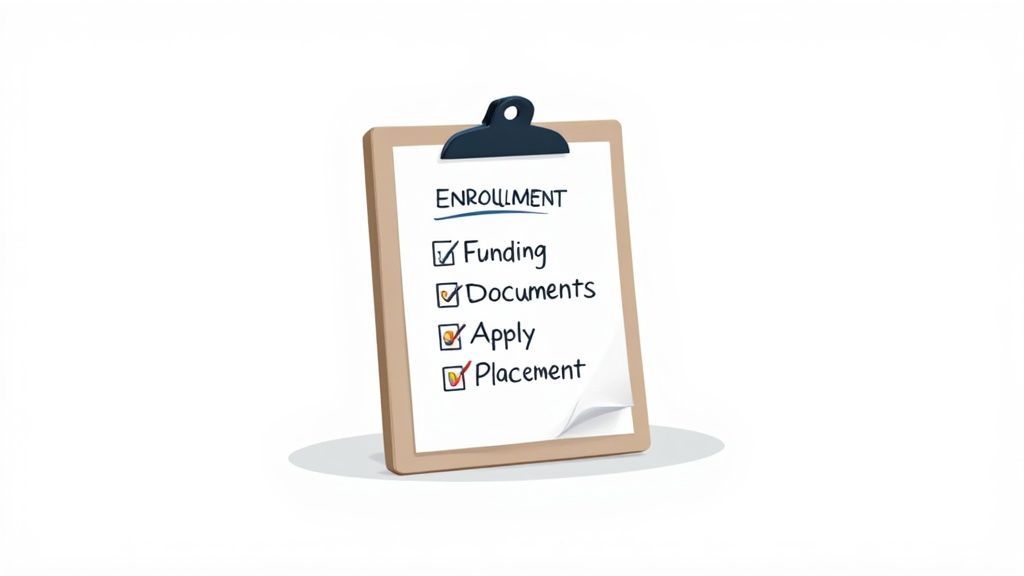
Your Step-by-Step Enrolment Checklist
Once you've got a handle on the finances, the actual enrolment process is just a series of simple steps. Having a checklist helps you stay on track and feel confident you haven't missed anything. Our guide on how to get qualified in community services also has some great insights on this.
Here’s a typical rundown of what you’ll need to do:
- Check Eligibility: First things first, make sure you meet the basic entry requirements. This usually covers things like age and any previous study or work experience they might be looking for.
- Gather Your Documents: You'll need to have some paperwork ready. This is typically proof of identity (like a driver's licence or passport) and sometimes proof of residency or citizenship.
- Complete the Application Form: This is almost always an online form where you'll fill in your personal details and confirm the course you're applying for.
- Skills Assessment: Many providers will ask you to do a quick Language, Literacy, and Numeracy (LLN) check. It’s not a test to pass or fail; it just helps them make sure you have the foundational skills to succeed and identify if you need any extra support.
Following these steps will make your application for a diploma of community services online a smooth ride, setting you up for a fantastic start to your studies.
Answering Your Key Questions About Studying Online
Deciding to start a diploma of community services online is a big move, and it's smart to have a few questions before you jump in. This is the perfect time to get clear on the practical side of things, figure out what to expect, and make sure this is truly the right path for your career goals.
To help you feel completely confident in your decision, we've pulled together the most common questions we hear from people just like you and given them straight, honest answers. Let's clear up any last-minute uncertainties so you can take that next step.
How Is a Diploma Different From a Social Work Degree?
This is a really common question, and getting the distinction right is key. Think of it like the difference between a paramedic and a doctor. Both are absolute lifesavers in the healthcare field, but they have different training, responsibilities, and day-to-day tasks.
The Diploma of Community Services (CHC52021) is a vocational qualification. It’s all about giving you the practical, hands-on skills you need to work directly with clients from day one. You’ll learn the ‘how-to’ of case management, advocating for people, and connecting them with the right support services. The whole point is to get you into the workforce quickly and competently, ready for roles like a Case Worker, Family Support Officer, or Community Coordinator.
A Bachelor of Social Work, on the other hand, is a university degree. It goes much deeper into social theories, research methodologies, and policy analysis. To officially call yourself an accredited Social Worker in Australia, you need to complete this university-level degree. The diploma is an amazing starting point and often acts as a fantastic pathway, sometimes even giving you credit towards a university degree if you decide to go down that track later.
What Is the Real Weekly Time Commitment?
One of the best things about studying online is the flexibility, but it’s so important to be realistic about the time you'll need to put in each week. Even though it's "self-paced," the course is still designed to meet national standards, so there's a definite workload involved.
As a general rule of thumb, you should probably budget for:
- Full-Time Study: Plan for around 15-20 hours per week. This covers everything from reading materials and watching tutorials to joining online discussions and tackling your assessments.
- Part-Time Study: This usually requires about 8-12 hours per week, which is often a much more manageable option if you're juggling a full-time job or have significant family commitments.
Before you sign up, have a good look at the course guide from the provider you're interested in. It should give you a clear idea of the expected study hours, which will help you map out a schedule that actually works for your life.
The secret to doing well with online study isn't about magically finding more hours in the day. It's about using the time you have effectively. Consistency beats intensity every time—small, regular study sessions will keep you moving forward much better than cramming.
For anyone weighing up this kind of study, questions often come up about the efficacy of distance education programs. A well-designed online course will always have a solid structure and clear expectations to make sure you stay on track and have what you need to succeed.
What Kind of Support Will I Actually Get?
The thought of studying a diploma of community services online can seem a bit isolating, but a good provider makes sure you feel anything but alone. The support network is a huge part of the experience, designed to keep you connected, motivated, and feeling good about your progress.
You should be looking for a layered support system that includes:
- Dedicated Trainers: You’ll have a direct line to your trainers and assessors. This is usually through email, phone calls, or scheduled one-on-one video chats, so you can get personalised help when you’re stuck on a particular concept.
- Student Support Officers: These are your go-to people for all the non-academic stuff. They can help with admin questions, sort out your enrolment, or get you in touch with tech support if you need it.
- Interactive Online Workshops: Many providers run regular live webinars. These are great because you get to chat with trainers and other students in real-time, ask questions, and work through tricky topics together as a group.
- Peer-to-Peer Forums: An online student forum is like your virtual student lounge. It's a place to connect with others in your course, share tips and experiences, form study groups, and just feel part of a community.
This blend of academic, admin, and peer support means you have a whole team of people to rely on, right from the day you enrol until you graduate. You're not just buying access to a course; you're joining a community that wants to see you succeed.
Is an Online Diploma Recognised Everywhere in Australia?
This is a big one, and the answer should give you total peace of mind. Yes, one hundred percent.
The Diploma of Community Services (CHC52021) is a nationally recognised qualification. It sits within the Australian Qualifications Framework (AQF), which is the official national system for all regulated qualifications in Australian education and training.
As long as you enrol with a proper Registered Training Organisation (RTO), your diploma is valid and respected by employers and universities in every state and territory. It doesn't matter if you graduate in Perth and want a job in Sydney, or use your diploma to get into a university in Melbourne—your qualification carries the exact same weight across the country. This ensures all your hard work pays off with a credential that is portable, valued, and recognised Australia-wide.
Ready to take the next step towards a fulfilling career in community services? At Get Course Australia, we connect you with leading online providers offering flexible, nationally recognised qualifications. Explore our range of courses and find the perfect fit to start making a real difference. Discover your Diploma of Community Services today!
Find Your Course
Compare courses across every field we write about, and enquire in under a minute.