Business and Administration Courses Online: Your Guide to Flexible Learning
Explore business and administration courses online to boost your career. Compare programs, qualifications, and flexible study options to find the right fit.
Taking an online business and administration course is one of the smartest ways to move your career forward without putting your life on hold. It gives you a chance to learn vital new skills completely on your own terms, making it a perfect fit for busy professionals, parents, or anyone ready for a change.
Why Study Business and Administration Online?
Let's face it, the old-school way of studying just doesn't work for everyone anymore. This is where online learning really shines, completely changing the game for how Australians can earn a new qualification. It’s moved from being a simple alternative to a genuinely strategic path to hitting your career goals.
The biggest drawcard is, without a doubt, flexibility. You can log in and learn from anywhere, whether you're in a city high-rise or a quiet country town. This freedom means you can finally shape your study schedule around your life, not the other way around.
Designed for the Real World
Online business and administration courses are built from the ground up to be practical. Forget drowning in abstract theories; the focus here is on giving you the exact skills that employers are looking for right now. You’ll get hands-on with project management, learn to wrangle finances, and develop the confidence to lead a team.
This practical approach has an immediate payoff. What you learn in a module on a Tuesday, you can often put into practice at work on Wednesday. It’s an instant return on your investment, making you a more valuable part of your team from day one.
The demand for this kind of learning has skyrocketed. Just look at the Australian Institute of Business (AIB) – it's now the largest online MBA provider in the country, with over 20,000 students worldwide. That alone shows you how popular and effective this style of education has become.
Studying online isn't just about getting a certificate. It's about deliberately upgrading your professional toolkit with skills that lead directly to promotions, new career paths, and a bigger paycheque.
Open Doors to New Opportunities
Earning a qualification in business and administration really expands your career options. It sends a clear signal to employers that you’re disciplined, proactive, and serious about your professional growth - qualities that are always in high demand.
Many graduates find themselves in roles with much more freedom. If you're curious about what that looks like, you can explore the many benefits of a remote career and see how these new skills fit perfectly with modern work trends.
Ultimately, studying online offers a clear, manageable way to build the career you've always wanted. To learn more, check out our article on how studying online benefits your career opportunities.
Figuring Out Your Qualification Pathway
Trying to choose between all the different business and administration courses online can feel a bit overwhelming, almost like navigating a maze without a map. Thankfully, the Australian Qualifications Framework (AQF) gives us that map. It lays out a clear, structured ladder from foundational skills right through to advanced expertise.
Think of each qualification level as a different rung, specifically designed to lift you to the next stage of your career.
Your starting point really just depends on your current experience and what you're aiming for. Whether you're brand new to the workforce or you've got your sights set on a leadership position, there's a pathway designed to get you there. This structure ensures your education makes sense, builds on itself, and is recognised right across the country.
Starting With The Essentials: Certificates III and IV
For anyone just starting out in the business world, or maybe looking to get an official qualification for skills you already have, a Certificate III in Business is the perfect first step. This qualification is the absolute bedrock of business administration. It’s all about teaching you the core, hands-on skills needed to make an office tick.
You'll get the hang of essential tasks like organising schedules, managing records, processing accounts, and providing top-notch customer service. It’s the ideal launching pad for roles like administrative assistant, receptionist, or data entry operator.
Moving up to the next rung, a Certificate IV in Business builds on this foundation but pushes you to take more initiative and even supervise others. It’s really designed for people who have some experience under their belt and are ready to take on more responsibility. This qualification can set you up for roles like a project officer, personal assistant, or team leader, where you might be looking after a small team or managing specific projects.
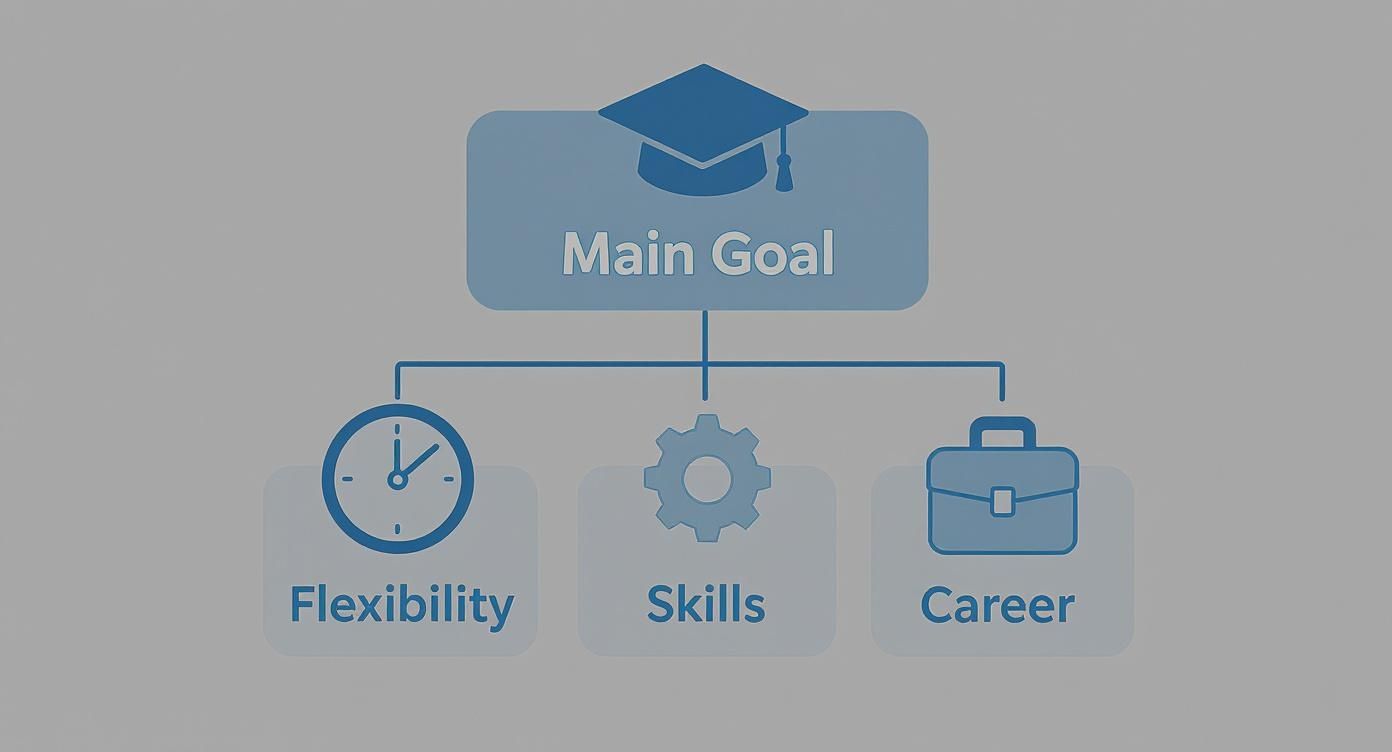
The flexibility of studying online is a huge advantage here, letting you build these practical skills and move closer to your career goals on your own terms.
Stepping Up To Diplomas And Beyond
Once you've got that solid foundation, the Diploma of Business is your next big leap. This is where you move beyond the day-to-day admin tasks and start digging into the strategic side of how a business actually runs. It's tailored for aspiring managers or anyone wanting to become a true expert in a specific area.
A diploma really gets into the more complex topics, including:
- Leadership and Management: Learning how to motivate a team, manage performance, and see projects through to the finish line.
- Human Resources: Getting a handle on recruitment, employee relations, and workplace health and safety.
- Financial Planning: Gaining skills in budgeting, creating financial reports, and managing resources effectively.
This level of study is perfect if you’re aiming for roles like Office Manager, Program Coordinator, or Executive Assistant.
To help you visualise how these qualifications stack up, here’s a quick comparison.
Comparing Business Administration Qualification Pathways
As you can see, each step is designed to build on the last, creating a clear and logical path forward.
An Advanced Diploma takes things even further. It equips you with the high-level strategic thinking needed to tackle major business challenges, come up with innovative solutions, and lead significant organisational change. It’s the direct pathway for senior management and specialised leadership roles.
Understanding this structure helps you map out your educational journey with real confidence. To get a more detailed look at how all these qualifications connect, explore our guide to business course pathways. By choosing the right starting point, you’re setting yourself up for a successful and rewarding career from day one.
The Practical Skills You Will Master
Theory is important, but let's talk about what really matters: the practical skills you'll actually use on the job. This is where an online business and administration course truly proves its worth. These qualifications are designed to give you tangible, day-one abilities that make you a valuable asset in any workplace.
Think of it less like reading a textbook and more like an apprenticeship. You don't just learn about business; you learn the hands-on techniques that keep an organisation running smoothly.
For example, a unit on 'financial administration' isn't just about memorising formulas. It's about giving you the confidence to manage a team budget, make sense of a profit and loss statement, and clearly explain financial results to your colleagues. You learn the 'how-to', not just the 'why'.

Building Your Professional Skillset
These courses methodically build a well-rounded professional skillset, covering the core functions you’d find in any successful business. You’ll get good at juggling priorities, communicating with purpose, and understanding your role in the bigger picture.
Here are some of the key skill areas you can expect to develop:
- Effective Communication: You’ll master writing professional emails, creating easy-to-read reports, and presenting your ideas with confidence.
- Time Management and Organisation: Learn real-world techniques for prioritising tasks, managing deadlines, and keeping projects on track, even when things get busy.
- Customer Service Excellence: Develop the skills to handle client enquiries, resolve issues professionally, and build the kind of customer relationships that help a business thrive.
- Digital Literacy: Get comfortable with essential office software, from creating spreadsheets and managing databases to building presentations and using online collaboration tools.
These foundational skills are your professional toolkit. They are universally in-demand, making you a more capable and adaptable employee no matter which industry you land in.
Exploring Specialised Areas
Beyond the fundamentals, many business and administration courses online let you dive into specialised areas that match your career goals. This is your chance to carve out a niche and become the go-to person in a high-demand field.
You might, for instance, decide to focus on project management. This path teaches you how to plan, execute, and deliver projects on time and on budget. You’ll get hands-on experience in managing resources, spotting risks, and leading a team from start to finish.
Or perhaps human resources (HR) is more your style. In these units, you’ll cover the essentials of recruiting and onboarding new staff, managing payroll, and making sure the workplace complies with Australian employment law. These are crucial skills for fostering a positive and productive team environment.
These specialisations aren't just add-ons; they are direct pathways to specific careers. They show employers you have focused, practical knowledge ready to solve their real-world business challenges.
This focus on practical, specialised skills is a trend across all levels of education. For example, universities are increasingly offering postgraduate courses like MBAs in Business Analytics to meet the demand for data-savvy leaders. Many of these programs, like the one at Flinders University, are aligning their MBA with industry demands, even including work placements to ensure graduates are ready for the job from day one.
Ultimately, the goal is simple: the skills you learn in your online course are meant to be used immediately. They'll build your resume, boost your confidence, and make you an indispensable member of any team.
What You Can Earn and Where You Can Work
Let's be honest - when you're thinking about studying, one of the biggest questions is, "What's in it for me?" Investing in your education is a big step, and you want to know it will pay off in your career and your bank account. The great news is that the skills you learn in business and administration courses online are in high demand right across Australia, in almost every industry you can think of.
This isn't just about getting a job; it’s about opening doors to genuinely rewarding roles. When you earn a qualification, you’re showing employers you have the practical know-how and dedication to help their business run smoothly. It’s the ticket to roles with more responsibility, interesting challenges, and, of course, better pay.
So, let's explore some of the most common and promising career paths that will open up for you after you graduate.

Administration and Office Management Roles
Think of these roles as the central nervous system of any successful organisation. They are the ones who make sure everything runs like a well-oiled machine day in and day out. To thrive here, you'll need a keen eye for detail and top-notch organisational skills - exactly the kind of abilities you’ll build during your course.
Common jobs in this area include:
- Office Manager: This is a vital leadership position. You’re in charge of everything from managing admin staff and office supplies to overseeing budgets and putting company policies into action. You're the go-to person who keeps the whole office productive and on track.
- Executive Assistant (EA): Working hand-in-hand with top-level executives, EAs are masters of organisation. You'll manage complex schedules, prepare high-stakes reports, book travel, and act as a crucial gatekeeper. It's a role that demands incredible discretion and the ability to think ten steps ahead.
- Administrative Assistant: This role is all about providing essential support across a department or an entire business. Your day could involve scheduling meetings, handling important mail, keeping databases up-to-date, and being a friendly, helpful face for clients.
These jobs are far more than just paperwork; they're about becoming an indispensable part of the team's success. As you start thinking about applying for these roles, it's crucial to present your skills clearly. You can find some great inspiration in these business resume examples and templates to help your CV shine.
Project and Program Coordination Roles
Do you love the satisfaction of seeing something through from a rough idea to a finished product? If so, a career in project coordination could be your perfect match. These roles are for natural planners and communicators who can keep teams on the same page and projects moving forward.
A qualification in business administration gives you the perfect toolkit for a career in project management. You’ll learn how to effectively manage resources, stick to budgets, and meet deadlines.
Here are a couple of popular career paths:
- Project Coordinator: You'll work alongside a Project Manager, helping to track progress, assign tasks, and manage all the project documents. It’s a fantastic way to get your foot in the door of the project management world.
- Program Administrator: This position involves looking after the administrative side of specific company programs. You'll make sure all activities are organised, everyone involved is kept in the loop, and the program's goals are achieved.
These roles are fast-paced and give you a chance to see the direct impact of your work. For even more career ideas, check out our guide to the top career paths for business management majors in Australia.
Potential Career Paths and Average Salaries in Australia
Now for the part you've been waiting for: the salary. Your exact pay will naturally depend on your experience, location, and the industry you work in, but we can look at the current Australian market to give you a solid idea of what to expect.
Here’s a look at some common roles for business administration graduates and what they typically earn.
As you can see, the salaries are competitive and reflect the value these roles bring to a business. Completing an online course is a practical, smart investment that puts you on a clear path toward these financially rewarding careers and a more secure future.
Finding the Right Online Course for You
With a sea of business and administration courses online, trying to pick the perfect one can feel a little overwhelming. But it doesn't have to be. By breaking the decision down into a few key checks, you can confidently find a course that genuinely fits your life, your budget, and where you want to go in your career.
Think of it like buying a car. You wouldn’t just grab the keys to the first one you see. You'd check the safety rating, see how it feels to drive, and make sure it actually suits your needs. It’s the same deal here – a little bit of homework ensures your investment in education really pays off.
Start with Accreditation and Recognition
First things first: is the qualification legit? You need to know that employers will actually value the certificate or diploma you earn. In Australia, that means checking if the provider is properly accredited. A quality provider will be a Registered Training Organisation (RTO), overseen by the Australian Skills Quality Authority (ASQA), or a higher education provider registered with the Tertiary Education Quality and Standards Agency (TEQSA).
This isn't just bureaucratic box-ticking. It’s your quality guarantee.
A nationally recognised qualification means your new skills hold weight anywhere in Australia. It tells employers you’ve met a high, consistent standard of training, which immediately makes you a more compelling candidate.
So, before you do anything else, find the provider’s RTO number on their website. It's the quickest and most important quality check you can do.
Match the Learning Style to Your Life
Online learning isn't a one-size-fits-all experience. Different providers structure their courses in different ways, so it’s important to find a rhythm that works for you and your personal schedule.
You’ll generally come across two main approaches:
- Self-Paced Learning: This is all about flexibility. You get all the materials and a final deadline, but how you get there is up to you. It's a fantastic option for anyone juggling unpredictable work hours, family life, or other commitments.
- Structured Learning: This feels a bit more like a traditional classroom, but online. You’ll have scheduled virtual classes, regular deadlines, and group work. If you thrive on routine and enjoy the energy of learning alongside others, this could be a perfect fit.
There’s no "best" way to learn - just the best way for you. The right choice is simply the one that helps you stay engaged and motivated from start to finish.
Look Closely at Student Support
Studying online shouldn't mean you're on your own. The best course providers have solid support systems in place to back you up. As you compare your options, this is something you really need to dig into.
What should you look for? Find out about:
- Trainer and Assessor Access: How easy is it to get help when you're stuck? Can you reach out via email, phone, or even jump on a one-on-one video call?
- Technical Support: What happens if the learning portal crashes or a file won't open? A good provider will have a dedicated tech team you can call on for a quick fix.
- Student Services: Many colleges offer support beyond the coursework itself, helping with things like managing your study load or offering guidance if life throws you a curveball.
Great student support can honestly be the difference between just scraping by and truly succeeding in your course.
Understand the Assessments and Costs
Finally, let’s talk about the practical stuff: what you’ll be doing and what you’ll be paying. Courses assess your learning in different ways. Some might use online quizzes and written assignments, while others could involve hands-on projects, case study reports, or even role-playing simulated workplace scenarios.
Try to find a course with an assessment style that plays to your strengths.
On the money side of things, look beyond the initial course price. Ask for a complete breakdown of all costs - are there extra fees for textbooks, software, or exam resits? You should also ask about payment plans. Many providers offer flexible instalments or access to government funding, which can make a huge difference. Getting all this information upfront means no nasty surprises down the track.
Ready to Take the Plunge? Here's How to Enrol
So, you’ve done the research and you’re feeling that spark of excitement about starting a business and administration course. Turning that interest into a real enrolment is the final piece of the puzzle, and thankfully, it’s a lot more straightforward than most people think.
The whole point of online courses is to be accessible. For most certificate-level qualifications, finishing Year 10 or showing you have the right language, literacy, and numeracy skills is all you need. If you're looking at a diploma, they might ask for your Year 12 certificate or want to see that you have some relevant work experience under your belt.
Prepping Your Application
Getting a few documents together before you start will make the whole process a breeze. It’s like getting your ingredients measured out before you start baking – it just makes everything smoother and less stressful.
Here’s a quick checklist of what you'll probably need:
- Proof of Identity: A driver's licence, passport, or birth certificate will do the trick.
- Proof of Residency: This is just to confirm you're eligible for the course and any potential funding.
- Past Qualifications: If you're using previous study to get into the course, have a digital copy of your certificate or academic transcript handy.
Having these saved and ready to go on your computer will make the online form feel like a piece of cake.
Remember, the enrolment process isn't a test. It’s more of a conversation to make sure the course is a great fit for you and that you’re set up for success right from day one.
The application is usually just a simple online form where you'll enter your details, upload those documents, and maybe answer a couple of questions about what you're hoping to achieve. Once you hit submit, an education advisor will usually reach out to walk you through the rest.
This is where you go from just thinking about it to actually doing it. The path to new skills and a better career is right in front of you. Your next move is to explore the courses that really stood out and have a chat with an advisor. They're there to answer all your questions and give you that final bit of encouragement to get started.
Your Questions, Answered
Thinking about studying online is a big step, and it's totally normal to have a few questions floating around. To help clear things up, we've put together answers to some of the things people ask us most often when they're looking at online business and administration courses.
Are Online Qualifications Actually Valued by Employers in Australia?
Yes, one hundred percent. Here in Australia, if a course is nationally recognised and delivered by a properly Registered Training Organisation (RTO), employers see it as just as legitimate as a qualification earned in a physical classroom. The seal of approval is the accreditation.
What hiring managers really care about are the skills you bring to the table. They know that graduates from these courses have practical, real-world abilities. Plus, they often see online students as incredibly self-motivated and organised - two traits that are pure gold in any workplace.
How Much Time Do I Realistically Need to Study Each Week?
This is a great question, and it really comes down to the specific course you choose and your own personal rhythm. As a rule of thumb, most students find themselves putting in about 10 to 15 hours per week. That time is usually a mix of going through course materials, watching video lessons, and tackling assignments.
The real advantage of self-paced study is its flexibility. You can dial it down during a hectic work week and then make up for it with a solid study session on the weekend. It's all about creating a schedule that fits your life, not the other way around.
What Kind of Support Can I Expect to Get?
Studying online definitely doesn't mean you're on your own. Good training providers have solid support networks built in to ensure you never feel lost. You can typically count on:
- Your Own Trainers: You'll have a direct line to experienced trainers and assessors through email, phone, or online portals. They're there to answer your questions and give you feedback on your work.
- Student Support Team: There's usually a dedicated team on hand to help with the admin side of things, like sorting out your study plan or helping you through any non-academic hurdles.
- Tech Help: If you hit a snag with the learning platform or can't get a video to load, a friendly IT support team is ready to step in and get you back on track.
Are There Any Payment Plans or Funding Options?
Making education accessible is a huge priority. To take the financial pressure off, most Australian course providers have flexible payment options. This often includes discounts if you pay upfront, or more commonly, interest-free payment plans that let you spread the cost out weekly or monthly over your course enrolment.
For higher-level qualifications like a diploma, you might also be eligible for government funding like VET Student Loans, though this depends on the specific course and the provider. The best first step is always to chat with a course advisor to see exactly what you're eligible for.
Ready to find a course that perfectly matches your career ambitions and your lifestyle? The team at Get Course Australia is here to guide you through the options and help you take that next step. Explore our range of business and administration courses today!
Find Your Course
Compare courses across every field we write about, and enquire in under a minute.