How to Become a Marriage Celebrant: how do i become a marriage celebrant
Thinking about how do i become a marriage celebrant? Learn the steps, qualifications, and tips to start your career in Australia.
So, you’re thinking about becoming a marriage celebrant? It’s a wonderful career path, putting you right at the centre of one of the happiest days in a couple's life. But before you can legally marry people, there's a clear pathway you need to follow, laid out by the Australian Government.
The essentials involve getting the right qualification, passing a background check, and then officially applying for registration. It’s a process designed to make sure every celebrant is professional, ethical, and knows the legal side of things inside out.
Your Path to Becoming a Marriage Celebrant
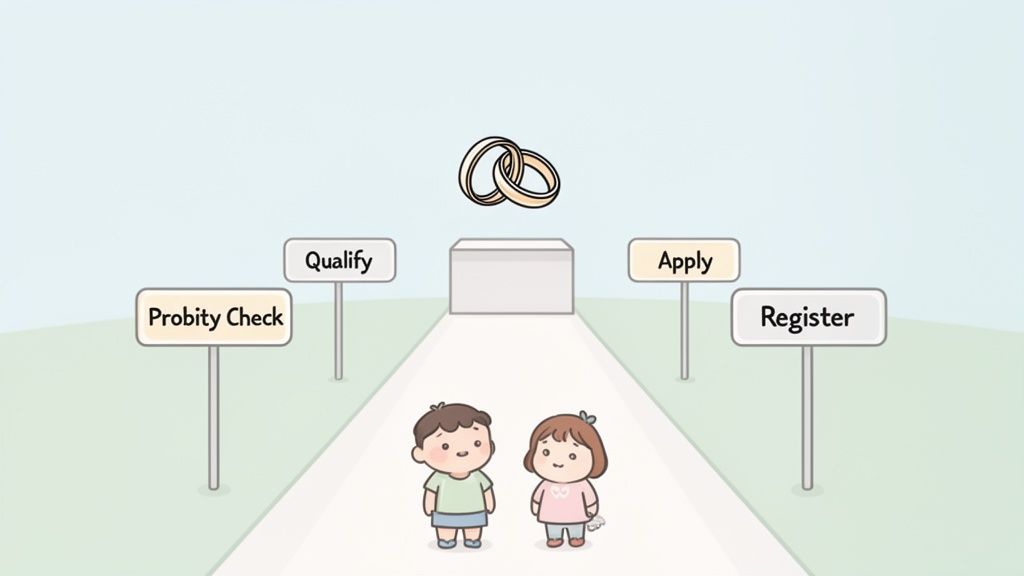
Embarking on this journey is an exciting move, whether it's a complete career change or a passion you're turning into a profession. You become a storyteller, a guide, and a legal official all in one. But what does that journey actually look like from start to finish?
Knowing the full process - from hitting the books to conducting your first ceremony - helps set realistic expectations. Everything is regulated by the Attorney-General's Department to uphold the integrity of the Marriage Act 1961, so every step is important.
The Core Journey
We can break the whole process down into four main stages you’ll need to work through:
- Getting Qualified: The first, non-negotiable step is to earn a Certificate IV in Celebrancy (CHC41015). This is your foundation.
- Passing Probity Checks: The government needs to know you're a 'fit and proper person'. This involves official checks, including a National Police Check.
- Applying for Registration: Once qualified, you'll submit a detailed application to the Attorney-General’s Department, along with all your documents and the required fees.
- Getting Registered: After your application is approved, your name is added to the official register. Congratulations! You can now legally solemnise marriages anywhere in Australia.
And it’s a great time to be getting into the field. According to the Australian Bureau of Statistics, there were 120,844 marriages in a recent year, a notable increase from the year before. With around 9,500 civil celebrants conducting most of those ceremonies, there's plenty of room for fresh, passionate professionals. If you're seriously thinking about a new direction, our guide on how to change careers has some great tips for making the switch.
Becoming a celebrant isn’t just about public speaking; it’s about becoming a legal authority, a storyteller, and a calm presence on one of the most important days in a couple's life.
To give you a clearer picture of the time and financial commitment, here's a quick rundown of what to expect.
Pathway to Becoming a Celebrant At a Glance
The table below breaks down the typical timeframes and costs associated with each stage of becoming a registered marriage celebrant in Australia.
Keep in mind these are estimates. Your course provider, the state you get your police check in, and government fee changes can all affect the final numbers. Think of this as a solid starting point for your planning.
Meeting the Core Training and Eligibility Requirements

So, you're thinking about becoming a marriage celebrant? Fantastic. But before you get lost in dreams of crafting beautiful ceremonies, there are a few foundational boxes you need to tick. The Australian Government has some clear and strict rules in place, and for good reason - they ensure every registered celebrant is professional, ethical, and up to the task.
Getting these fundamentals right from the very beginning will save you a world of headaches, time, and money later on. Let’s walk through what you need to have in order.
Confirming Your Basic Eligibility
First things first, let's run a quick self-check against the government's core criteria. This isn't about skills or experience just yet; it's the absolute baseline.
To even be considered for registration as a marriage celebrant in Australia, you must:
- Be at least 18 years of age.
- Hold the required qualification (we’ll get to that in a moment).
- Not have a conflict of interest that would stop you from performing your duties with complete impartiality.
That last point about a conflict of interest is a big one. A common example is if your main job is selling wedding packages for a specific venue or promoting a photography business. As a celebrant, your primary duty is to the couple, and you must be free from any commercial pressure that could compromise that.
The Attorney-General's Department needs to know that a celebrant's main motivation is serving the couple and upholding the Marriage Act - not trying to upsell them on other products or services.
The Cornerstone Qualification: Certificate IV in Celebrancy
Once you've cleared the basic eligibility check, it's time to tackle the main event: your formal education. To become a marriage celebrant in Australia, completing the Certificate IV in Celebrancy (CHC41015) is non-negotiable. This is the mandatory, nationally recognised qualification set by the government.
Think of this course as your comprehensive training ground. It’s been specifically designed to give you the legal knowledge, practical skills, and ethical grounding you'll need to truly excel. It goes far beyond just learning what to say during a ceremony.
You'll find this qualification offered by various Registered Training Organisations (RTOs) across the country. One of the best things for aspiring celebrants today is the flexibility. Providers like Lumify Learn or Open Colleges let you complete the entire course online, which means you can study at a pace that works around your job and family life.
What You Will Learn in Your Celebrancy Course
The Certificate IV in Celebrancy is a really thorough program that covers everything you'll need to know. You'll be assessed on your ability to not only conduct a beautiful ceremony but also handle all the critical legal and admin work that happens behind the scenes.
Some of the key units of competency you can expect to cover include:
- Legal Responsibilities: You'll do a deep dive into the Marriage Act 1961 and all its associated regulations. Learning how to correctly fill out and lodge all the legal paperwork is one of the most crucial parts of the job.
- Ceremony Design and Delivery: This is where your creativity comes in. You’ll learn how to interview couples, write truly personalised scripts, and deliver ceremonies that are engaging, heartfelt, and, of course, legally compliant.
- Client Communication and Management: From that very first email enquiry right through to the post-ceremony follow-up, you'll pick up the skills to manage your client relationships professionally and with genuine empathy.
- Small Business Operations: You'll cover the essentials of setting up and running your own celebrancy business, including marketing, finances, and record-keeping. Many celebrants find this area fascinating, and you can even build on it by exploring the Certificate in Wedding Planning.
Civil celebrancy has exploded in Australia since it was formally introduced back in 1973. Today, civil ceremonies make up over 80% of all marriages - a massive shift from when religious services were the default. This incredible demand underscores the need for well-trained, professional celebrants who can create meaningful, modern experiences for all kinds of couples. As you research courses, make sure they are Attorney-General approved. Completing this qualification is your first major step towards answering the question, "how do I become a marriage celebrant?"
Navigating the Official Application and Registration Process
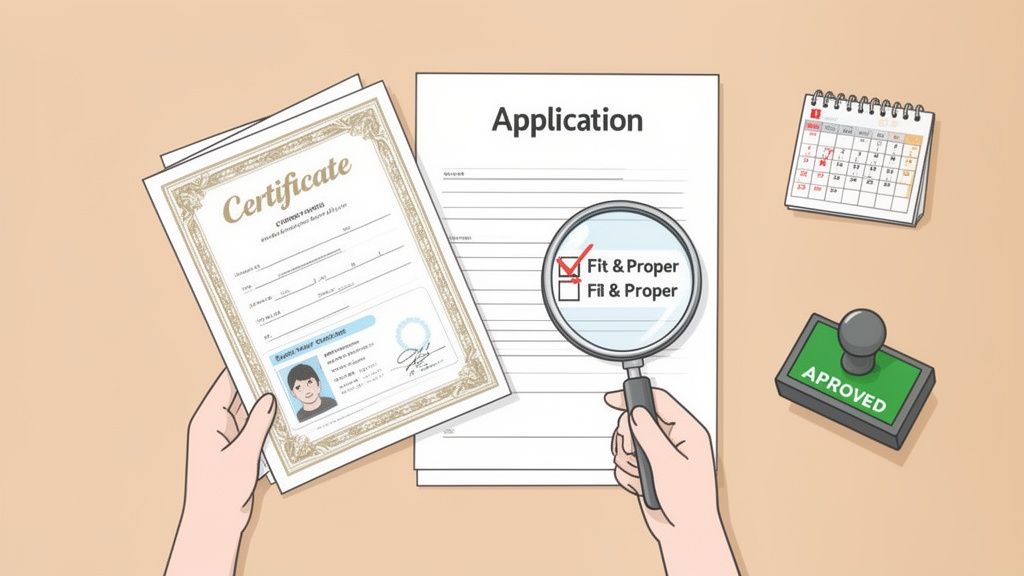
Holding your Certificate IV in Celebrancy is a huge achievement, but it's really the ticket to the main event, not the finish line. Now for the crucial part: getting officially registered with the Commonwealth. This involves a formal application to the Attorney-General's Department, a process that is deliberately thorough to uphold the integrity of the profession.
This step is all about precision and patience. You're not just flicking over your qualification; you're proving you have what it takes to handle the serious legal and ethical responsibilities of a celebrant. Getting your application right the first time will make a world of difference to how quickly you can get started.
Getting Your Paperwork in Order
Before you even think about starting the online form, get all your documents gathered, scanned, and ready to go. A messy, incomplete submission is the number one reason for delays. Treat this as your first official celebrant task - with impeccable attention to detail.
Here’s the checklist of what you'll need to have on hand as clear, high-quality digital copies:
- Your Certificate IV in Celebrancy: Make sure you have the full certificate and the academic transcript of your results.
- Proof of Identity: Your birth certificate, passport, or citizenship certificate will do the trick.
- Photo Identification: A current driver's licence or proof of age card.
- Proof of Address: A recent utility bill or bank statement is perfect.
A quick but vital tip: make sure the names on all your documents match exactly. Any little discrepancy can flag your application for a manual review, potentially adding weeks to your waiting time.
The 'Fit and Proper Person' Check
A massive part of your application is the 'fit and proper person' assessment. This isn't a test you can cram for; it's a deep dive into your character, integrity, and good standing. The Attorney-General's Department needs to be completely confident that you're a suitable person to handle the legal duties that come with marrying people.
The assessment boils down to two things: your own declarations on the application form and a mandatory National Police Check. You must be completely upfront about any past convictions or pending charges. Being dishonest here is an immediate red flag and will almost certainly see your application thrown out.
The 'fit and proper' test is fundamentally about trust. It's designed to ensure that couples are placing the legal validation of their marriage in the hands of someone who has a proven history of honesty and respect for the law.
The assessors look at the whole picture. Even your communication with the department and the general professionalism of your application contribute to their impression of you.
Costs and Timelines: What to Expect
Once you hit that 'submit' button, the waiting game begins. The official processing time can take up to three months, although it can be quicker if your application is squeaky clean and you apply during a less busy period. During this time, they'll be reviewing your documents, running the probity checks, and processing your payment.
Speaking of payment, the one-time, non-refundable application fee is currently $600. That's a pretty good incentive to get your submission perfect the first time!
If all goes well and you're approved, your name and details will be added to the public register of marriage celebrants. You’ll receive your official registration certificate in the mail, and from that moment, you are legally authorised to solemnise marriages anywhere in Australia.
Building and Marketing Your Celebrancy Business

Congratulations, you're officially registered! That's a huge milestone, giving you the legal power to solemnise marriages. But here’s the thing: being registered is just your license to operate. To actually thrive, you need to build a real business.
Your focus now shifts from being qualified to being booked, and that all starts with setting solid foundations and marketing yourself smartly. It's time to treat this as the professional service it is. First up, get your Australian Business Number (ABN) - it's free and absolutely essential for invoicing and taxes. You'll also need to sort out your professional indemnity and public liability insurance to protect both yourself and your clients.
Defining Your Brand and Services
So, before you can start marketing, you need to know exactly what you’re selling. It might sound a bit corporate, but successfully building your personal brand is the secret sauce for a great celebrancy business.
What kind of celebrant are you? Are you warm and traditional? Funky and full of humour? Your brand is your unique promise to couples, and it should come through in everything you do.
Once you’ve nailed your vibe, you can create service packages that make sense. Instead of just a single price, think about offering a few different tiers:
- The Essentials Package: This is your simple, no-fuss, legal-only ceremony. It's perfect for elopements or registry-style weddings and can be a great low-cost, high-volume option.
- The Classic Ceremony: This will likely be your bread and butter. It includes a fully personalised script, planning meetings, a rehearsal, and the use of your PA system.
- The Premium Experience: Think bigger! This could bundle the classic ceremony with MC services for the reception, a professionally printed keepsake copy of the ceremony, or other special touches.
Your brand is the story you tell about yourself, and your packages are how couples can buy into that story. Make both compelling, clear, and reflective of the unique experience you offer.
Creating Your Digital Shopfront
In the wedding world, your website is your most important tool. Think of it as your digital office, your portfolio, and your booking agent, all working for you 24/7. A professional, easy-to-use website is non-negotiable if you want to look credible and attract the right clients.
A few pages are absolute must-haves. An "About Me" page helps couples connect with you personally - share your story and why you love what you do. A clear "Services" or "Packages" page needs to outline exactly what you offer and your pricing. Finally, a gallery of stunning photos and a page full of glowing testimonials provide the social proof couples need to feel confident locking you in.
Getting Smart with Marketing
To help you get started, here's a look at some common marketing channels and what you can expect from them.
Marketing Channels for New Celebrants
Each channel has its place, but a strong website backed by great reviews and an active social media presence is a winning combination for most new celebrants.
Leveraging Social Media and Testimonials
While your website is your home base, social media is where your personality can really shine. Instagram is a powerhouse for celebrants; it’s visual, personal, and a great way to connect with couples who match your style. Share beautiful photos from weddings (with permission, of course!), behind-the-scenes snaps of you writing ceremonies, and helpful tips.
After every single wedding, make it your mission to ask for a review. Those glowing testimonials are pure marketing gold. The average marriage celebrant stays in the game for about 8 years, and a stellar reputation is what gives you that staying power. Nudge couples to leave reviews on Google, your website, and any wedding directories you’re listed on.
Networking with Other Wedding Vendors
The wedding industry is a tight-knit community, and referrals are everything. One of the best ways to get bookings is by connecting with other awesome vendors. Make an effort to meet photographers, wedding planners, venue managers, and florists in your local area. You can find more practical advice on this in our comprehensive guide to starting a wedding planning business.
When you’re at a wedding, introduce yourself to the other suppliers and be a great team player. Afterwards, follow them on social media and tag them in any posts. When you send business their way, they’re much more likely to return the favour.
Remember, building a business takes time. Industry data shows that celebrants typically spend around 28% of their revenue on marketing and put in an average of 16 hours for each wedding. With median marriage ages now at 32.9 for men and 31.2 for women, couples know what they want: 56% are looking for warmth and 27% want humour. Make sure your marketing shows them you've got it.
Keeping Your Celebrancy Career Thriving: Your Ongoing Responsibilities
Congratulations, you’re officially a registered marriage celebrant! It’s a huge achievement, but it’s really just the beginning. Think of your registration not as a finish line, but as your entry into a community of professionals who are committed to a high standard of practice.
Staying registered and building a respected business means embracing a few key ongoing responsibilities. These aren’t just bureaucratic hoops to jump through; they’re designed to protect the integrity of the marriage act and ensure couples across Australia are in safe, professional hands.
The Yearly To-Do List: Registration and Professional Development
First things first, you've got to keep your registration active. Every year, you'll need to pay an annual registration fee directly to the Attorney-General's Department. Right now, that fee is $240, but it’s always a good idea to double-check as it can change. Missing this payment deadline is a surefire way to be removed from the register, so pop a reminder in your calendar.
Alongside the fee, you’re required to complete Ongoing Professional Development (OPD) every single year. This isn't just busywork. OPD is your lifeline to staying current with any tweaks in marriage law, refreshing your ceremony skills, and picking up new ideas.
I can't stress this enough: your annual OPD is a crucial investment in your career. It’s what keeps you compliant, confident, and on top of your game in a role where the legal details are everything.
The Attorney-General's Department sets the topics each year. You’ll typically have one compulsory session on legal matters and then a choice of electives covering everything from marketing your business to advanced ceremony writing. It’s a core part of staying successful long after you first become a celebrant.
Living by the Code of Practice
As soon as you're registered, you are legally bound by the Code of Practice for Marriage Celebrants. This is the rulebook that sets the minimum standards for your conduct and service delivery. It covers everything from how you market yourself to how you present yourself on the big day.
Some of the non-negotiables under the code include:
- Professionalism is Key: You’re expected to maintain a high standard of service in all your interactions - not just with your couples, but with other vendors and the public.
- Paperwork Perfection: All legal documents, especially the Notice of Intended Marriage (NOIM) and marriage certificates, must be filled out flawlessly and submitted on time. There’s no room for error here.
- Secure Record-Keeping: You're the custodian of sensitive information. Keeping secure, confidential records of all marriage documents for the required period is a massive responsibility.
- No Conflicts of Interest: Your guidance must always be impartial. Your focus is solely on the best interests of the couple you’re serving.
Running Your Business Like a Pro
Being a great celebrant is one thing; running a successful business is another. As a self-employed professional, you have to get your head around the financial side of things.
This means being meticulous with your bookkeeping, tracking all your income and expenses, and understanding if you need to register for GST. Getting savvy with your finances is essential for sustainability. Learning about maximizing sole trader tax deductions is a great starting point for keeping your business in good financial health.
When you have your business admin sorted, you’re free to pour all your energy into the part you love most - crafting unforgettable ceremonies for your couples.
Your Top Questions About a Celebrant Career, Answered
Deciding to jump into a new career always brings up a bunch of practical questions. As you weigh up whether becoming a marriage celebrant is the right path for you, you’re probably wondering about the day-to-day realities - from how much you can actually make to what it really takes to be great at this job.
Let's dive into some of the most common queries I hear from aspiring celebrants. I’ll give you the straightforward, honest answers you need to get a clear picture of what this incredibly rewarding career is all about.
How Much Can I Realistically Earn as a Marriage Celebrant?
Alright, let's talk money. It's a big one. The truth is, your income as a celebrant is tied directly to how many weddings you book, and this can swing wildly depending on where you live, how you market yourself, and the kinds of ceremonies you offer.
With the average fee for a ceremony sitting around $874, a part-time celebrant who books just 10-15 weddings a year can bring in a really nice side income. For many, this is the perfect balance, especially when you're starting out or juggling celebrancy with another job.
Thinking of going full-time? It's definitely possible. Booking 50 or more weddings annually will get you there, but it demands a serious commitment to your marketing and rock-solid time management.
It's so important to remember you're running a business, not just a hobby. When you're dreaming about potential earnings, always subtract your expenses - insurance, annual registration fees, marketing, travel - to get a realistic idea of your actual profit.
What Personality Traits Make a Great Celebrant?
While you don't need to be a born entertainer, some personal qualities will absolutely set you up for success. At its heart, this job is about connecting with people, telling their stories, and holding a calm, joyful space for them during one of life's biggest moments.
When asked what they look for in a celebrant, couples consistently put warmth (56%) and a good sense of humour (27%) at the top of their list. Beyond that, the best celebrants I know all share a few key traits:
- Confident Public Speaking: You don't need to be a stage performer, but you do need to be comfortable and clear speaking in front of a crowd.
- Strong Writing Skills: Crafting a ceremony that’s personal, engaging, and legally watertight is the absolute core of the role.
- Exceptional Organisation: Juggling multiple couples, legal deadlines, and event logistics requires you to be meticulously organised.
- Deep Empathy: You have to be a great listener. The ability to genuinely connect with your couples' stories is what turns a good ceremony into an unforgettable one.
The fantastic news is that many of these skills, especially public speaking and writing, are things you’ll develop and polish during your Certificate IV in Celebrancy and with every single wedding you do. Authenticity is what couples are looking for.
What Is the Biggest Challenge for New Celebrants?
Honestly? The biggest hurdle for most new celebrants is getting those first few bookings. It’s all about building momentum in what can feel like a crowded market.
To stand out, you need to figure out what makes you different. Maybe you could specialise in a particular niche, like intimate elopements, multicultural ceremonies, or adventure weddings in wild locations. Creating a specific brand helps you attract the right couples for you.
Having a professional online presence is non-negotiable these days. But one of the most effective strategies is also one of the oldest: networking. Getting to know local wedding photographers, planners, and venue managers is a surefire way to build a steady stream of referrals. I've also found that another early challenge is just mastering the legal paperwork; creating a detailed checklist for every single wedding is a lifesaver to make sure nothing ever gets missed.
Can I Complete My Celebrant Training Entirely Online?
Yes, absolutely! This is one of the best parts about getting started. The required qualification, the Certificate IV in Celebrancy (CHC41015), is widely available through Registered Training Organisations that offer flexible, completely online learning.
This setup is perfect for people who need to fit study around their current job, family, or other commitments. Your coursework is delivered through virtual classrooms and online materials, so you can pretty much study at your own pace.
Even the practical assessments, like performing a mock ceremony, are usually done by submitting a video recording. You'll have access to online tutors and student support the whole way through, so you're never on your own. It's a fantastic way to get qualified and take that first exciting step into your new career.
Ready to turn your passion for celebrating love into a profession? Get Course Australia connects you with flexible, nationally recognised courses from leading providers. Explore your options and find the perfect online celebrancy course to fit your life. Start your journey today! Find out more at https://getcourse.com.au.
Find Your Course
Compare courses across every field we write about, and enquire in under a minute.