Your Path to diploma in early childhood education online: A Comprehensive Guide
Earn your diploma in early childhood education online with flexible options, accredited programs, and practical insights to launch your career.
Studying for your diploma in early childhood education online is one of the most flexible and fulfilling ways to kickstart a stable, high-demand career. It means you can get qualified from anywhere in Australia, slotting your study sessions in around your job, family, or whatever else life throws at you. It’s a direct path to making a real difference.
Why an Online Early Childhood Diploma Is a Smart Career Move
Think of yourself as an architect. But instead of designing buildings, you're carefully crafting the foundations for a child’s entire life of learning and happiness. That’s what an early childhood educator really does. You’re not just teaching letters and numbers; you’re sparking curiosity, fostering resilience, and creating a safe, nurturing space for kids to flourish.
And getting into this career has never been easier, largely thanks to the freedom of online study. You can earn a nationally recognised qualification without having to press pause on your life, which is a game-changer. This kind of flexibility is essential, especially as the sector continues to boom.
Meeting a Growing National Need
Right now, the demand for skilled early childhood educators is skyrocketing across Australia. As more and more children enrol in preschool, the need for qualified, passionate professionals to guide them has grown in lockstep. The Australian Bureau of Statistics backs this up, showing 341,568 four- and five-year-olds are already in preschool programs, with that number climbing every year. You can dive deeper into the numbers on the ABS statistics website.
An online diploma isn't just a piece of paper; it’s a direct response to a critical workforce shortage. It gives you the practical, on-the-ground skills to walk straight into a meaningful role where you can start making an impact from day one.
Building Your Future with Flexible Learning
Choosing to study online gives you a real strategic advantage. It’s an investment in your future that opens doors right away while also setting you up for long-term career growth.
Some of the biggest benefits are:
- Study On Your Terms: You make learning fit around your life, not the other way around. It’s the perfect setup for parents, people switching careers, or anyone juggling a busy schedule.
- Develop In-Demand Skills: The course curriculum is built around the National Quality Framework, so you know you’re graduating with up-to-date, relevant skills that employers are actively searching for.
- Unlock Career Pathways: This diploma is a launchpad. It can lead to leadership roles within a centre and gives you a solid foundation if you decide to pursue a university degree later on.
Getting your diploma is also the first step in a career of ongoing professional development for educators, which is vital for keeping your skills sharp. By studying online, you’re not just getting ready for a job—you're building a lasting and truly rewarding career.
What You'll Really Learn in Your Diploma Course
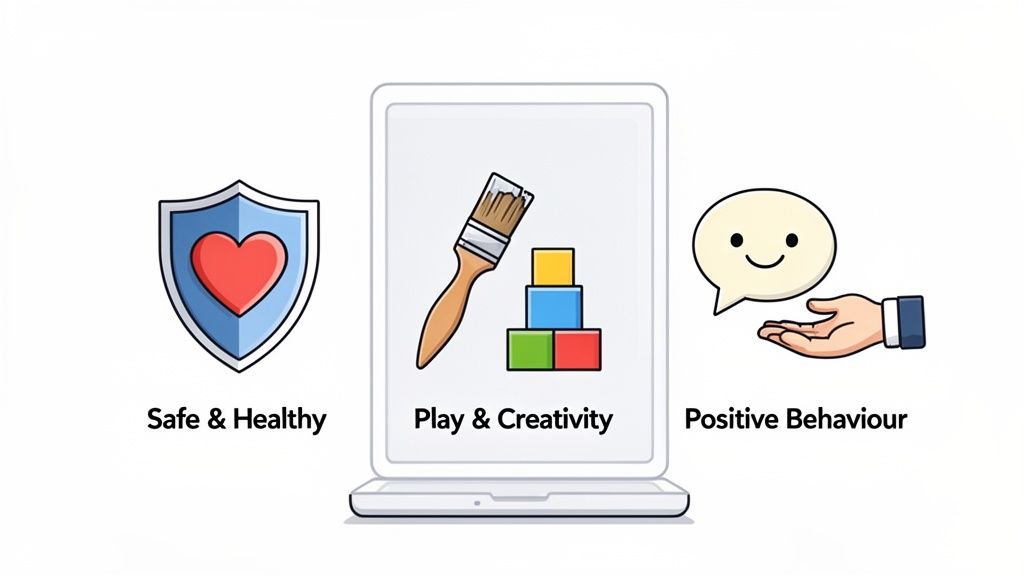
When you enrol in a Diploma of Early Childhood Education online, you're not just signing up for a series of modules. You’re building a practical toolkit that will help you truly connect with and guide young children.
Think of this qualification as the bridge between basic care and becoming a confident, capable leader in the room. It’s all about understanding the ‘why’ behind what we do every day, so you can turn child development theory into practical, impactful actions.
Creating Safe and Healthy Environments
First things first: a child’s world has to be built on a foundation of safety, health, and wellbeing. You simply can't spark a child's curiosity if they don't feel secure, nurtured, and looked after. This is the absolute bedrock of quality care.
In this part of your course, you'll master essential skills like:
- Promoting children's health and safety: This covers everything from planning nutritious meals and managing allergies to implementing rock-solid hygiene routines and spotting potential risks in a play area before they become a problem.
- Providing first aid response: You’ll gain the confidence to handle injuries and medical emergencies calmly and correctly—a non-negotiable skill for anyone working with children.
- Nurturing holistic wellbeing: This goes way beyond just physical health. It’s about creating an emotionally and psychologically safe space where every single child feels seen, heard, and valued.
These skills are central to the role of child care providers in development, because a safe and trusting environment is where all meaningful learning begins.
Sparking Creativity Through Play
Once that safe space is established, the real fun begins. Modern early childhood education is all about play-based learning. We now know that children learn best not from sitting at desks, but from exploring, experimenting, and following their own interests.
Your job will be to become an architect of play. You'll learn to design experiences that aren't just fun, but are secretly packed with learning opportunities. This means watching what kids are naturally drawn to and then intentionally setting up activities that build their cognitive, social, and motor skills. You’ll also delve into creating inclusive learning environments for every child, ensuring your programs are accessible and equitable for all.
Your goal is to turn the room into a vibrant hub of discovery. You'll learn how to use play as a powerful tool for everything from introducing early literacy and numeracy concepts to developing problem-solving and teamwork skills.
Guiding Positive Behaviour
Learning how to guide children's behaviour is probably one of the most rewarding skills you'll develop. This isn’t about old-school discipline. It's about understanding the developmental reasons behind a child's actions and using positive, respectful strategies to help them learn self-regulation.
You will learn to:
- Analyse and respond to behaviour with empathy, looking for the 'why' behind the action.
- Use strategies that build a child's self-esteem and encourage positive ways of interacting with others.
- Work as a team with families, creating a consistent and supportive approach that flows between home and the centre.
This empathetic approach builds the strong, trusting relationships that are so critical for a child’s social and emotional growth. To give you a clearer picture, let's look at how some of the core diploma units translate into these practical, day-to-day skills.
Core Units and Their Real-World Applications
The CHC50121 Diploma is made up of specific units of competency, but it’s easy to get lost in the codes and official titles. This table breaks down a few key units to show you exactly what you’ll be learning and, more importantly, how you’ll actually use those skills on the floor with the children.
Ultimately, each unit is designed to build your confidence and competence, preparing you not just to work in an early learning centre, but to lead and make a genuine difference in the lives of children and families.
Understanding National Recognition and Requirements
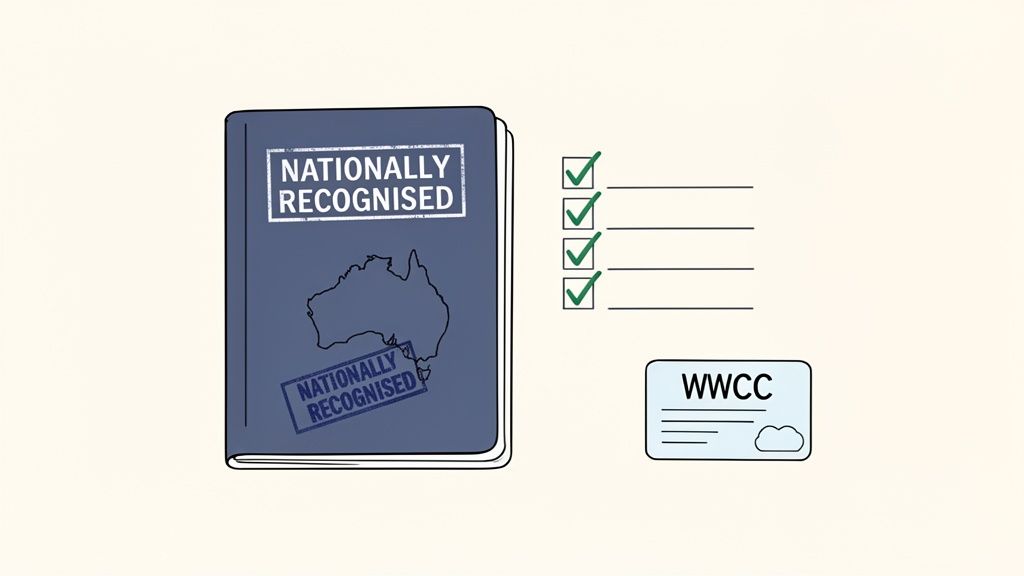
As you start looking into the diploma in early childhood education online, you’ll see the term “nationally recognised” pop up everywhere. It sounds a bit official and maybe a little confusing, but it’s actually a straightforward concept that’s absolutely crucial for your career.
Think of a nationally recognised qualification as your professional passport. It ensures your skills and knowledge are accepted and valued by employers in every state and territory across Australia, giving you the freedom to work anywhere your career takes you.
This national standard means that whether you study in Melbourne and want to work in Perth, or vice versa, your diploma meets the exact same high benchmark. It’s a guarantee of quality and consistency for the entire early childhood sector.
The Guardians of Quality in Early Childhood Education
This national standard isn't just a vague idea; it's actively managed by key governing bodies to ensure every graduate is truly ready to provide exceptional care. You don’t need to memorise all the details, but knowing who these organisations are helps you appreciate the real value behind your diploma.
The main players in this space are:
- ACECQA (Australian Children’s Education & Care Quality Authority): This is the national authority that oversees the whole system. They work with state and territory governments to ensure early childhood education is high-quality and consistent, no matter the postcode.
- The National Quality Framework (NQF): This is the rulebook, the set of standards that most childcare services across Australia must follow. Your diploma is specifically designed to give you the skills and understanding needed to excel within this framework.
Because these organisations set the bar high, employers know that a graduate with a nationally recognised diploma is competent, prepared, and ready to make a positive impact from day one.
Essential Prerequisites for Your Studies
Before you can dive into your studies and practical work, there are a couple of non-negotiable requirements. These are all about safeguarding children, which is always the top priority in this field.
The most critical check is the Working with Children Check (WWCC). Depending on your state, it might be called a Blue Card (QLD) or something similar. This is a mandatory background check for anyone working with children in Australia, and you absolutely must have a valid one before you can start your practical placement.
Think of your practical placement not as a chore, but as an apprenticeship. It’s the crucial phase where theory is transformed into real-world skill, allowing you to practise what you've learned in a supportive, hands-on environment.
The Power of Practical Placement
Every nationally recognised diploma in early childhood education online includes a mandatory work placement. This is where everything you've learned in your online modules clicks into place. It’s your chance to step out from behind the screen and apply your new knowledge in a real early learning centre.
This isn’t just about ticking a box. It’s about building genuine confidence. You'll work alongside experienced educators, engage with children and families, and get a real feel for the daily rhythm of the job. By the time you graduate, you won't just have a piece of paper—you'll have the practical, hands-on experience to back it up, making you exactly the kind of candidate employers are looking for.
How Much Does It Cost and How Long Does It Take?
Starting a new qualification is a big step, and two of the biggest questions are always about time and money. When you study a diploma in early childhood education online, the great news is you have a lot more control over both. You can shape your study plan to fit neatly around your life and your budget.
Let’s get straight to the point about the costs. Your course fee isn't just a number on a page; it’s an all-inclusive investment in your future. It covers everything you need to succeed, from your digital learning resources and access to the student portal to, most importantly, the one-on-one support from experienced trainers who are there to help you every step of the way.
Making Your Qualification Affordable
Paying for your course shouldn't be a source of stress. Good online providers understand this and offer flexible payment plans to take the pressure off. Instead of needing a large lump sum upfront, you can spread the cost out with smaller, manageable weekly or fortnightly payments.
This approach makes a real difference. It breaks down the financial barrier that can stop people from chasing their career dreams, letting you budget comfortably while you learn.
Think of it like a lay-by for your career. You get instant access to all your course materials and trainer support, but you pay it off in small, regular amounts that fit your weekly budget. It’s a smart way to invest in yourself without having to put everything else on hold.
Most providers will offer a few options to suit different situations:
- Interest-free payment plans: This is the most popular choice. You simply pay your course fees in regular instalments over a set period, with absolutely no interest or hidden fees.
- Upfront payment discounts: If you’re in a position to pay the full course fee at the start, some providers will offer you a handy discount.
- Government funding (where applicable): It's always worth asking if any government subsidies or loans are available. This can depend on your state and personal circumstances, so have a chat with your chosen provider to see if you’re eligible.
With these kinds of options, a quality education is genuinely within reach for more people.
Study On Your Own Schedule
One of the best things about studying your diploma in early childhood education online is the freedom it gives you. Forget about rigid timetables and strict deadlines you’d find at a traditional TAFE or university. With online learning, you’re in charge.
You decide when and where to study. Are you an early bird who loves to get a couple of hours in before the kids wake up? Or a night owl who does their best work when the house is quiet? The course fits around you, not the other way around.
This self-paced approach is designed for real life. You can power through more content during a quiet week or ease off a little when work gets busy or family needs you. There’s no such thing as "falling behind" because you’re the one who sets the pace.
Of course, this freedom comes with a need for a bit of self-discipline. The trick is to map out a realistic study routine that works for you and stick with it. To give you an idea of how this plays out, let’s look at how your weekly study hours can affect how quickly you finish.
Estimated Completion Time Based on Weekly Study Hours
The beauty of a self-paced online diploma is that you can fast-track your qualification or take a more relaxed approach. It all comes down to how many hours you can realistically set aside each week. This table gives you a clear picture of how your timeline could look.
As you can see, the control is entirely in your hands. By finding the right study rhythm, you can make sure your path to a new career is not just successful, but also enjoyable and perfectly balanced with the rest of your life.
Your Career Path After Graduation
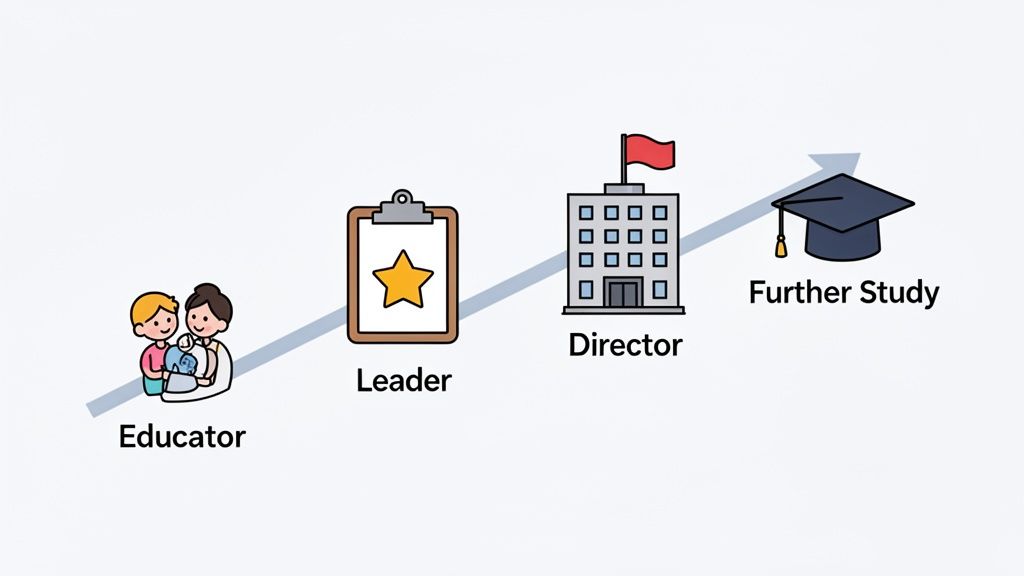
Finishing your diploma in early childhood education online isn’t the finish line—it’s the starting block for a career that’s as dynamic as it is rewarding. Think of this qualification as your launchpad into a sector brimming with chances to grow, lead, and find your niche.
This diploma is so much more than a piece of paper that qualifies you as an educator. It arms you with the advanced skills that leadership roles demand: designing curriculum, leading a team, and navigating the complex world of compliance. It’s the key that unlocks the door to real leadership opportunities.
Stepping into Leadership Roles
With your diploma in hand, you’re perfectly positioned to step up from an educator role into positions with more responsibility and influence. These are the roles where you get to shape a centre's educational direction, mentor other staff, and make a much bigger impact on the quality of care children receive.
Here are a few of the exciting leadership roles your diploma opens up:
- Centre Director: You're the captain of the ship. You’ll manage staff, handle budgets, ensure the centre meets the National Quality Framework, and be the key point of contact for families and the community.
- Educational Leader: This is a crucial role focused on the how and what of learning. You’ll be the one guiding the curriculum, mentoring your colleagues, and making sure the educational program is engaging, effective, and tailored to the children's needs.
- Family Day Care Coordinator: In this role, you support and supervise a network of educators running their own family day care services. You’re their go-to for ensuring they provide safe, high-quality, and compliant care from their own homes.
These positions don’t just come with a better paycheque; they offer the deep satisfaction of steering an entire learning community towards success.
Your diploma is your ticket to upward mobility. It tells employers you’ve got the ambition and the skills to manage a team, design a curriculum, and lead a centre to thrive.
A Foundation for University Studies
But why stop there? Your career path doesn't have to end with leadership roles inside a centre. The diploma is also a fantastic stepping stone into higher education, giving you a direct pathway to university.
Many graduates use their diploma to get into a Bachelor of Education (Early Childhood), often receiving credit for the units they've already completed. This can seriously cut down the time it takes to become a fully qualified early childhood teacher, which opens up jobs in preschools and even the early years of primary school.
To get a better sense of how it all connects, you can check out our guide on online early childhood education degrees.
This academic pathway lets you build on your practical, hands-on experience with deeper theoretical knowledge, creating a really powerful skill set. When you map it all out, it's clear that investing in your diploma gives you a fantastic return, setting you up for a long, successful, and genuinely fulfilling career.
How to Choose the Right Online Provider for You
Deciding where to study for your diploma in early childhood education online is a huge step. With so many colleges and RTOs out there, it's easy to feel a bit lost in all the options. A good way to think about it is like finding the right mentor for your career—you need a partner who gets what you're trying to achieve, offers the right kind of support, and has the resources to help you get there.
Not all online courses are cut from the same cloth. Some providers offer fantastic, hands-on support where you feel truly guided, while others are much more 'do-it-yourself'. The trick is to look beyond the slick marketing brochures and get into the nitty-gritty of what will actually impact your day-to-day study experience. A great provider doesn't just enrol you; they invest in your journey right through to graduation.
Key Factors to Evaluate in an Online Provider
Before you even think about signing up, it’s a smart move to create a personal checklist. This will help you compare different providers side-by-side and find the one that genuinely fits your life and learning style. Remember, you’re not just buying a qualification; you're teaming up with the people who will guide you into a rewarding new career.
Here are the absolute must-haves to look into:
- Tutor and Trainer Support: How easy is it to get hold of your trainers? Look for providers that give you multiple ways to connect, like phone calls, email, and even scheduled one-on-one video chats. Real support means having an expert you can actually talk to when you're stuck on a tricky concept.
- Learning Platform Usability: The online portal is going to be your classroom, so it needs to work for you. Is it simple to navigate, or is it a clunky, confusing mess? Always ask for a demo or a free trial to get a feel for the platform yourself.
- Work Placement Assistance: This one is a big deal. Does the provider have a dedicated team to help you find and lock in a suitable work placement? An RTO that actively helps with this critical part of the course can save you a mountain of stress and time.
The Right Questions to Ask Before Enrolling
Once you've narrowed it down to a few top contenders, it's time to put on your detective hat. Don't ever feel shy about picking up the phone and asking some direct questions. A good, transparent provider will be more than happy to give you straight answers.
Try asking things like:
- What kind of real-world industry experience do your trainers have?
- Can you walk me through the process for finding a practical placement in my local area?
- What’s the typical turnaround time for getting feedback on my assessments?
- Are there any online forums or groups where I can connect with other students?
Choosing the right online provider is the single most important step in ensuring your study experience is positive and successful. Your goal is to find an institution that offers more than just a login; you need a genuine support system that is committed to helping you cross the finish line with confidence.
The demand for qualified educators has never been higher. As Australia's online education market hit $12.2 billion, the sector has grown by a massive 6.9% since 2020. With long waitlists at centres across the country, skilled graduates are needed now. You can read more about 2025 early childhood education trends on LineLeader to see just how much the industry is growing.
Finding the right training partner ensures you gain job-ready skills to make a real difference in children's lives. And if you're still weighing up your options, check out our helpful guide on online diploma courses in Australia.
Frequently Asked Questions
It's completely normal to have a few questions swirling around when you're thinking about a new qualification. Let's tackle some of the most common ones we hear about the online Diploma of Early Childhood Education, so you can feel confident about what's ahead.
Can I Really Get a Job with an Online Diploma?
Yes, without a doubt. The CHC50121 Diploma of Early Childhood Education and Care is a nationally recognised qualification. Employers across Australia see it as the industry standard, and they don't distinguish between online or on-campus study.
What they do care about is practical experience. That’s why the mandatory work placement is a non-negotiable part of the course. It’s your chance to apply what you’ve learned and show future employers you’re ready to go from day one.
How Does the Practical Placement Work if I'm Studying Online?
This is where the 'blended learning' model really shines. While all your theory and assignments are done online at your own pace, the hands-on placement happens in a real-world early childhood centre.
A good provider won't leave you to fend for yourself. They have dedicated teams whose job it is to help you find and lock in a placement at an approved local centre. It’s the perfect mix of flexible online learning and essential, hands-on practice.
Think of it this way: your online course gives you the knowledge and the 'why,' but the placement is where you learn the 'how.' Both are critical, and a great online college will support you through it all.
Should I Do a Diploma or a Certificate III?
Great question. The right choice really hinges on your career ambitions.
- Certificate III (CHC30121): This is your ticket into the industry. It's the standard for becoming an assistant educator and is the perfect starting point to see if the sector is right for you.
- Diploma (CHC50121): This is a step up. It qualifies you for leadership positions like a Room Leader or even a Centre Director. You'll dive deeper into designing curriculums, managing compliance, and leading a team.
There's no wrong path here. Many people start with a Certificate III, get a feel for the work, and then go on to study the Diploma to open up more senior roles and responsibilities.
What Kind of Support Will I Get as an Online Student?
Studying online doesn’t mean you’re on your own. Far from it. Reputable providers have built-in support systems to make sure you never feel isolated.
You should expect a solid network of help, including:
- Your Own Trainers: You'll have direct access to experienced trainers and assessors via phone or email. They're your go-to when you're stuck on a topic or need feedback on an assessment.
- Student Communities: Most providers have private online forums or Facebook groups. They're a brilliant way to connect with classmates, swap stories, and help each other out.
- Tech Support: If the learning platform ever gives you trouble, a dedicated tech team is just a call or an email away to get you back on track quickly.
This web of support is there to guide you from the day you enrol to the day you graduate.
Ready to take the first step towards a truly rewarding career working with children? At Get Course Australia, we help you find the perfect online course from leading providers that fits your life and your goals.
Find your Diploma in Early Childhood Education and Care course now
Find Your Course
Compare courses across every field we write about, and enquire in under a minute.