What Does an Enrolled Nurse Do A Practical Career Guide
What does an enrolled nurse do? Explore the daily tasks, scope of practice, and career paths for Enrolled Nurses in Australia. Your complete guide is here.
So, what exactly is an Enrolled Nurse (EN)? In Australia, ENs are the healthcare professionals delivering vital, hands-on care to patients, working under the guidance of a Registered Nurse (RN). They're the ones you'll find at the patient's bedside, monitoring their condition, administering medications, and making sure they're safe and comfortable.
The Heartbeat of Australian Healthcare
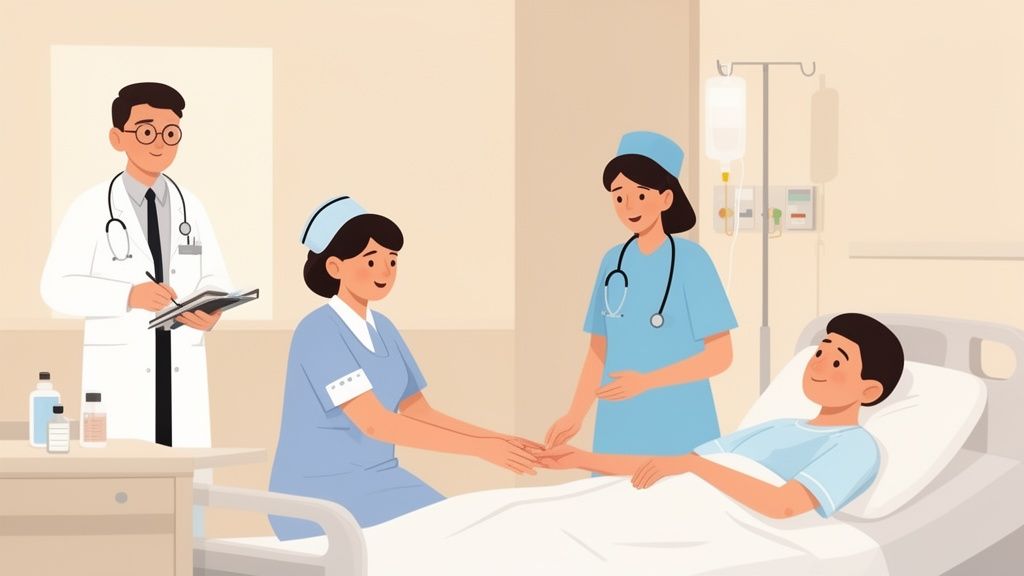
Think of a busy hospital ward like a finely tuned orchestra. The doctors might write the music—the overall treatment plan. The Registered Nurses act as the conductors, overseeing the entire performance and ensuring every part works together. And the Enrolled Nurses? They are the skilled musicians, playing their instruments with precision to bring the whole composition to life for each and every patient.
ENs are the professionals who turn a high-level care strategy into real, tangible actions. This crucial role connects the dots between a doctor's orders and the immediate needs of the person in the hospital bed. Without their constant presence and dedication, the whole healthcare system would grind to a halt.
A Direct Path to a Meaningful Career
The path to becoming an EN is one of the most practical and direct ways to get into the healthcare industry. It's a fantastic choice if you're looking for a qualification that leads straight into a job—especially for career changers who want to make a genuine difference without spending years at university.
The role itself is a unique blend of technical skill and profound human connection. One minute you could be performing a complex wound dressing, and the next, you’re offering a reassuring word to a nervous patient or their family. It’s this combination that makes being an EN so challenging, yet so incredibly rewarding.
An Enrolled Nurse is more than just a healthcare worker; they are a direct source of comfort, safety, and clinical support for patients at their most vulnerable. Their ability to deliver compassionate care while executing technical tasks is fundamental to positive patient outcomes.
This hands-on responsibility makes ENs absolutely indispensable. Their impact is felt everywhere, from bustling hospital wards and community health clinics to aged care facilities. It just goes to show you don't need the most senior title to make the biggest difference.
A Day in the Life of an Enrolled Nurse
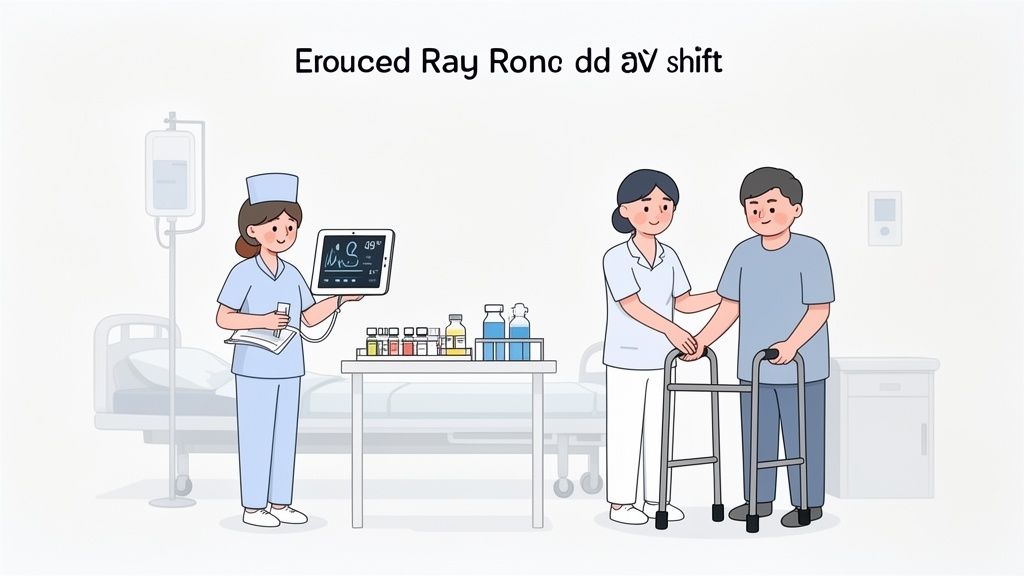
To really get a feel for what an Enrolled Nurse does, you need to imagine walking a shift in their shoes. It’s not about dramatic, life-saving moments from the get-go. It’s about the details. The day truly begins with the handover, a crucial briefing where the outgoing shift passes on every piece of vital information about each patient to the incoming team.
This handover sets the entire tone for the shift. An EN tunes in, absorbing every detail about medication timings, new observations, and any concerns that popped up overnight. This information is what shapes their priorities, helping them build a mental roadmap for the day. Right from this moment, the day becomes a constant blend of hands-on clinical skill and genuine human connection.
The Morning Patient Rounds
Once the handover wraps up, the practical work kicks in. First up is usually the morning rounds, which involves methodically checking in with every patient under their care. This is far more than just a quick “hello”; it's a fundamental part of the assessment process.
During these rounds, an EN carries out a series of core duties that lay the groundwork for the day's care. These first interactions are what nursing is all about—building trust and getting a clear picture of how each person is really doing.
Typical morning tasks often include:
- Monitoring Vital Signs: This means taking blood pressure, temperature, pulse, and oxygen readings to make sure everything is stable.
- Administering Medications: Carefully cross-checking prescriptions and dosages before giving patients their scheduled morning tablets or injections.
- Assisting with Hygiene: Helping people who need a hand with washing, dressing, and getting ready for the day, always with dignity and respect.
- Checking Mobility: Seeing how well a patient can move around and providing support with walkers or other aids if they need it.
But this isn't just about ticking boxes. A great EN uses this time to notice the small things—a slight grimace of pain, a new cough, or even a subtle shift in someone's mood. These observations are carefully documented because they’re the clues that help the entire healthcare team make the right decisions.
For an Enrolled Nurse, observation is an active skill. It's about seeing beyond the chart and connecting with the person, recognising that the smallest details often tell the biggest stories about a patient's health journey.
This cycle of assessing, doing, and documenting is what keeps patient care safe and responsive. Every single action, whether it's adjusting a pillow or giving an injection, is done with care and precision, all contributing directly to a patient’s comfort and recovery.
Responding to Clinical Needs
As the day unfolds, an EN's work becomes a dynamic mix of planned care and responding to whatever comes up. After the initial rounds, the focus might shift to more technical tasks that require a steady hand and sharp clinical judgement.
For instance, an Enrolled Nurse is often tasked with complex wound care. This involves carefully removing old dressings, cleaning the wound using sterile techniques, applying fresh dressings, and recording how it’s healing. It’s a meticulous job where precision is key to preventing infection and helping the body heal.
An EN's day-to-day work is also heavily influenced by their workplace, whether it’s a busy city hospital or a small rural clinic. Of the 41,600 Enrolled Nurses working in Australia, 59% are employed part-time, which offers a level of flexibility that appeals to many. They provide crucial care like mobility support and treatments under the guidance of an RN, averaging 32.2 hours per week—a schedule that can often support a better work-life balance. For a deeper dive into these employment trends, the data from Jobs and Skills Australia provides some fantastic insights.
What Can an Enrolled Nurse Actually Do? Understanding Your Scope of Practice

One of the first things you learn in nursing is the importance of professional boundaries. For an Enrolled Nurse (EN), this is all defined by your scope of practice—basically, a clear framework outlining what you're qualified and legally allowed to do. It’s not about limiting you; it’s about keeping patients safe and making sure everyone on the healthcare team knows their role.
The absolute cornerstone of the EN scope is that you always work under the direction and supervision of a Registered Nurse (RN). Now, this doesn't mean an RN is glued to your side 24/7. A better way to think about it is like a pilot and co-pilot.
The RN is the pilot, responsible for creating the overall patient care plan—the flight path. The EN is the skilled co-pilot, executing critical tasks, monitoring the patient’s condition, and making important contributions to keep everything running smoothly. It's a true partnership, and it's this collaboration that ensures patients get the best and safest care possible.
How Supervision Works in the Real World
Supervision in nursing is a flexible concept. It changes depending on the EN's experience, the complexity of the patient's needs, and the specific task at hand. This professional relationship is built on a foundation of trust and crystal-clear communication.
You'll generally come across two types of supervision on the floor:
- Direct Supervision: This is hands-on. The RN is physically there with you, either observing or working alongside you. It's most common when you're learning a new procedure, dealing with a particularly complex case, or in a high-stakes situation where you might need immediate backup.
- Indirect Supervision: This is the most frequent scenario. The RN is on the ward or easily contactable, but they aren't right there watching you. They've delegated a task because they're confident in your ability to handle it safely and competently on your own.
This system gives ENs the autonomy to get on with their work, all while having the safety net of senior clinical support just a call away. As you gain more experience, you'll find the level of supervision naturally evolves.
The scope of practice for an Enrolled Nurse isn't a restrictive cage. It's a professional framework that empowers you to provide safe, competent, and compassionate care as a vital part of the wider nursing team.
So, What Does an EN Do Day-to-Day?
Working within their scope, ENs are the backbone of patient care, handling a massive range of essential clinical duties in hospitals, aged care homes, and clinics all over Australia.
Here are some of the key responsibilities you'll have:
- Administering Medications: You’ll give patients a variety of prescribed medications, from oral tablets and injections to IV infusions, all depending on your specific training and workplace policies.
- Managing Wounds: This involves carrying out wound care plans set by the RN, performing complex dressings, and keeping a close eye on wounds for any signs of infection or progress.
- Monitoring Patients: A huge part of the job is taking and recording vital signs, checking blood sugar levels, and tracking other key health markers. You're the one who spots subtle changes and reports them back to the RN.
- Helping with Daily Living: You provide that crucial hands-on support with things like patient hygiene, moving around safely, and getting the right nutrition to feel comfortable and well.
Knowing Your Professional Boundaries
Just as crucial as knowing what an EN can do is knowing what falls outside your scope. These lines are drawn to ensure that the most complex clinical judgements are always made by the person with the most advanced training and accountability.
To get a clearer picture of how different qualifications shape nursing roles, it’s worth exploring the entire journey through nursing courses.
Enrolled Nurse vs Registered Nurse Key Distinctions
The roles of ENs and RNs are often confused, but their education and scope of practice create clear and important differences. The following table breaks down the key distinctions you'll find in any Australian healthcare setting.
Ultimately, these distinctions ensure a safe and tiered approach to patient care. Tasks that typically fall outside an EN’s scope include:
- Creating a patient's initial, comprehensive care plan.
- Performing the very first in-depth patient assessment on admission.
- Taking charge of an entire ward or a team of nurses.
- Giving certain high-risk IV medications without an RN directly supervising.
This structure guarantees that patient care is always led by the right professional, with ENs providing the skilled, hands-on support that is absolutely essential for recovery.
Where Enrolled Nurses Work in Australia

Once you qualify as an Enrolled Nurse (EN), you’re not locked into a single career path. Far from it. Your diploma opens doors to a huge range of healthcare settings all across Australia, from the high-tech corridors of a major city hospital to the familiar comfort of a patient's home.
This versatility is a massive advantage. It gives you the freedom to find a role that genuinely fits your personality and career ambitions. Whether you're energised by high-stakes situations or find fulfilment in building long-term patient relationships, there’s a place for you.
Hospitals: The Epicentre of Acute Care
When most people picture a nurse, they imagine a bustling hospital ward—and for good reason. Public and private hospitals are the biggest employers of Enrolled Nurses. They're dynamic, fast-paced environments where you’ll constantly use and sharpen your clinical skills.
Within a single hospital, the variety is incredible. ENs can work in all sorts of specialty areas, each bringing unique challenges and rewards.
- Surgical Wards: You'll be right there with patients before and after their operations, helping manage pain, changing wound dressings, and guiding them on the first steps to recovery.
- Medical Wards: Here, you might be looking after patients with ongoing conditions like heart disease or diabetes, focusing on managing their medications and teaching them about their health.
- Maternity Units: This is a chance to support new mums and their babies, assisting with postpartum care and providing that crucial early guidance.
- Emergency Departments: If you thrive under pressure, the ED is a high-energy environment where you’ll assist with immediate and often urgent patient needs.
Aged Care Facilities: Building Lasting Bonds
The aged care sector is another area where ENs are absolutely essential. This work is less about the quick turnaround of a hospital and more about building consistent, meaningful relationships with residents.
In an aged care setting, your role extends far beyond clinical duties. You become a trusted and familiar face in the residents' daily lives, providing not just medical care but also vital emotional support and companionship. It’s a career path that’s deeply rewarding for those with genuine empathy, as your work directly shapes a person's quality of life.
In aged care, an Enrolled Nurse is more than a clinician; they are a constant, a confidant, and a key figure in ensuring residents live with dignity, comfort, and respect. This work requires a unique blend of patience, skill, and genuine compassion.
Community and General Practice Settings
The work of an EN isn't just confined to hospitals and residential facilities. Many find their calling in community-based roles, where the focus shifts to preventing illness, promoting health, and supporting people in their own local environments. ENs are becoming more and more vital in community health, including providing specialised in-home nursing services.
Common community roles include:
- General Practice (GP) Clinics: Working alongside doctors, you could be giving immunisations, helping with minor procedures, and supporting patients to manage chronic conditions.
- Community Health Centres: These hubs focus on public health, offering everything from health screenings to local wellness programs.
- Disability Support Services: In this role, you provide specialised care that helps individuals with disabilities maintain their health and live independently.
Enrolled Nurses are a true cornerstone of Australia's healthcare system. Right now, there are 54,006 ENs registered and working across the country, delivering essential hands-on care. Their impact is particularly strong in aged care; one survey revealed that 64% of nursing staff respondents were ENs, showing just how critical they are in this high-demand sector.
Your Roadmap to Becoming an Enrolled Nurse
Thinking about a career in nursing is a big step, and thankfully, the path to becoming an Enrolled Nurse (EN) in Australia is very straightforward. It’s a journey that expertly blends classroom learning with the hands-on experience you’ll need to feel confident and capable in any healthcare setting.
The whole process really hinges on getting one key qualification. Once you have that under your belt, it’s all about putting your knowledge into practice and meeting the national standards for registration. Let’s walk through exactly what you need to do.
Step 1: Complete a Diploma of Nursing
First things first: you’ll need to complete a HLT54121 - Diploma of Nursing. This is the nationally recognised qualification that serves as your ticket into the profession. Typically, you can expect to finish it in about 18 to 24 months of full-time study.
This is where you'll build the solid foundation of your nursing knowledge. You’ll dive into essential topics like anatomy and physiology, learn the ins and outs of infection control, get comfortable with administering medication, and understand the legal and ethical rules that guide every nurse in Australia. For anyone coming from overseas, the first step is figuring out the requirements to study in Australia so you can enrol in one of these crucial courses.
Many TAFEs and colleges now offer flexible learning, which is a game-changer. You can often complete the theory parts online, fitting your studies around work, family, or whatever else you have going on. But while the theory is vital, the next step is where it all starts to click.
Step 2: Gain Hands-On Experience Through Clinical Placement
You can't learn nursing just from a textbook. That’s why the most important part of your Diploma of Nursing is the mandatory clinical placement. This is your chance to step into a real healthcare environment—like a hospital, aged care home, or a local clinic—and see how it all works.
During your placement, you’ll be working right alongside experienced Registered and Enrolled Nurses, taking what you’ve learned in class and applying it to actual patient care. It’s an incredibly immersive experience where you’ll build practical skills and, just as importantly, your confidence. You’ll be doing things like monitoring vital signs, helping patients with their daily needs, and dressing wounds, all under careful supervision.
Clinical placement is the bridge between knowing the 'what' and understanding the 'how'. It’s where you truly learn the art of nursing—communicating with real empathy, thinking on your feet, and becoming a valuable part of the team.
This practical training is absolutely essential; you can’t get registered without it. It ensures that when you graduate, you’re not just carrying a certificate—you’re a competent, safe, and effective nurse, ready to make a difference from day one. Some people might begin with a different course, so exploring the difference between a Certificate III and a Certificate IV in Nursing can help clarify the various pathways into the field.
Step 3: Apply for Your National Registration
You’ve done it! You’ve finished your Diploma of Nursing and completed all your clinical hours. Now for the final, crucial step. To legally work as an Enrolled Nurse in Australia, you have to register with the Nursing and Midwifery Board of Australia (NMBA).
The NMBA is the official body that regulates the profession, making sure all nurses and midwives meet the high standards needed for safe practice. The application process is thorough: you'll need to provide your qualification, prove you meet English language standards, and confirm you’re a suitable person to join the nursing profession.
Once your application gets the green light, you'll be officially registered and can proudly call yourself an "Enrolled Nurse." This registration is your professional licence to practise, a clear sign that you have met all the national requirements and are ready to start a truly rewarding career helping people across Australia.
What You Can Earn and the Skills You'll Need
Let's talk brass tacks. While becoming an Enrolled Nurse (EN) is incredibly fulfilling on a personal level, it’s also a smart, stable career move. Knowing what you can expect to earn and what skills you need to succeed will give you the full picture of this brilliant profession.
In Australia, an EN's salary isn't a one-size-fits-all number. It really depends on a few things: how much experience you have, which state or territory you’re working in, and whether you're in the public or private health system. Freshly qualified ENs start on a solid wage, and that figure climbs as you gain more experience and take on bigger responsibilities.
For a really detailed look at the numbers, we've put together a comprehensive guide on nurse salaries in Australia.
Beyond the pay cheque, the job outlook for ENs is fantastic. The healthcare and social assistance sector is one of Australia’s biggest and is set to keep growing, meaning skilled nurses will be in high demand for years. That’s a level of job security you just don’t find in every industry.
It's About More Than Just the Clinical Stuff
Sure, you need the technical know-how. But what separates a good EN from a great one is the blend of clinical skills and personal qualities. These are often called "soft skills," but there's nothing soft about them – they're what allow you to truly connect with patients, work seamlessly with your team, and handle the pressure with professionalism.
Think of it this way: the clinical skills are the what you do (giving medication, changing a dressing). The soft skills are the how you do it (the compassion you show, the clear way you explain things, the calm you bring to a chaotic moment). Employers are always on the lookout for people who have both in spades.
The best nurses I've ever worked with understood that healing isn't just about medicine. It's built on trust, clear communication, and a real human connection. Mastering these people skills is every bit as important as perfecting a clinical procedure.
Top Skills for Enrolled Nurses in Australia
To really shine as an EN, you need a well-rounded skillset. Employers want people who are not only clinically competent but also have the emotional intelligence to thrive in a demanding, patient-first environment. Here’s a rundown of the key skills that will make you a standout candidate.
Ultimately, a combination of these clinical and personal skills is what will make you a confident, capable, and highly sought-after Enrolled Nurse.
Your Top Questions About Becoming an Enrolled Nurse
Thinking about a career as an Enrolled Nurse is exciting, but it's completely normal to have a few questions buzzing around. To help you feel confident about your next steps, we've tackled some of the most common queries we hear from aspiring ENs right here in Australia.
How Long Does It Take to Become an Enrolled Nurse?
The most direct path is the Diploma of Nursing. If you can commit to full-time study, you’re looking at completing the qualification in about 18 to 24 months. That timeframe wraps up all your classroom learning and the essential hands-on clinical placements you'll need to get registered.
Life's busy, though, right? That’s why most providers also offer part-time options. It might take a bit longer, but it gives you the breathing room to juggle study with your job, family, or other commitments. It makes a nursing career achievable for almost anyone.
Can Enrolled Nurses Advance Their Careers?
Without a doubt. Starting as an Enrolled Nurse (EN) is a brilliant way to get into the healthcare sector, and it comes with clear, well-trodden paths for moving up. A lot of ENs eventually go on to study a Bachelor of Nursing to become a Registered Nurse (RN).
Think of your Diploma of Nursing as a powerful launchpad. Not only does it get you working in the industry quickly, but it also serves as a recognised credit towards a university degree, shortening your future study time.
Beyond becoming an RN, you can also specialise. Extra training in high-demand areas like aged care, mental health, or immunisation can unlock more senior roles and broaden what you're qualified to do, letting you take on more responsibility.
Is Nursing a Demanding Job?
Let's be honest: yes, nursing will push you. It's physically demanding – you'll be on your feet, helping patients move, and performing careful, hands-on tasks all shift long.
It’s also an emotional rollercoaster. You'll be right there with patients and their families during some of the most difficult times of their lives. While that can be tough, the reward is immense. Making a real, tangible difference every single day is a powerful feeling that keeps nurses passionate about what they do.
What Is the Difference Between an Enrolled Nurse and an Assistant in Nursing?
This is a really important distinction to understand. An Enrolled Nurse (EN) has completed a Diploma of Nursing and is officially registered with the NMBA. This qualification allows them to handle a broad range of clinical tasks, including administering medications (under the supervision of an RN).
An Assistant in Nursing (AIN), on the other hand, typically holds a Certificate III. AINs are absolutely vital, providing crucial support with daily activities like personal care and helping patients get around. However, their clinical scope is much narrower, and they don't administer medication.
Ready to take the first step toward a rewarding career in healthcare? Get Course connects you with flexible, nationally recognised Diploma of Nursing courses from leading Australian providers. Explore your study options and find the perfect pathway to becoming an Enrolled Nurse today.
Find Your Course
Compare courses across every field we write about, and enquire in under a minute.