Complete Guide: how to become a disability support worker and start your career
Your roadmap on how to become a disability support worker: essential qualifications, checks, and tips to land your first role.
So, you're thinking about a career in disability support? That's fantastic. It’s one of the most stable and genuinely rewarding fields you can enter in Australia right now, and it all starts with the right qualification. The most common launching pad is a Certificate III in Individual Support (Disability), which gives you the core skills to step into an entry-level role with confidence.
Your Path to a Rewarding Career
Thinking about how to become a disability support worker isn't just about a job—it’s about choosing a path defined by purpose and connection. Every single day, you get the chance to empower someone, helping them hit their personal goals, grow their independence, and get more involved in their community. It’s a career where your patience, compassion, and creative thinking directly improve someone's quality of life.
A Sector with Unprecedented Growth
Let's talk numbers, because they tell a powerful story. The demand for skilled and caring support workers in Australia has never been higher, thanks in large part to the National Disability Insurance Scheme (NDIS). This isn't just a temporary spike; it’s a long-term expansion creating thousands of stable jobs.
The role of 'Aged and Disabled Carers' now accounts for a massive 360,600 workers in Australia—that's 2.55% of the entire workforce. To put that in perspective, this number has jumped from just 237,088 in 2021. With 1 in 6 Aussies living with a disability, the need for qualified professionals is only going to grow. You can dig deeper into the data on Australia's disability services workforce planning to see the full picture.
What This Guide Will Cover
My goal here is to give you a clear, no-nonsense roadmap. We’ll cut through the jargon and lay out the practical steps to get you started.
Here’s what you’ll get:
- The Right Qualifications: We'll look at the Certificate III and Certificate IV pathways to help you figure out the best starting point for your goals.
- The Essential Checks: I'll walk you through the non-negotiables, like the NDIS Worker Screening Check and First Aid certifications.
- Getting Real-World Experience: We'll cover why practical placements are so crucial for turning what you learn in a course into real-world skills.
- Landing Your First Role: You'll get practical tips for writing a resume that gets noticed and acing the interview.
This career is a perfect fit if you're a natural problem-solver, a great listener, and someone who genuinely enjoys championing others. It's for people who want their work to truly mean something.
By the time you're done with this guide, you'll have a complete picture of what it takes—from choosing an online course that works for you to confidently stepping into your first role. Let’s get started.
Choosing the Right Qualification for Your Goals
Alright, let's get down to the first real step in your journey: picking the right qualification. This isn't just about getting a piece of paper; it’s about building the foundation for your skills, your confidence, and the kinds of jobs you'll be able to land.
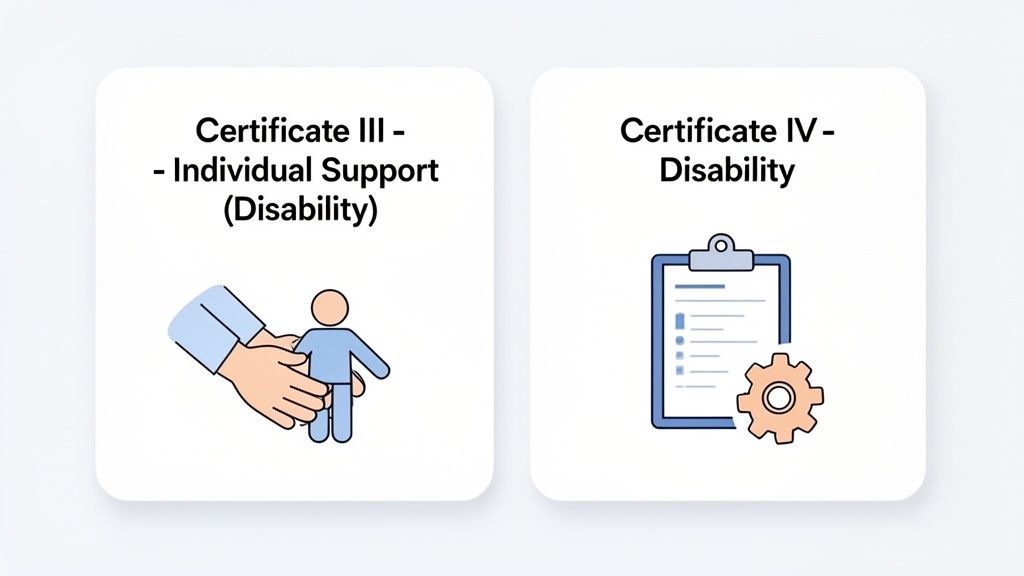
For most people starting out in Australia, the choice usually boils down to two key VET qualifications.
The most common starting point, and for good reason, is the Certificate III in Individual Support (Disability). Think of this as the essential toolkit for the industry. It's built to give you the core, hands-on skills you need to be effective in a frontline support role from day one.
The other main option is the Certificate IV in Disability. This one takes things a step further, building on the fundamentals to prepare you for roles with more responsibility, where you might be handling more complex support needs or even leading a team. Which one you pick really just depends on your own career goals and where you're at right now.
Certificate III: The Strong Foundation
If you’re looking for the most direct path into an entry-level job, the Certificate III in Individual Support (with a disability specialisation) is it. The course is all about the practical, day-to-day skills you’ll be using when you're working directly with people. It’s perfect for career changers or anyone new to the care sector who wants to build a really solid base of knowledge.
You’ll get across things like:
- Providing person-centred support: This is a huge one. It’s all about putting the individual's own choices and goals at the very centre of everything you do.
- Following safe work practices: You'll cover the essentials like safe manual handling and infection control to keep both yourself and your clients safe.
- Supporting independence and wellbeing: This means learning practical ways to help people with daily living, getting out into the community, and kicking their own personal goals.
- Recognising healthy body systems: A basic understanding of how the body works helps you better support individuals with their physical health.
A graduate with a Cert III is ready to jump in and help someone with their morning routine, assist with meals, provide transport to an appointment, or support them at a local art class—all while championing their independence.
The Bottom Line: The Certificate III is all about mastering the 'how' of direct support. It’s practical, client-focused, and gives you the confidence to step into your first role and make a real difference.
Certificate IV: The Next Step Up
Maybe you've already got some experience under your belt, or you’re aiming high for a role with more autonomy and leadership. If that sounds like you, then the Certificate IV in Disability is a smart move.
This course digs much deeper into the complexities of the disability sector. It’s really designed for people who see themselves coordinating services, managing more complex situations, or taking on a supervisory role within a support team.
With a Cert IV, you’ll be able to:
- Facilitate the empowerment of people with disability: This moves into more advanced strategies for advocacy and developing detailed person-centred plans.
- Work with diverse people: You’ll explore how to support people with complex needs, co-existing conditions, and different communication styles.
- Coordinate services for clients: This is about learning the logistics of working with other health professionals and managing NDIS plans to ensure a person has a strong support network.
- Provide leadership and supervision: Some units focus specifically on mentoring other support workers and leading a team to get great results for clients.
Someone with a Cert IV might be tasked with creating a new community program, training new staff, or being the main point of contact for a client with very complex support needs.
Comparing Key Disability Support Qualifications
To help you decide, let's lay it out side-by-side. Thinking about where you are now and where you want to be in a few years is the best way to figure out your next step.
Flexible online courses have made it so much easier to get qualified, even if you’re juggling work or family. You can tackle the theory in your own time before doing the mandatory practical placement that brings all your learning to life.
For a more detailed look at what's involved, our complete guide to individual support courses has you covered. Ultimately, both qualifications lead to an incredibly rewarding career—the best one is simply the one that fits your personal and professional goals right now.
Getting Your Paperwork in Order: Essential Checks and Certifications
Before you can start making a difference in someone's life, there are a few non-negotiables you need to sort out. Think of these as your professional passport into the care industry. They're not just bureaucratic hoops to jump through; they are crucial safeguards that protect clients, build trust with employers, and prove you have the foundational skills for the job.
Getting these checks and certifications sorted early shows employers you're serious and ready to go. Let's break down exactly what you’ll need.
The National Police Check
This one’s a standard across the board. A National Police Check gives employers a look at any disclosable criminal history from any state or territory in Australia. It’s a fundamental part of their duty of care, helping them recruit people they can trust.
You’ll need to provide some ID, like a driver’s licence or passport, to apply. You can get one through your state police force or an accredited agency. Most checks are considered valid for 12 months, but don't be surprised if some workplaces ask for a more recent one.
The NDIS Worker Screening Check
If you're planning to work with NDIS participants—and most disability support roles do—this check is an absolute must. It might sound like a police check, but the NDIS Worker Screening Check goes much deeper. It looks at your whole background, including criminal records and any workplace misconduct, specifically assessing any potential risk to people with disability.
Here’s why it’s different:
- It’s purpose-built: The screening is designed from the ground up to protect NDIS participants.
- It’s national: Once you’re cleared, that clearance is valid with any NDIS provider, anywhere in Australia.
- It’s always on: Unlike a police check that’s a snapshot in time, the NDIS check involves ongoing monitoring. Authorities are flagged if any new, relevant police information comes up about you.
You'll apply for this through your state or territory government agency. A clearance is generally valid for five years, but it's your employer's job to make sure you're always current.
The NDIS Worker Screening Check is more than just paperwork. It’s a national promise to keep the scheme safe for every single person who relies on it.
First Aid and CPR Certification
Picture this: you're with a client, and they suddenly start choking or have a fall. Knowing what to do in those first few moments can change everything. That's precisely why up-to-date First Aid and CPR certificates are non-negotiable in this line of work.
These hands-on courses give you the confidence to:
- Stay calm and act decisively in an emergency.
- Perform CPR or use a defibrillator if needed.
- Handle common injuries like burns, sprains, or cuts.
- Spot the signs of a stroke or heart attack and get help fast.
You’ll need to complete a nationally recognised course like HLTAID011 Provide First Aid, which covers the CPR component (HLTAID009 Provide Cardiopulmonary Resuscitation). Remember, the main First Aid certificate lasts for three years, but the CPR part needs to be refreshed every single year.
Other Things That Will Put You Ahead
Beyond the mandatory stuff, a couple of other things can make a huge difference to your job prospects. A valid driver’s licence is a big one. Many support roles involve driving clients to appointments or helping them get out into the community, so having your own reliable car and a clean record can open up a lot more doors.
Also, if you plan on working with children or teens, a Working with Children Check (WWCC) is essential. It's a separate check from the police check and is legally required for any child-related work. The rules vary a bit between states, so double-check what's required where you live. Having these ready to go shows employers you’re organised and proactive—exactly the kind of person they want to hire.
Turning Theory into Real-World Experience
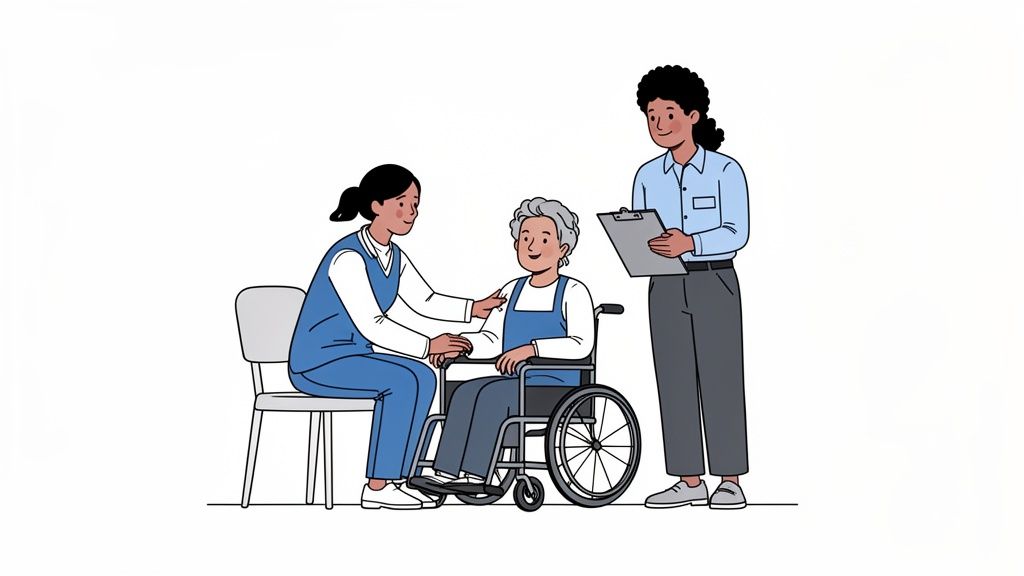
While your TAFE or VET course gives you a brilliant foundation, the real learning happens when you step out of the classroom and into a support environment. This is where your mandatory work placement comes in. It’s where the theory you’ve studied finally clicks into place, and you see how textbook concepts become genuine, person-centred care. Honestly, it's the most vital part of your training.
This hands-on experience, which is usually around 120 hours for a Certificate III, is your chance to build real confidence and refine your skills. You’ll get a true feel for the day-to-day realities of the job, working alongside experienced professionals, watching how they do things, and gradually taking on tasks yourself under their guidance.
What to Expect During Your Placement
Your work placement isn’t about watching from the sidelines. It's an active, immersive learning experience. You could find yourself in a residential group home, a community day program, or even providing in-home care.
At first, you’ll likely shadow a seasoned support worker, getting to know the specific routines, communication styles, and unique personalities of the people they support. Before you know it, you'll be providing direct assistance yourself. This could involve things like:
- Helping with daily living tasks like preparing meals or assisting with personal care.
- Supporting someone to get out into the community, like joining them for a trip to the local library or a doctor’s appointment.
- Chatting with team members and contributing to daily handovers and progress notes.
- Putting the safe work practices you learned in class, like manual handling techniques, into action.
Think of your placement as the perfect place to ask all your questions, learn from mistakes in a safe environment, and see firsthand how the NDIS Code of Conduct plays out in everyday situations. Soak it all in.
Turning Your Placement into a Job Offer
It’s incredibly common for support workers to land their first job with their placement provider. It happens all the time. When a student shows real initiative, empathy, and a genuine desire to learn, they make themselves indispensable.
If you want to make an unforgettable impression, zero in on these areas:
- Build Genuine Rapport: Really listen to clients and get to know their preferences. Show them respect and treat them as individuals, not just a list of tasks to get through.
- Be Proactive and Reliable: Show up on time, follow instructions to the letter, and always look for ways to help without being asked. A positive, can-do attitude speaks volumes.
- Communicate Effectively: Keep your supervisor in the loop, ask for feedback on your progress, and show everyone you're a team player they can count on.
The personal welfare services industry, which is where disability support sits, has grown into a $43.2 billion market here in Australia, fuelling massive job growth. It's a flexible sector, too—the average support worker clocks in 22.7 hours per week, which is perfect if you're balancing other life commitments. With NDIS reforms bringing more participants into the scheme, the demand for qualified, passionate workers has never been higher.
Fast-Tracking Your Journey with RPL
What if you already have a background in care? Maybe you've been a carer for a family member with a disability or have experience in a related field like aged care or youth work. If that sounds like you, then Recognition of Prior Learning (RPL) could be a game-changer.
RPL is simply a formal assessment process that gives you credit for the skills and knowledge you've picked up through life and work. Instead of sitting through units you’ve already mastered, you can provide evidence of your competence and get it signed off.
This can seriously cut down your study time and costs. If you think you have relevant experience, it’s absolutely worth looking into whether you can fast-track a qualification like a Certificate III in Individual Support (Ageing and Disability) and get into the workforce much sooner.
How to Land Your First Support Worker Job
You’ve got the qualification and your checks are all sorted. Now for the exciting part—turning all that hard work into your very first paid role as a support worker. This is where you bring your training and placement experience to life, showing employers you’re the caring, competent, and reliable person their team needs.
The good news? You’re stepping into a field that desperately needs fresh talent. NDIS providers across Australia are facing significant recruitment challenges, so new disability support workers are in high demand.
Many roles kick off as casual positions, often through agencies. This can be a fantastic way to get your foot in the door, gain a wide range of experience, and see what kind of work environment suits you best. While the demand puts you in a strong position, you still need to present yourself professionally to secure the best opportunities.
Crafting a Resume That Stands Out
Even if this is your first formal job in the sector, your resume can be packed with relevant skills. The trick is to shift the focus away from a typical work history and towards the abilities that make a great support worker.
Think of your resume as more than just a list of tasks; it's your highlight reel.
Start with a powerful summary statement instead of a generic objective.
- Before: "Seeking a position as a disability support worker."
- After: "Compassionate and dedicated Certificate III graduate with 120 hours of hands-on placement experience in a community residential setting. Skilled in person-centred support planning, safe manual handling, and building rapport with clients to promote independence and achieve NDIS goals."
Right at the top, create a "Key Skills" section that lists both your practical skills and your personal qualities. This is what hiring managers scan for.
- Practical Skills: NDIS Code of Conduct, Person-Centred Support, Manual Handling, First Aid & CPR, Basic IT for Documentation.
- Personal Qualities: Empathy, Patience, Active Listening, Problem-Solving, Team Collaboration, Communication.
To really make your application pop, it's worth looking at some effective student resume templates with real examples that show you how to structure this information clearly.
Nailing the Interview Process
Interviews for support worker jobs are less about what you know and more about who you are. Employers want to see your values in action. They’ll ask questions designed to test your judgement, empathy, and your gut-level understanding of core principles like the dignity of risk.
You’ll almost certainly get hit with a few scenario-based questions. They aren't meant to trick you; they’re a window into your thought process. For instance, they might ask, "A client you support insists on going to the shops alone, but you're concerned about their safety crossing a busy road. What do you do?"
There isn’t a single ‘correct’ answer. What they’re listening for is how you talk through the problem:
- Respecting Choice: You’d start by acknowledging the client's right to make their own decisions.
- Assessing Risk: Then, you’d gently bring up the specific concern—the busy road.
- Collaborative Problem-Solving: From there, you could brainstorm solutions together. Could you practise the route? Find a quieter crossing? Maybe go with them the first few times?
- Documentation: You’d wrap up by mentioning that you would document the conversation and the outcome in the client’s progress notes.
The best interview answers always come back to person-centred care. Frame your response around empowering the client and respecting their goals, all while keeping their safety and wellbeing at the forefront.
Getting comfortable with these types of questions is key to walking in with confidence. For more great advice, take a look at our guide on job interview tips and tricks that will help you succeed.
Understanding Your Employment Options
The disability support world offers a few different work environments, each with its own vibe. Knowing the difference can help you focus your job search on what fits you best.
- Large Organisations: These providers usually have solid training programs, clear career paths, and the stability of a big team. You'll likely work with a diverse range of clients and have plenty of colleagues to learn from.
- Small, Local Providers: Working for a smaller agency can feel more like being part of a family. You often have a closer relationship with management and more consistency with the clients you support.
- Working Directly for a Participant: Some people on the NDIS self-manage their funds and hire their own support workers. This setup offers a lot of autonomy and the chance to build a deep, one-on-one professional relationship.
Don’t be afraid to try a few things out. Agency work, in particular, is a brilliant way to sample different environments before you decide to settle into a permanent role. Whichever path you choose, you're starting this journey at the perfect time.
Your Top Questions About Becoming a Support Worker, Answered
Thinking about a new career is exciting, but it always brings up a few questions. And when that career is as hands-on and important as disability support, you want to make sure you have the full picture.
Let's walk through some of the most common queries I hear from people starting out. My goal is to give you clear, practical answers so you can feel confident about taking that next step.
Do I Really Need a Formal Qualification to Get Started?
This is a big one. While you might occasionally spot an assistant role that doesn't ask for a certificate upfront, the reality on the ground has changed. Reputable employers, especially those working within the NDIS framework, almost always require a nationally recognised qualification.
Think of it this way: a Certificate III in Individual Support (Disability) is your key to the door. It’s solid proof that you understand the essentials of safety, ethics, and person-centred care. It doesn't just make you a stronger candidate—it gives you the confidence and skills to provide high-quality, safe support from day one.
How Long Does It All Take?
The journey to becoming a qualified support worker is more of a marathon than a sprint, but it's a very achievable one. How long it takes really depends on how you choose to study. If you opt for a flexible online course, a Certificate III in Individual Support (Disability) typically takes between 6 to 12 months.
That timeframe covers your coursework plus the crucial 120-hour work placement, which is where everything you've learned clicks into place in a real-world setting.
Don't forget to factor in a little extra time for the essential checks:
- National Police Check: This is usually pretty quick, often coming back within a couple of weeks.
- NDIS Worker Screening Check: This one can take a bit longer, so it’s a smart move to get the ball rolling early.
- First Aid Certificate: You can knock this over in a day or two.
For most people juggling work or family, wrapping everything up within a year is a totally realistic goal. It allows for a steady, well-prepared transition into your new career.
The Bottom Line: You won't be qualified overnight, but the path is clear. With a bit of planning, you can be skilled up and ready for a job in a high-demand sector in less than a year.
What Kind of Person Makes a Great Support Worker?
Your certificate will get you the interview, but your personal qualities will make you truly brilliant at this job. You can teach someone the technical skills, but the right character and attitude are what really make a difference.
From my experience, the people who thrive in this role are those who naturally have:
- Real Empathy and Compassion: It’s all about the ability to connect with people on a human level, see things from their perspective, and genuinely show you care.
- Patience and Resilience: Some days will be challenging. A calm, patient approach and the ability to bounce back are absolutely essential.
- Great Communication Skills: This is as much about listening as it is about talking. Building trust and truly understanding someone's needs starts with being an exceptional listener.
- Rock-Solid Reliability and Integrity: People are literally counting on you. Being dependable, honest, and fiercely protective of privacy are non-negotiable.
These aren't just buzzwords; they are the absolute foundation of building strong, trusting, and professional relationships with the people you support.
What Can I Expect to Earn?
Let's talk money—it’s a practical and important part of any career decision. In Australia, wages for disability support workers are set by the Social, Community, Home Care and Disability Services (SCHADS) Industry Award.
Your pay packet will vary based on your qualifications, your experience, and the shifts you work. A huge plus is that the award includes penalty rates for evenings, weekends, and public holidays, which can give your income a healthy boost.
To give you a ballpark figure, a new casual support worker can generally expect to earn between $30 and $35 per hour. As you gain experience and add to your qualifications, that rate naturally goes up. With such high demand for skilled workers right now, you'll find many organisations offer competitive pay to attract and keep good staff.
Ready to take the first step towards a career that truly matters? At Get Course Australia, we make it simple to find and compare flexible online courses that fit your life. Explore nationally recognised qualifications from leading providers and get the job-ready skills you need to make a real difference. Find your perfect disability support course today.
Find Your Course
Compare courses across every field we write about, and enquire in under a minute.