Your Guide to a Diploma in Digital Marketing in Australia
Explore how a diploma in digital marketing can launch your career. Learn about course content, job outcomes, salaries, and how to choose the right provider.
Think of a Diploma in Digital Marketing as your all-access pass to one of Australia’s fastest-moving industries. It’s not just a piece of paper; it’s a hands-on training program designed to get you job-ready, fast, by focusing on the real-world tools and strategies that businesses depend on every single day. This is a nationally recognised qualification that offers a depth of learning you simply won't find in a short online course.
What a Diploma in Digital Marketing Really Offers You

So, what makes a diploma different from a traditional university degree? While a degree often spends years on theory, a diploma throws you straight into the deep end - in a good way. From day one, you’re immersed in the practical side of digital marketing. It’s built for action, giving you the exact skills you need to manage everything from a Google Ads campaign to a buzzing social media content calendar.
The whole point is to close the gap between knowing about marketing and actually knowing how to do it well.
A Bridge to a Thriving Industry
Let’s be clear: the demand for skilled digital marketers in Australia is exploding. This qualification is your direct response to that demand. It’s structured to produce graduates who can walk into a new role and start making a real impact from their first week. You’ll learn the ‘why’ behind the strategy, but more importantly, you’ll master the ‘how’ of getting it done. This practical focus is what employers are crying out for.
The numbers don't lie. Australia’s digital marketing scene is currently valued at around AUD 21 billion and is forecast to rocket to over AUD 37 billion by 2034. This kind of growth shows just how much businesses need qualified people to steer the ship. For a deeper dive, you can read more about the growth of Australia’s digital marketing market and check out the full report.
From Theory to Practical Mastery
A good diploma follows a structured curriculum that builds your expertise one skill at a time. This isn't about rote-learning definitions from a textbook; it’s about getting your hands dirty creating, managing, and optimising actual campaigns. You’ll be working with the same software and platforms that top agencies and brands use every day.
Think of a Diploma in Digital Marketing as less of a lecture and more of a hands-on apprenticeship. It’s designed to give you the confidence to not just talk about marketing strategies, but to actually build them, run them, and get results.
A Quick Overview
To give you a clearer picture, let's break down what a Diploma in Digital Marketing typically includes.
This table gives you a snapshot, but the real value is in how these elements come together to create a direct pathway into the industry.
Key Features of the Diploma
Here’s a closer look at what you can expect to get out of the program:
- Practical Skill Development: You’ll gain real, hands-on experience in the pillars of digital marketing: SEO, social media, content creation, email automation, and paid advertising (PPC).
- Industry-Relevant Tools: The curriculum is built around the essential software you'll be expected to know, like Google Analytics, social media scheduling tools, and major email marketing platforms.
- A Nationally Recognised Qualification: When you graduate, you’ll have an official qualification that employers across Australia respect. It’s a powerful signal that you have proven skills and knowledge.
- Direct Career Pathways: The entire course is designed to get you into the workforce. It prepares you for common entry-level and coordinator roles, providing a clear and direct launchpad for your career.
The Core Skills You Will Actually Use
A diploma in digital marketing is all about getting your hands dirty with the practical, in-demand skills that employers are desperate for. This isn't just about learning what ‘SEO’ means; it’s about knowing exactly how to get a business found on Google by the right customers, at the very moment they’re ready to pull out their wallet.
This is where you move from theory to practice. Instead of just reading about ‘PPC’, you’ll be building real ad campaigns that turn clicks into loyal customers. Think of every skill you pick up as another tool for your professional toolkit, ready to deliver real results for a business.
Mastering Search Engine Optimisation
Search Engine Optimisation (SEO) is really the art and science of being seen online. It’s all the work that goes into making a website more appealing to search engines like Google. When you get it right, your client's website pops up at the top of the search results, bringing in a consistent flow of high-quality traffic - for free!
You’ll learn how to dig into keyword research to figure out what your audience is actually typing into that search bar. From there, you'll get into on-page SEO to make sure the website's content is spot-on, and technical SEO to keep everything running smoothly behind the scenes. This one-two punch is the secret to long-term, sustainable growth.
Creating Compelling Content and Email Strategies
Content is the lifeblood of any good marketing plan. During your diploma, you'll learn how to build a content strategy that speaks directly to a target audience's problems and interests. This is so much more than just writing blog posts; it’s about creating engaging videos, slick infographics, and social media updates that build trust and establish authority.
The real aim of great content isn’t just to pull in an audience; it’s to build a dedicated community. You’ll learn to craft messages that truly connect, turning casual readers into enthusiastic brand fans who share and engage with your work.
Email marketing is another huge piece of the puzzle. You’ll get to grips with building and segmenting email lists, creating automated messages that nurture potential customers, and designing campaigns that drive sales. A smart email strategy is still one of the most powerful ways to build a direct, personal relationship with your audience.
Driving Results with Paid Advertising and Social Media
When you need results fast, paid advertising, or Pay-Per-Click (PPC), is where you turn. You’ll get comfortable using platforms like Google Ads and Meta Ads to create laser-focused campaigns that reach specific groups of people with pinpoint accuracy. This involves everything from writing killer ad copy and managing budgets to poring over the data to get the best bang for your buck.
And of course, there’s social media marketing. This is where a brand’s personality really comes to life and where you connect with its community.
- Strategic Planning: You'll figure out how to choose the right platforms for the right audience - whether that’s Instagram for visual brands, LinkedIn for B2B connections, or TikTok for reaching a younger crowd.
- Campaign Execution: This covers creating content schedules that keep people engaged, running targeted ad campaigns, and managing the day-to-day community interactions that build a positive brand image.
- Influencer Collaboration: To really make an impact today, you need to know how to work with influencers. A big part of that is using the right essential influencer marketing tools to manage campaigns and track your results.
Social media advertising is a massive industry in Australia. In fact, ad spending on social platforms is projected to hit AUD 7.5 billion, making up nearly a third of all digital ad spending in the country. This just goes to show how central platforms like Facebook and Instagram are to any modern marketing strategy.
Analysing Data and Measuring Success
At the end of the day, none of this matters if you can't measure what’s working. Data analytics is the skill that pulls everything together. You’ll learn to use tools like Google Analytics to track website traffic, see how people are behaving on the site, and figure out which marketing channels are actually bringing in the bacon.
This is what allows you to stop guessing and start making smart, data-driven decisions. By learning to read the numbers, you can constantly tweak and improve your strategies, prove your value to your boss, and show a clear return on every marketing dollar spent. To dive deeper into different areas of expertise, check out our guide on the most popular digital marketing courses.
What Can You Do (and Earn) After You Graduate?
Finishing your diploma in digital marketing is a huge achievement, but it’s really just the beginning. The next, most exciting step is to take all that knowledge and turn it into a career you love. This qualification isn't just a piece of paper; it's your ticket into the core of how modern businesses grow, where your ability to drive online results is gold.
Graduates are primed to step into roles that are the lifeblood of any company's marketing efforts. These aren't just nine-to-five jobs. They're real opportunities to build a brand’s story, connect with customers on a massive scale, and see the direct impact of your work on the bottom line. You become the go-to expert who knows how to cut through the noise online.
Common Roles for Diploma Graduates
The great thing about the skills you'll learn is their flexibility. You can choose to become a specialist in one area or take on a broader role that touches on everything. Straight out of the gate, many graduates land coordinator or specialist positions - perfect for getting your hands dirty and building up that crucial real-world experience.
Here are a few of the most common paths you can take:
- Digital Marketing Coordinator: This is often the perfect first step. Think of yourself as the marketing all-rounder, helping to run campaigns across SEO, social media, and email, and then reporting back on what worked. It's a fast-paced role where you learn how all the different parts of the marketing machine work together.
- SEO Specialist: If you got a kick out of figuring out how to get a website to the top of Google, this one's for you. As an SEO Specialist, you'll spend your days hunting for the right keywords, fine-tuning website content, and building links to climb the search rankings and pull in valuable organic traffic.
- Social Media Manager: Are you a natural storyteller who loves building communities? This role is all about creating brilliant content, engaging with followers, running paid social ads, and growing a brand's online personality.
Each of these roles allows you to put the theory from your diploma into practice from day one, solving real business challenges.
The diagram below breaks down how it all fits together. A solid strategy is the foundation, which then informs the three key pillars of any successful digital presence.
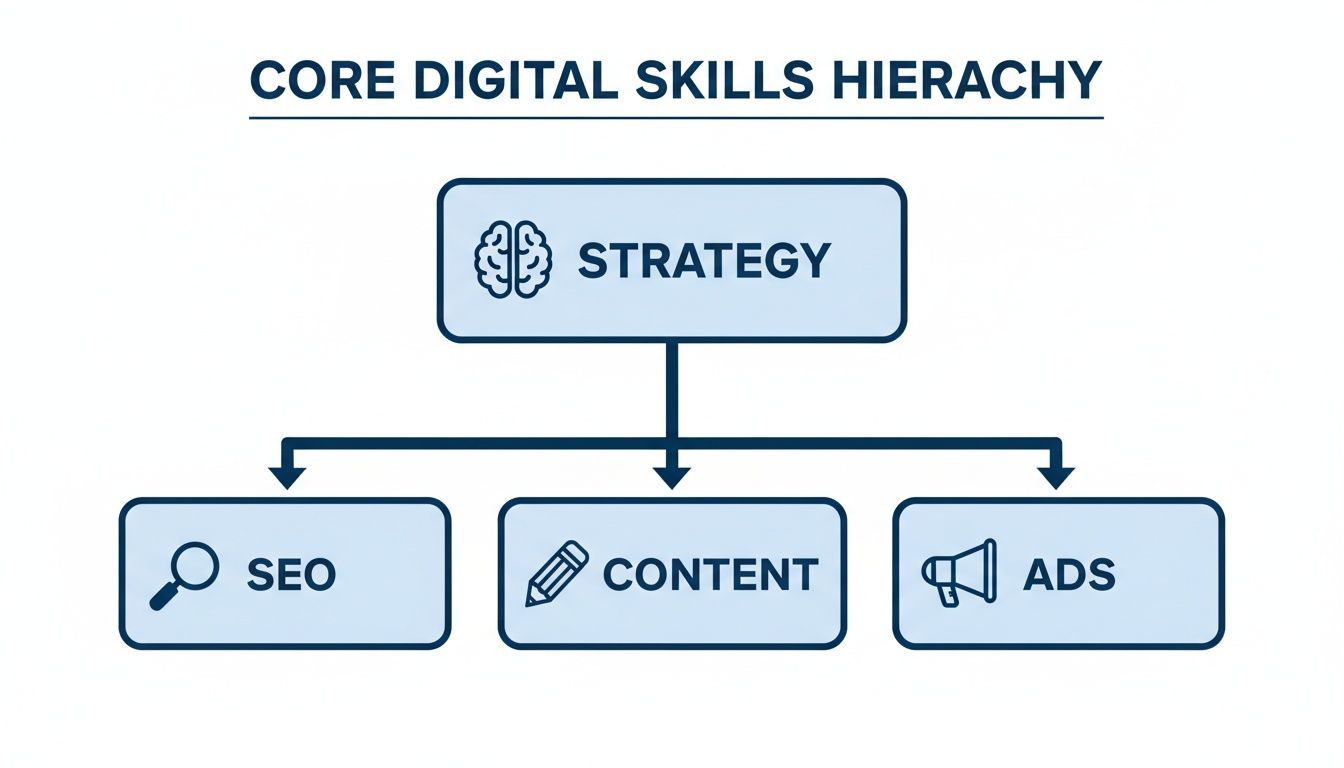
As you can see, a strong strategic brain - something your diploma helps you develop - is what holds everything together. It’s the key to making SEO, content, and advertising work in harmony.
What to Expect for Your Salary
Let's talk money. It's one of the most important questions, right? Your diploma gives you a tangible return on investment by making you a prime candidate for well-paid, sought-after roles.
Salaries will always vary a bit depending on your city, the size of the company, and your unique skills, but there are some solid benchmarks for what you can expect to earn in Australia.
Having a diploma in digital marketing on your resume is a massive advantage. It tells employers you have the practical, job-ready skills to hit the ground running, which often translates to a higher starting salary than someone without a formal qualification.
Potential Digital Marketing Roles and Salary Ranges in Australia
To give you a clearer picture, here’s a look at some common jobs for diploma graduates and what you can expect to earn as you start and grow in your career.
As you can see, your earning potential grows significantly as you build experience and specialise. For a deeper dive, check out our full guide on how much a digital marketing associate earns in Australia.
And the growth doesn't stop there. The digital world is always evolving, and staying ahead of the curve pays off. For example, a professional skilled in leveraging AI for ads as a User Acquisition Manager can earn even more due to their highly specialised expertise. This shows that in digital marketing, continuous learning is directly linked to bigger and better career opportunities.
How to Choose the Right Course Provider for You

Deciding where to study for your diploma in digital marketing is a massive step - just as important as choosing the qualification itself. Let's be honest, not all courses are the same. The right provider can be the difference between simply getting a certificate and actually launching a successful career.
Think of it like picking a personal trainer. You wouldn't just go for the one with the flashiest gym. You'd want someone with a track record, who gets your goals and has a plan to get you there. Your education provider is your career trainer, so it really pays to do your homework.
Online or On-Campus Study
First up, you need to decide how you want to learn. There’s no single "best" way; it all comes down to what fits your life, your learning style, and your other commitments.
Online Learning: This is all about flexibility. If you're juggling a full-time job, family, or other responsibilities, online study lets you fit everything in on your own terms. It’s perfect if you're a self-starter who’s comfortable learning from anywhere in Australia.
On-Campus Learning: Prefer a more traditional setup? On-campus gives you that structured classroom environment with direct, face-to-face time with trainers and classmates. It’s a great fit for anyone who thrives on a set schedule and in-person discussions.
Blended or Hybrid Models: Some providers offer a mix of both worlds, combining the convenience of online modules with occasional on-campus workshops. It can be a fantastic way to get structure and support without sacrificing all your flexibility.
What to Look for in a Quality Provider
Once you know your preferred study mode, it’s time to dig into the providers themselves. Look beyond the slick marketing and focus on what really matters for your education. A quality diploma should be built around the skills that employers are actually hiring for.
For example, Search Engine Optimisation (SEO) skills are in massive demand here in Australia. Businesses are tipped to spend around AUD 1.5 billion on SEO services alone, purely because the return on investment is so strong. With the right training, you'll be perfectly placed to meet that demand. You can get more insights on what businesses are focusing on for 2025 at RGC Digital Marketing.
A great course provider doesn't just teach you the theory; they connect you to the industry. Look for trainers with real-world experience, a curriculum that's up-to-the-minute, and support systems that are genuinely there to help you succeed.
Your Essential Provider Checklist
To help you compare your options and make a smart choice, use this checklist. It's a simple way to make sure your investment is going into a program that will deliver real value.
Accreditation and Recognition: Is the diploma a nationally recognised qualification? This is a non-negotiable. It’s your guarantee that employers all over the country will respect your certificate.
Industry-Experienced Trainers: Find out who will be teaching you. Are they academics, or are they current and former marketing professionals? You want people who can share invaluable, real-world stories and insights, not just textbook knowledge.
Robust Student Support: What happens when you hit a roadblock? A good provider offers more than just a helpdesk. Look for access to trainers for your questions, dedicated student support teams, and even career services to polish your resume or prep you for interviews.
Positive Student Reviews: See what past students are saying. Jump on independent review sites like Trustpilot to get an unfiltered view of what the experience is really like.
Trying to find the right provider can feel like a huge task, but using a platform that lets you compare your options makes it so much easier. You can start your search by exploring a curated list of reputable Australian course providers and find the perfect fit with confidence.
Sorting Out Course Costs and How to Enrol
Alright, let's talk about the practical stuff: how you actually make this happen. Figuring out the investment for a diploma in digital marketing is a big step, but the good news is, it's more achievable than you might think. This is an investment in your career, so it’s smart to get a clear picture of the costs and the different ways you can manage them.
The price tag on a diploma can vary quite a bit. It all depends on the provider, how deep the course goes, and what kind of support they offer students. In Australia, you’ll generally find total course fees ranging from about $8,000 to $20,000. That seems like a big gap, I know, but it reflects the different things you get for your money - from one-on-one mentoring to dedicated career services after you graduate.
How to Make Your Diploma Affordable
The great thing is, you rarely have to pay that full amount in one hit. Most of the top Australian education providers have flexible options to help you get started without the financial stress. They're designed to make investing in your skills a much smoother process.
Here are the most common ways to pay for your course:
- Flexible Payment Plans: This is usually the simplest option. Most providers let you break down the cost into smaller, interest-free weekly, fortnightly, or monthly payments. It takes the pressure off and makes budgeting for your studies much easier.
- VET Student Loans (VSL): If you're an eligible student and the course is approved, the government's VET Student Loans program is a fantastic option. It essentially lets you study now and pay later. You won't have to start repaying the loan until your income hits a certain amount.
The main thing to remember is that a tight budget shouldn't hold you back. Between VET Student Loans and custom payment plans, a quality diploma in digital marketing is definitely within reach.
What It Takes to Get In
One of the best things about a vocational diploma is how accessible it is. Unlike uni degrees that often hinge on a high ATAR, diploma providers are more interested in your drive and potential. This opens up opportunities for everyone, whether you’re fresh out of high school or a professional looking to switch careers.
To get in, you’ll typically just need one of the following:
- Finished Year 12: Or the equivalent in your state.
- A Certificate IV Qualification: If you’ve already got a relevant Cert IV, that can often get you straight in.
- Mature Age Entry: If you’re over 21, your work and life experience often count for a lot, meaning you might not need your high school certificate at all.
Your Pathway to Further Study
Finishing your diploma doesn't have to be the finish line for your education. Think of it as a launchpad. Many diplomas have agreements with universities, which means the work you’ve already done can be counted as credit towards a Bachelor’s degree.
This can shave a significant amount of time and money off a university degree later on. It’s the best of both worlds, really - you get job-ready skills now with a clear pathway to higher qualifications if you want them.
Taking the Next Step in Your Marketing Career
Making a career change can feel like a huge task, but it doesn't have to be. It all starts with exploring your options in a smart, organised way. Using a platform designed to help with this can make all the difference.
Finding and Comparing Courses with Ease
Forget juggling dozens of browser tabs and getting lost down a rabbit hole of different college websites. You can streamline the whole thing. A platform like Get Course brings together a handpicked list of the best Diploma in Digital Marketing courses from top Australian providers.
It lays everything out for you - course structure, fees, study modes - all in one place. This lets you spend less time searching and more time making a decision that actually fits your goals and your life. It’s all about finding a course that works for you, not just one that ticks a few boxes.
Your next career move shouldn't feel like a leap of faith. With the right support, it's a well-planned, confident step forward. Getting expert advice ensures you're investing in an education that will deliver real, long-term value.
The Power of Personalised Guidance
Sometimes, you just need to talk it through with someone who knows the ropes. This is one of the biggest benefits of a service like Get Course - you get access to course experts. These advisors are there to offer one-on-one guidance based on your unique situation.
Here’s how they can help:
- Understand the Details: They can break down the differences between providers and explain the nitty-gritty of each curriculum.
- Navigate Enrolment: From clarifying entry requirements to helping with the paperwork, they make the entire enrolment process much smoother.
- Match You Correctly: They’ll actually listen to what you want to achieve and help you find the provider and course that lines up perfectly with your future.
Your Future in Digital Marketing Starts Now
Getting your diploma isn’t just about adding a qualification to your name. It's a strategic move that sets you up for the long haul. You're investing in practical, valuable skills that will make you job-ready for a dynamic and growing industry.
This is your chance to take control of your career and step into roles where you can make a real impact from day one. Your new career isn't some far-off dream - it's right here, waiting for you to take the next step.
Frequently Asked Questions
Thinking about jumping into a diploma in digital marketing? You're not alone, and it's normal to have a few questions swirling around. Let's tackle some of the most common ones so you can feel confident about your next move.
Is This Diploma Worth It in Australia?
Absolutely. The digital side of Australia's economy is booming, and companies are crying out for people who have genuine, hands-on skills. This isn't like a long, theory-heavy university degree; a diploma is your fast track straight into the industry.
It’s a smart investment whether you're looking to switch careers, put a formal qualification behind the skills you already have, or get a running start right out of school. You'll walk away with a piece of paper that tells employers you can get the job done from day one.
How Long Does the Diploma Take?
The timeframe really depends on how you want to study, but the whole point is to get you qualified without putting your life on hold for years.
- Studying full-time, you can expect to be finished in about 10 to 12 months.
- Part-time gives you more breathing room, usually taking up to 24 months.
This flexibility is key. It means you can balance your studies with work, family, or whatever else you've got going on, all while learning at a pace that feels right for you.
One of the biggest pluses of a diploma is how it respects your time. It’s built to pack the most valuable, career-ready skills into a timeframe that gets you into the workforce, not stuck in a classroom.
Do I Need Previous Marketing Experience?
Nope, not at all. A diploma in digital marketing is designed to teach you everything from the ground up, making it perfect for anyone starting fresh.
Most course providers are more interested in your enthusiasm for the digital world and communication than your resume. As long as you’ve completed Year 12 (or an equivalent) or meet mature age entry rules, the door is usually wide open.
What Is the Difference Between a Diploma and a Certificate IV?
This is a great question, and it's important to understand the distinction. Think of it like this: a Certificate IV gives you the basic tools, while a Diploma teaches you how to be the project manager.
So, while a Certificate IV is a fantastic first step for learning the lingo, the Diploma pushes you much further. You'll learn how to actually plan, build, and measure entire marketing campaigns, which naturally opens up doors to roles with more autonomy and better pay.
Ready to find the perfect diploma in digital marketing to kickstart your career? At Get Course Australia, we connect you with top courses from Australia's leading providers. Explore your options and get personalised advice today!
Find Your Course
Compare courses across every field we write about, and enquire in under a minute.