Short Courses Online Australia: Fast Upskilling with Top Providers
Explore top providers offering short courses online australia to boost IT, healthcare, and business skills fast. Compare courses and enroll today.
In today's fast-paced job market, waiting years for a degree isn't always practical. The demand for targeted, job-ready skills is soaring, and short online courses have become the go-to solution for thousands of Australians looking to upskill, switch careers, or simply gain a competitive edge. These focused, flexible programs offer a direct path to acquiring in-demand knowledge in high-growth sectors like IT, healthcare, and business, without the long-term commitment or hefty price tag of traditional education.
This guide cuts through the noise to bring you a curated roundup of the best providers of short courses online Australia has to offer. We will explore top platforms, what makes them unique, and how you can choose the perfect course to achieve your professional goals this year. To ensure these courses are accessible and effective for all learners, providers often leverage tools for teacher lesson captions, making complex topics easier to follow and review. Each platform review includes screenshots and direct links to help you compare options efficiently.
Whether you're aiming for a promotion, a complete career change, or just a new skill, the right short course is your launchpad to success.
1. Get Course Australia
Get Course Australia stands out as a premier destination for anyone seeking high-quality, flexible short courses online in Australia. Functioning as a comprehensive education marketplace, it consolidates a vast array of vocational courses from reputable Australian providers like Open Colleges, Lumify Learn, and Upskilled. This "one-stop shop" approach simplifies the search process, allowing learners to compare and enrol in nationally recognised qualifications and industry-specific micro-credentials across dozens of high-demand sectors.
The platform is meticulously organised to support clear career progression. Whether you're aiming for a Certificate III in Individual Support to enter the aged care sector, a professional certificate in cybersecurity to pivot into tech, or a Diploma of Business to advance your management skills, Get Course provides structured pathways. This design makes it an ideal choice for school leavers, career changers, and professionals seeking targeted upskilling.
Key Features and Advantages
Get Course excels in delivering a learner-centric experience grounded in flexibility and support. The platform’s key strengths lie in its course variety, accessible delivery model, and proven student outcomes.
- Extensive Course Catalogue: With options spanning IT, healthcare, business, community services, animal care, and creative design, the selection is one of the broadest available. You can find everything from short, skill-specific courses to comprehensive diploma qualifications.
- Flexible Study and Payment: All courses are 100% online and self-paced, allowing you to fit study around work, family, or other commitments. Most providers on the platform offer flexible payment plans, and many courses are Centrelink-approved, making education more financially accessible.
- Strong Industry Connections: Courses are designed in collaboration with industry experts to ensure the skills you learn are practical, current, and job-ready. The connection to nationally recognised VET qualifications provides a tangible boost to your resume.
- Proven Student Support: With over 10,000 students and an "Excellent" 4.6/5 Trustpilot rating, Get Course has established a reputation for reliable student support. Verified reviews frequently praise the helpful course advisors and the straightforward enrolment process.
Expert Tip: Use the platform's CourseMatch tool to receive personalised recommendations. This feature helps narrow down the extensive catalogue to find the study option that best aligns with your career goals and current skill set.
How It Works
Navigating Get Course is straightforward. You can browse by industry, qualification level, or provider. Each course page provides detailed information on modules, duration, career outcomes, and pricing, including any available payment plans. While fees vary between providers, this transparency allows for effective comparison to find the best value. Because it’s an aggregator, it’s wise to research the specific provider of your chosen course to understand their unique support systems and reputation before committing.
Website: https://getcourse.com.au
2. Open Universities Australia (OUA)
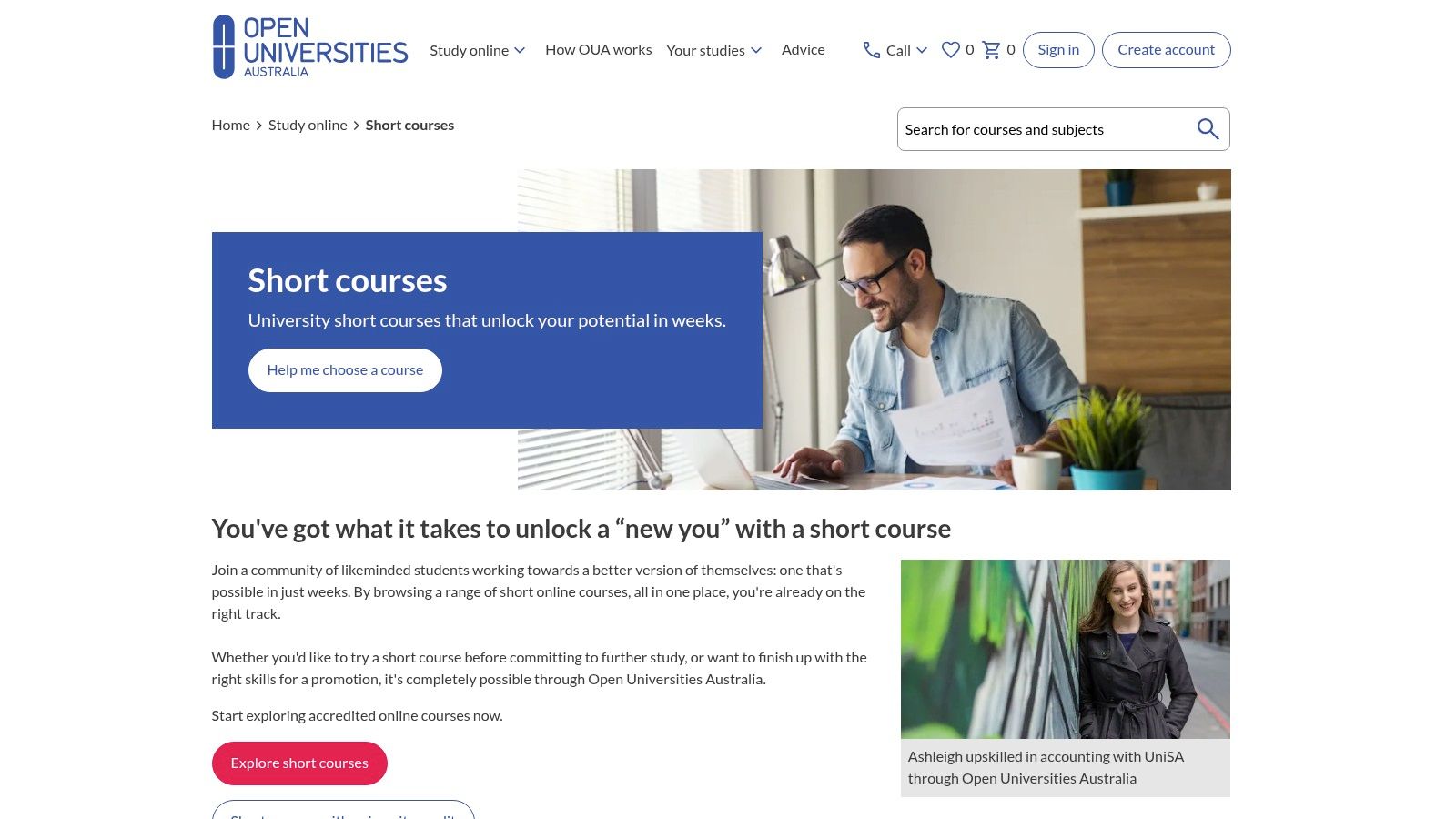
Open Universities Australia (OUA) acts as a national marketplace, bringing together a vast array of university-run short courses and microcredentials from leading Australian institutions. Instead of visiting dozens of separate university websites, OUA allows you to compare programs, fees, start dates, and entry requirements all in one place, streamlining your search for the perfect short courses online Australia has to offer.
Why OUA Stands Out
What makes OUA unique is its focus on university-level learning and credit pathways. Many of the short courses are actual university subjects, which means the knowledge you gain is academically rigorous and can often be counted as credit towards a future degree. This "try before you buy" model is ideal for anyone considering a full degree but wanting to test the waters first.
Another key advantage is the clear guidance on funding. OUA highlights which courses are eligible for FEE-HELP loans, making university-level study more accessible without upfront costs. Their student advisors are available over the phone to walk you through enrolment, credit transfers, and funding options, providing a level of support that is hard to find elsewhere.
Navigating OUA Effectively
- Use the Filters: The platform has powerful filters to narrow your options by study area, university, or even by which courses offer university credit.
- Check Entry Requirements: While many courses are open to everyone, some microcredentials or advanced subjects may require prior study or relevant work experience. These prerequisites are clearly listed.
- Explore "Stackable" Credentials: Look for microcredentials that are part of a series. Completing several can often lead to a graduate certificate, creating a valuable pathway to a postgraduate qualification.
- Plan Around Study Periods: University subjects run on specific timetables. Pay close attention to start dates and enrolment deadlines, as they are less flexible than on-demand platforms.
Website: https://www.open.edu.au/study-online/short-courses
3. TAFE NSW – TAFE Digital
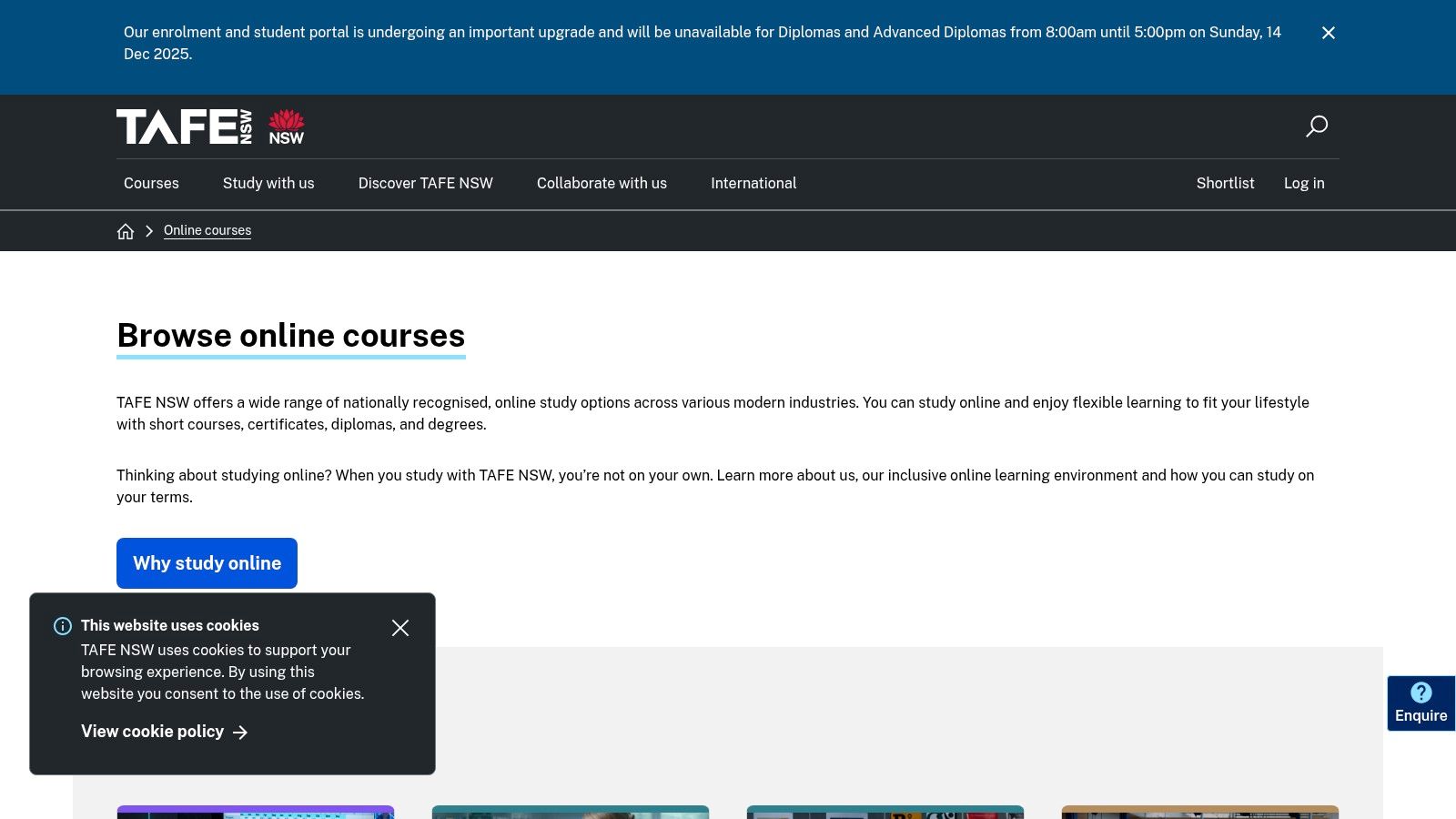
As the online arm of a government-backed institution, TAFE Digital offers a huge range of vocational short courses and Statements of Attainment designed for practical, job-ready outcomes. TAFE NSW is a nationally recognised Registered Training Organisation (RTO), meaning its qualifications are respected by employers across the country, making it a trusted source for some of the best short courses online Australia has to offer.
Why TAFE Digital Stands Out
TAFE Digital’s biggest advantage is its connection to government funding initiatives, particularly for NSW residents. Through programs like the Smart and Skilled scheme, eligible students can access heavily subsidised or even fee-free training. This makes high-quality vocational education exceptionally accessible, covering high-demand areas from cybersecurity and business administration to digital marketing and community services.
Beyond funding, the platform provides clear pathways from short courses into higher qualifications. A Statement of Attainment can often count as credit towards a Certificate III or IV, allowing you to build your credentials over time. This "stackable" learning model is perfect for those who want to gain specific skills quickly while keeping the door open for further, more comprehensive study in the future.
Navigating TAFE Digital Effectively
- Check Your Eligibility: The TAFE NSW website has a dedicated eligibility checker. Use this tool before enrolling to see if you qualify for any subsidies or fee-free places.
- Look for 'Statements of Attainment': These are nationally recognised short courses focused on a specific skillset (e.g., medical terminology). They are ideal for quick, targeted upskilling.
- Act Quickly on Subsidised Courses: Fee-free and subsidised spots are limited and fill up fast. If you see a course you're interested in, don't wait too long to enquire and enrol. You can learn more about how TAFE's online courses work to prepare.
- Note the Delivery Mode: While most courses are self-paced, some may include scheduled virtual classroom sessions. Check the course details to ensure the format fits your lifestyle.
Website: https://www.tafensw.edu.au/digital
4. RMIT Online (Short Courses / Future Skills)
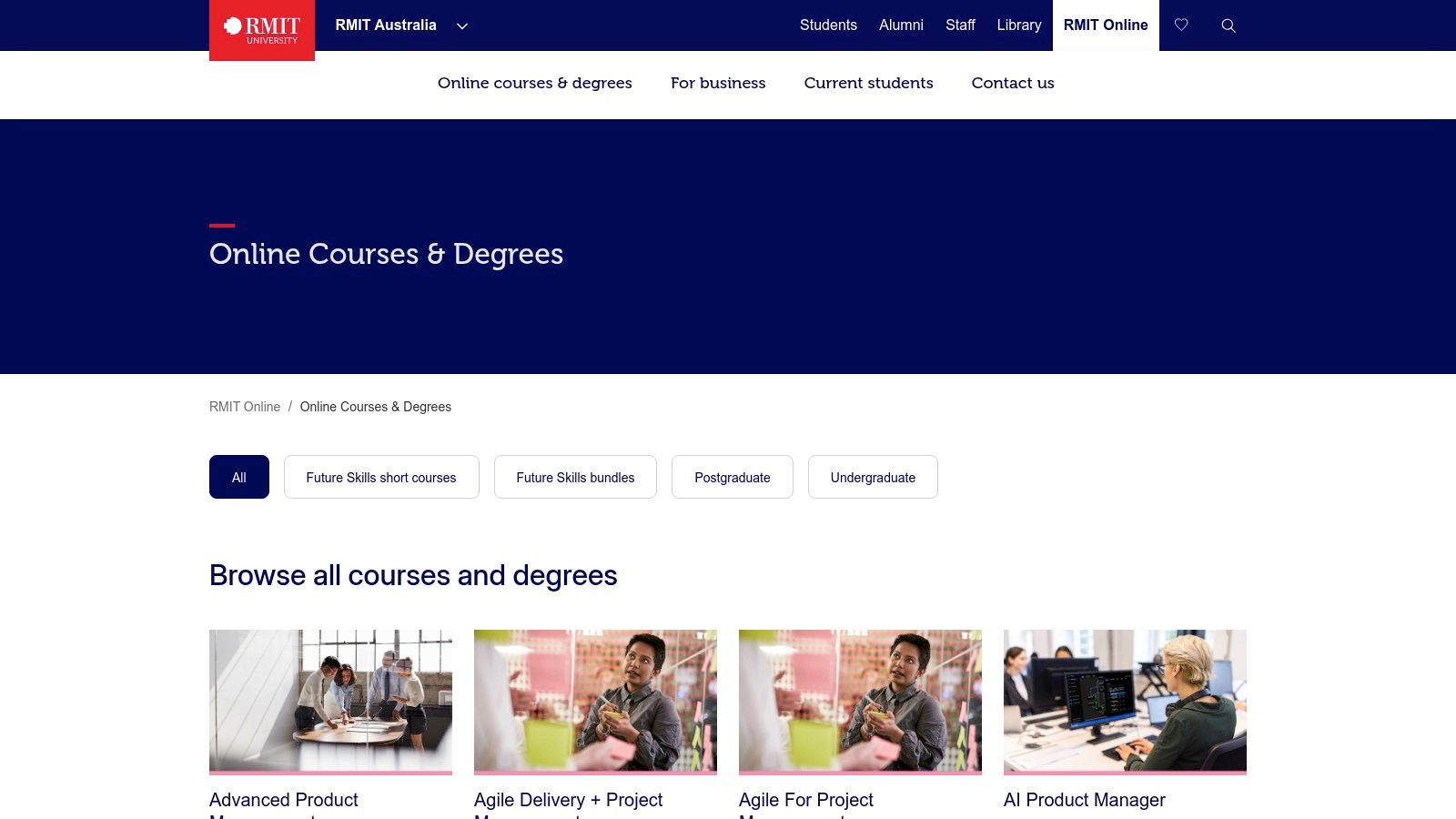
RMIT Online focuses on delivering industry-aligned short courses that are designed in collaboration with leading companies to address current skills gaps. Through its Future Skills and Short Courses portfolios, it provides structured, cohort-based learning experiences in high-demand areas like digital marketing, user experience (UX) design, data analytics, and project management. These courses are ideal for professionals looking to upskill with practical, job-ready credentials.
Why RMIT Online Stands Out
What distinguishes RMIT Online is its deep connection to industry and its project-based learning model. Courses are not just theoretical; they are built around real-world projects and case studies, often co-designed with partners like Adobe, Salesforce, and AWS. This ensures the curriculum is immediately applicable in the workplace and highly regarded by employers.
The cohort-based structure, which typically runs for 4–12 weeks, provides a collaborative environment with access to industry mentors and a dedicated student success team. This level of support helps keep learners motivated and on track, a significant advantage over self-paced, isolated learning formats. While fees can be higher than mass-market platforms, the investment reflects the quality of instruction and strong industry recognition, making it one of the premier destinations for short courses online Australia provides. You can discover more about their offerings by exploring a range of online short courses available to Australian learners.
Navigating RMIT Online Effectively
- Check Course Intakes: As courses are cohort-based, they have specific start dates throughout the year. Plan your enrolment in advance to secure a spot in your preferred intake.
- Review the Weekly Commitment: Each course page clearly outlines the expected weekly study hours. Ensure this fits with your work and personal schedule before enrolling.
- Look for Course Bundles: RMIT Online often offers specialist bundles, such as combining Agile methodologies with Project Management, which can provide a more comprehensive skill set at a better value.
- Engage with Your Mentor: Take full advantage of the industry mentor support. They are an invaluable resource for feedback on projects, career advice, and networking insights.
Website: https://www.rmit.edu.au/online/courses
5. University of Sydney – Centre for Continuing Education (CCE)
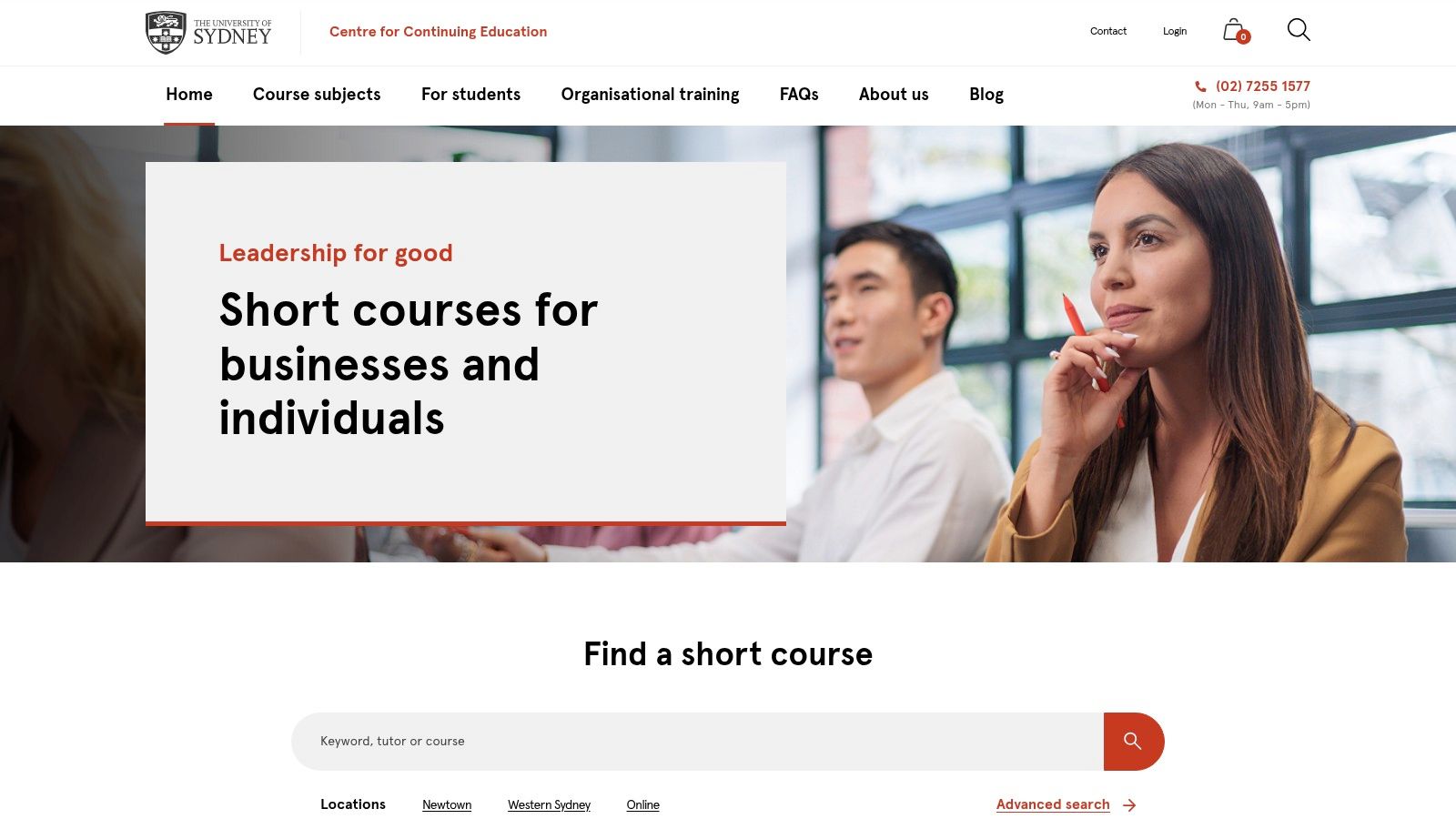
The University of Sydney’s Centre for Continuing Education (CCE) brings the prestige and academic quality of a world-leading university to the public through a vast catalogue of professional and personal development courses. With over 300 options, the CCE provides high-quality, non-award programs in areas like business, IT, languages, and marketing, making it a premium destination for those seeking expert-led short courses online Australia can offer.
Why CCE Stands Out
What sets the CCE apart is its focus on live, instructor-led online learning. While many platforms offer pre-recorded content, the CCE emphasises interactive sessions where you can engage directly with industry experts and fellow participants in real-time. This model is perfect for Continuing Professional Development (CPD) and corporate training, as it fosters a collaborative and dynamic learning environment backed by the credibility of a Group of Eight university.
The platform is exceptionally user-friendly, with a simple online enrolment process and clear course outlines. Unlike formal university degrees, most CCE courses have no prerequisites and are open to the public. This accessibility, combined with the strong brand reputation and high teaching ratings, makes it a trusted choice for professionals looking to sharpen their skills or individuals exploring a new passion with academic rigour. Explore your options to find the perfect university short course that aligns with your career goals.
Navigating CCE Effectively
- Filter by Delivery Mode: The website allows you to filter specifically for "Live Online" sessions if you value real-time interaction, or look for self-paced options if you need more flexibility.
- Check Session Timetables: Most instructor-led courses run on fixed schedules (e.g., Tuesday evenings for four weeks). Ensure the timetable fits your availability before enrolling, as these are less flexible than on-demand courses.
- Look for Corporate Training Options: If you are looking to upskill your team, CCE offers tailored corporate training solutions, bringing their expertise directly to your organisation.
- Review Course Fees: Prices can vary significantly based on the course length, topic, and instructor expertise. Factor this into your budget when comparing options.
Website: https://cce.sydney.edu.au
6. UTS Open (University of Technology Sydney)
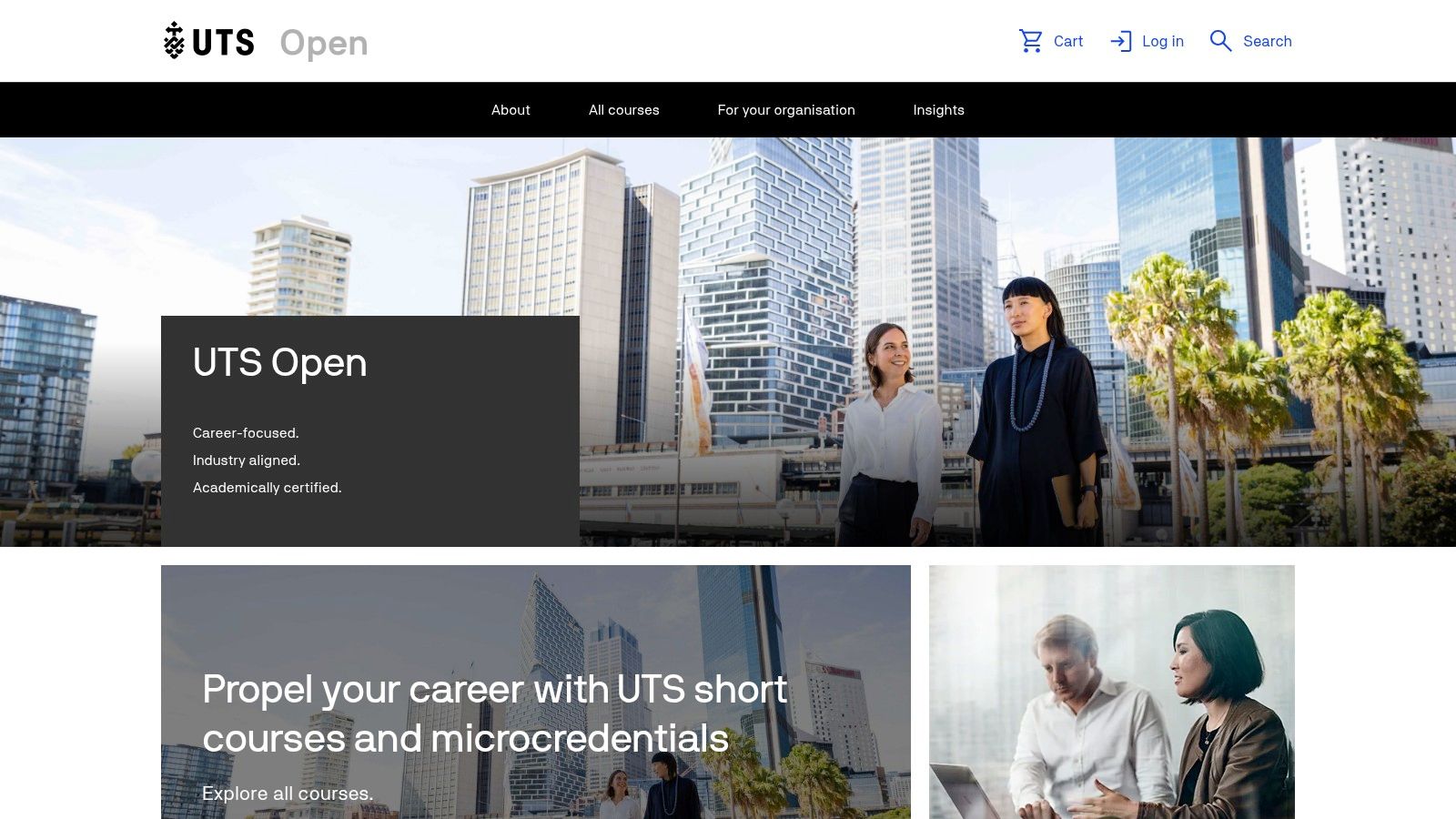
UTS Open is the public-facing platform from the University of Technology Sydney, offering a diverse collection of short courses, microcredentials, and free tasters. It focuses on delivering practical, future-focused skills in high-demand areas like data, cybersecurity, business, and regulation, making it a strong choice for professionals seeking targeted short courses online Australia provides.
Why UTS Open Stands Out
The key strength of UTS Open lies in its accessibility and transparency. The platform offers a brilliant entry point into university-level learning through its many free or low-cost "taster" courses. These short, self-paced modules allow you to sample the content and teaching style before committing to a more substantial microcredential, which is perfect for learners who are still exploring their options.
Furthermore, UTS Open provides a clear mix of delivery styles. You can choose fully self-paced courses for maximum flexibility or opt for scheduled programs with live online sessions for more interaction and instructor guidance. The pricing is displayed upfront on each course tile, removing any guesswork and making it easy to budget for your professional development.
Navigating UTS Open Effectively
- Try a Free Taster: Before enrolling in a paid microcredential, see if a free introductory course is available in the same subject area. This is a no-risk way to validate your interest.
- Filter by Delivery: Use the filters to specifically search for "Online" courses. You can further refine your search by cost (e.g., "Free," "Under $500") and start date to find a program that fits your schedule and budget.
- Check for Regional Relevance: Some courses, particularly in areas like building and regulation, are designed around NSW-specific legislation. If you live outside NSW, double-check that the content is applicable to your state.
- Look for Bundles: UTS Open sometimes bundles related microcredentials together, which can provide a more comprehensive learning pathway and occasionally offer better value.
Website: https://open.uts.edu.au
7. FutureLearn
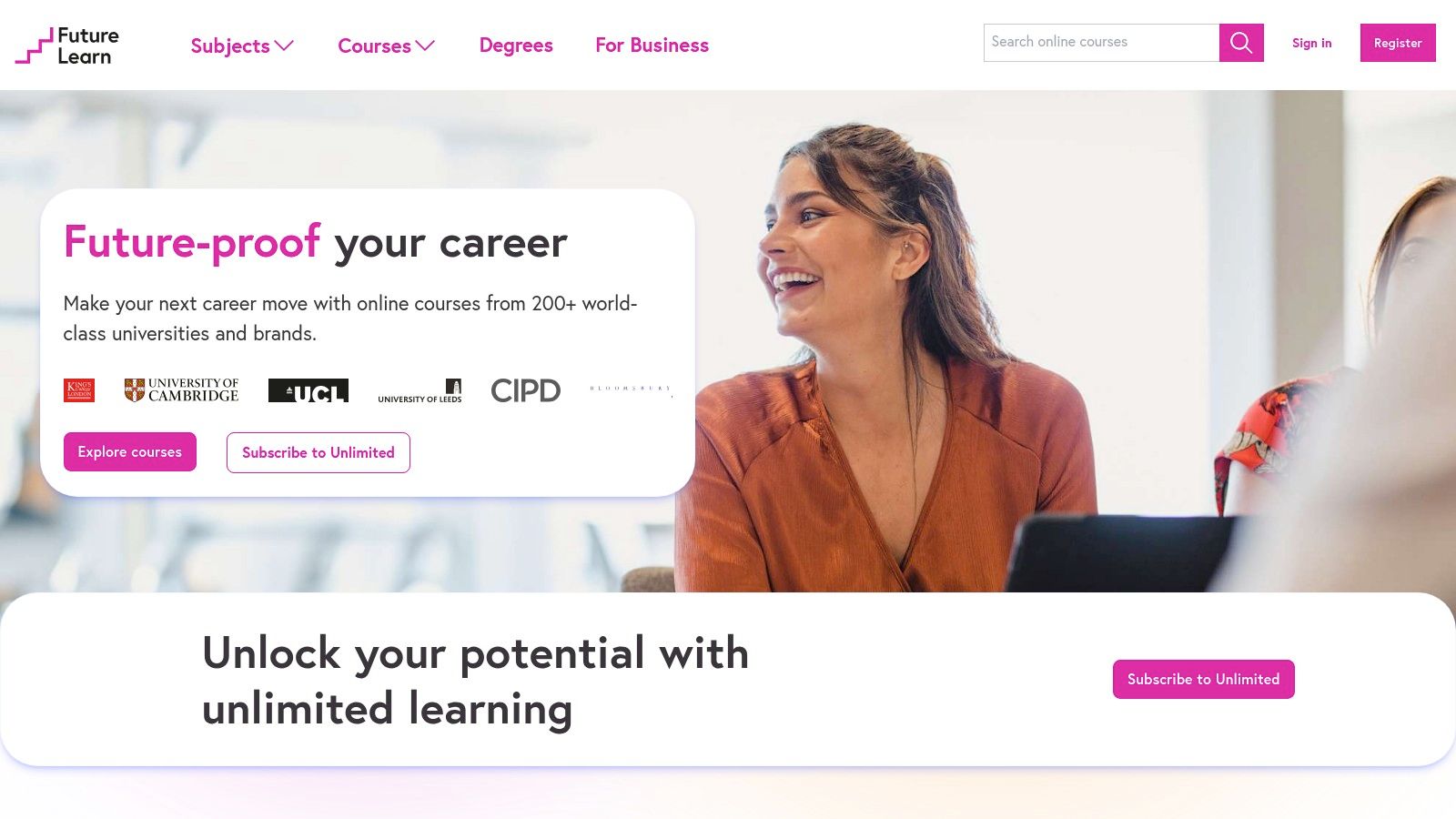
FutureLearn is a global learning platform that partners with leading universities and organisations, including many from Australia, to offer a vast catalogue of online short courses. It stands out for its flexible access model, allowing learners to audit a significant portion of its courses for free. This makes it an excellent entry point for anyone curious about a new subject or looking to explore short courses online Australia without an immediate financial commitment.
Why FutureLearn Stands Out
The key differentiator for FutureLearn is its 'try before you buy' philosophy. You can access the video lectures, articles, and peer discussions of many courses for their duration plus 14 days at no cost. If you wish to gain permanent access, take quizzes, and earn a digital certificate of achievement, you can choose to upgrade for a one-off fee or subscribe to their "Unlimited" plan for broader access across the catalogue.
This model serves a wide range of learners, from those exploring a hobby to professionals needing a certificate for their portfolio. The platform combines self-paced elements with scheduled course runs that foster a sense of community, allowing you to learn alongside a global cohort and engage in active discussions. This social learning approach helps maintain motivation and provides diverse perspectives on the course material.
Navigating FutureLearn Effectively
- Audit First, Upgrade Later: Take advantage of the free access period to ensure the course content and teaching style meet your needs before paying for a certificate.
- Explore Microcredentials: For more in-depth learning, look for "Microcredentials" and "ExpertTracks." These are series of paid courses designed to build specialist skills and often carry academic credit from the partner university.
- Check the Partner Institution: The value and recognition of a course can depend on the provider. FutureLearn hosts courses from esteemed Australian institutions like Deakin University, Monash University, and QUT.
- Engage in Discussions: The platform’s strength lies in its social features. Participate in the comments section on each step of the course to ask questions, share insights, and connect with fellow learners and educators.
Website: https://www.futurelearn.com
Top 7 Australian Online Short-Course Providers — Comparison
Your Next Step: Choosing the Right Course and Starting Your Journey
Navigating the landscape of short courses online Australia has never been more accessible. We've explored a range of top-tier providers, from the aggregated convenience of Get Course and Open Universities Australia to the specialised offerings of TAFE Digital, RMIT Online, and leading university centres like those at the University of Sydney and UTS. Each platform presents a unique opportunity to gain job-ready skills, pivot into a new industry, or simply deepen your expertise in a field you're passionate about.
The key takeaway is that high-quality, flexible education is within your reach. Whether you need a micro-credential in cybersecurity to secure a promotion, a certificate in community services to start a fulfilling new chapter, or a diploma in business to launch your own venture, there is a pathway designed to fit your schedule and budget. The power of online learning lies in its ability to adapt to your life, not the other way around.
Making Your Decision: A Practical Checklist
Choosing the right course is a critical step that sets the foundation for your success. Before you enrol, take a moment to reflect on your goals and practical needs. Use this simple checklist to guide your decision-making process and ensure you find the perfect fit.
- Define Your "Why": What is your primary motivation? Are you upskilling for a current role, reskilling for a complete career change, or pursuing a personal interest? Your goal will determine whether you need a nationally recognised qualification or a non-accredited skills-based course.
- Assess Your Commitment: Realistically evaluate the time you can dedicate to study each week. Look for providers that offer self-paced learning or flexible timetables if your schedule is unpredictable.
- Investigate Career Outcomes: Look beyond the course curriculum. Research the specific job roles, industry recognition, and potential salary increases associated with the qualification. Does the provider offer career support or links to industry partners?
- Review Financial Options: Compare course fees, but also investigate payment plans like those offered by Zip or other interest-free options. Understanding the full financial commitment and available support is crucial. For those embarking on a significant professional change, aligning your educational choice with a clear transition plan is essential. For more on this, refer to a practical guide on how to switch careers to ensure your learning directly supports your future goals.
Ultimately, the best short course is one that not only provides valuable knowledge but also empowers you to take tangible steps forward. The right program will feel less like a chore and more like an investment in yourself, opening doors to opportunities you may not have previously considered. Embrace the flexibility and accessibility of online education and take that decisive step towards building the future you envision.
Ready to find the perfect online course to match your ambitions? Explore Get Course Australia, a streamlined platform that aggregates top-tier, industry-recognised qualifications from leading providers across the country. Start your search today and enrol in a program that will unlock your potential and fast-track your success.
Find Your Course
Compare courses across every field we write about, and enquire in under a minute.