Start a Meaningful Career with Community Services Online Courses
Discover flexible community services online courses in Australia. Find the right Certificate or Diploma to launch a rewarding career helping others.
If you're looking for a career that fills your cup and not just your wallet, then you've landed in the right spot. With community services online courses, you have a direct and flexible way to step into one of Australia's most essential and rapidly expanding sectors.
This guide is your roadmap. We’ll take you from that first spark of curiosity all the way to understanding the qualifications you need for a career that makes a real, lasting impact on people’s lives.
Embarking on a Career That Truly Matters
Choosing a career in community services isn't just about finding a job; it’s about answering a call. It’s a field built on purpose, compassion, and genuine human connection.
You could be supporting an elderly person to live independently, assisting someone with a disability to achieve their goals, or guiding a young person toward a brighter future. It’s all about empowering people to navigate challenges and live better lives.
This line of work isn't just emotionally rewarding - it's also bursting with opportunity. The Australian community services industry is one of the nation's fastest-growing fields, with an expected employment growth of 18.7% by 2025. That figure easily outpaces the country's average employment growth, proving there's a strong, ongoing need for skilled and caring professionals. You can read more about the growth in community services courses on Training.com.au.
Finding Your Why
Everyone who comes into this field has their own personal reason. For many, it's a deep-seated desire to give back and see the direct result of their work in someone else's life. It’s about being the person who shows up, who really listens, and who helps someone through a tough patch.
For many students, service opportunities are an excellent way to give back to the community, develop new skills, and strengthen interests. They are not just about what looks best on an application, but are instead about growing as a person and making a positive impact.
This drive to help is the perfect starting point. It’s the very foundation that a successful, fulfilling career is built on. If you're curious about what draws people to this work, check out these five key motivations for entering community services and support work.
What This Guide Covers
We’ve designed this guide to cut through the confusion and show you exactly what to expect from community services online courses. We'll break it all down for you, so you'll walk away knowing about:
- The practical skills you’ll actually learn at each qualification level.
- How online study can fit perfectly around your existing life and commitments.
- The job outcomes and career pathways waiting for you after you graduate.
- Flexible payment options designed to make your education affordable.
Our aim is to give you a clear, honest overview, so you feel confident and ready to take that next step toward a career that genuinely matters.
What You Will Actually Learn in These Courses
Jumping into a community services course can feel a bit like exploring a new city. You've seen the brochure, but what will you really find on the ground? Let's go beyond the official descriptions and look at the practical, real-world skills you'll actually be building.
Think of the qualifications as a ladder. Each rung takes you a step higher, giving you more advanced skills and preparing you for greater responsibility. Whether you're starting from scratch or aiming for a leadership role, there’s a clear pathway to get you where you want to go.
Certificate III: The Foundation for Frontline Support
A Certificate III in Community Services is your entry ticket into the sector. It's built for people who want to work directly with clients, providing that essential, hands-on support. The focus here is on the absolute fundamentals - the bedrock skills you'll rely on every single day.
You’ll learn how to communicate effectively and with real empathy, connecting with a diverse range of people from all walks of life. This isn't just about talking; it's about learning to truly listen, build trust, and show genuine understanding, which are the real currencies in this line of work.
Key areas of study often include:
- Person-Centred Support: This is about moving away from a one-size-fits-all model. You'll learn to craft support plans that are shaped around an individual's own goals, preferences, and needs.
- Safe Work Practices: You'll get to grips with maintaining a safe environment for both yourself and your clients, covering all the critical health and safety protocols you need to know.
- Legal and Ethical Frameworks: This module covers the essential rules and ethical guidelines that govern the community services sector in Australia, ensuring you work professionally and with integrity.
- Recognising and Responding to Crises: You'll build the confidence to identify when a client might be at risk and learn the correct procedures to follow to get them the help they need.
This qualification gets you ready to step confidently into entry-level roles like a community support worker or personal care assistant, where your main job is to make a direct, positive impact.
Certificate IV: Sharpening Your Skills for Specialised Roles
If a Certificate III is about learning the basics, the Certificate IV is about honing those skills for more specialised work. This qualification is perfect for those who already have some experience or want to take on roles with a bit more independence.
Imagine you're no longer just following a support plan; you're now helping to create and coordinate them. A Certificate IV builds on what you already know, adding layers of complexity and teaching you to think more critically about the support you provide.
This level of study really bridges the gap between direct support and coordination. It’s where you start managing specific programs, working with more complex client needs, and seeing the bigger picture of how services come together.
You'll dive deeper into case management principles, learning how to properly assess a client's situation and pull together services from different agencies. This takes solid organisational and advocacy skills. Many of these programs also cover essential topics for group therapy substance abuse, giving you the tools to facilitate sessions that genuinely help people on their recovery journey.
Diploma: Preparing for Leadership and Complex Case Management
The Diploma of Community Services is designed for the future leaders and coordinators of the sector. This is where you make the leap from doing the work to designing and managing it. It’s a significant step up, focused on strategic thinking, program development, and handling highly complex client situations.
At this level, you’ll master advanced skills in:
- Case Management: Taking full ownership of a client's journey, from the initial intake and complex assessment right through to developing and overseeing their long-term support strategies.
- Program Development and Evaluation: Learning how to spot a need in the community, design a program to meet that need, find funding for it, and then measure its impact to see if it’s working.
- Advocacy and Social Policy: Gaining an understanding of how to advocate for clients on a bigger scale and contribute to wider social change.
- Managing and Leading Teams: Picking up the skills to supervise other support workers, provide mentorship, and lead a team effectively.
This qualification opens doors to roles like Case Manager, Program Coordinator, or Centre Manager. It’s for those who want to be the architects of services that support entire communities.
Choosing Your Community Services Qualification
The table below breaks down how these qualifications translate into real-world careers, helping you see which path aligns with your ambitions.
Ultimately, choosing one of these community services online courses is about more than just earning a piece of paper. It’s about methodically building the confidence and competence you need to handle challenging situations with skill and professionalism, ensuring you’re truly ready to make a difference.
How Online Study Fits into Your Real Life
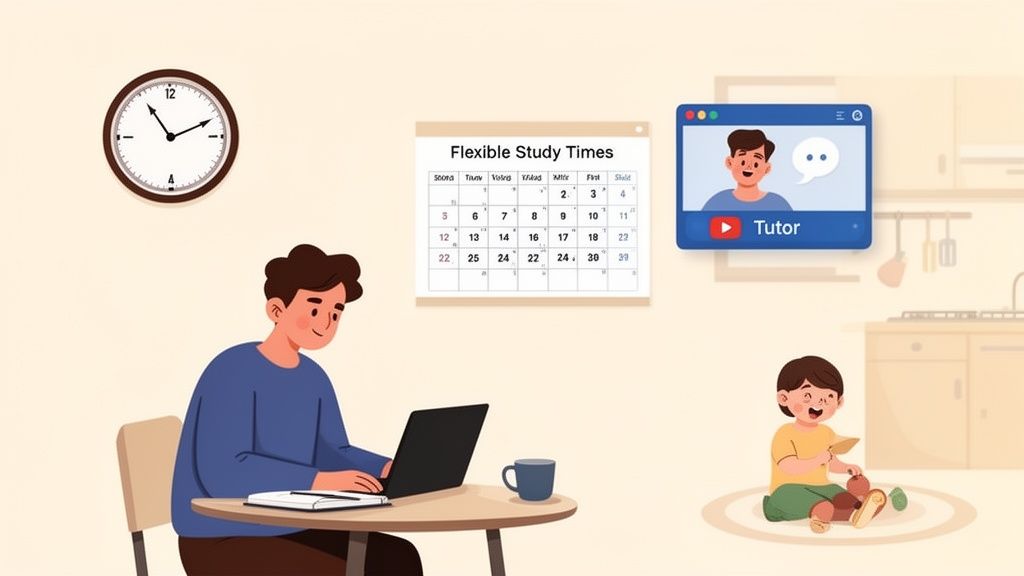
Let's be realistic. The idea of adding 'study' to an already packed schedule of work, family, and life can feel impossible. This is exactly where studying online completely changes the game. Forget rigid timetables and the mad dash to a campus. Think of it more like weaving your education into the life you already have, rather than trying to rearrange your entire world to fit it in.
This isn't just a marketing line; it's a practical reality. It means you can hit the books after the kids are in bed, carve out a few hours on a quiet Sunday, or even use your lunch break to get ahead on an assignment. You are in the driver's seat, which means you can earn a valuable qualification without sacrificing the commitments that truly matter.
It’s an especially smart way to enter a field with such strong career prospects. Over the last five years, Australia's community services sector has experienced incredible growth, becoming one of the nation’s fastest-expanding employment areas. With well over 967,000 people already working in community services roles across the country, the demand for skilled, compassionate professionals is undeniable.
Busting The Myth That Online Means Alone
One of the biggest worries people have about studying online is that they'll be left to fend for themselves. The truth is, high-quality community services online courses are built with a strong support network right from the start.
You’re not just handed a login and wished the best of luck. Instead, you step into a structured learning environment designed with multiple layers of help, ready for you whenever you need it.
This support system usually includes:
- Dedicated Tutors and Trainers: These are your subject matter experts. When you're wrestling with a tricky concept or need feedback on an assessment, they're your first port of call for expert guidance.
- Student Support Advisors: Think of them as your personal cheerleaders and navigators. They’re there to help with everything from managing deadlines to keeping you motivated when life throws a curveball.
- Technical Support Teams: If you hit a technical snag with the online platform, a dedicated IT team is ready to get you back on track quickly so you can focus on your studies.
This framework means you get the best of both worlds: the freedom of self-paced learning combined with the expert guidance you'd expect from a traditional classroom.
The real advantage of modern online learning is the tailored support. You get help when you need it, in a way that works for you, without being tethered to a physical classroom. It empowers you to truly take ownership of your education.
Learning That Respects Your Time
At the end of the day, an online course is about getting you a nationally recognised qualification in a way that respects your time and your life. It’s a pathway into a meaningful career that doesn't demand you put everything else on hold. The flexibility and support work hand-in-hand to create an environment where you can succeed on your own terms.
This is proving to be a highly effective way to learn, and there are plenty of compelling reasons to ditch the traditional classroom setup and study online instead. By choosing an online course, you're not just picking convenience; you're selecting a modern, supportive, and efficient way to achieve your career goals in the vital community services sector. You can build skills, gain confidence, and prepare for a rewarding future - all while managing the real demands of everyday life.
Choosing the Right Course for Your Career Goals
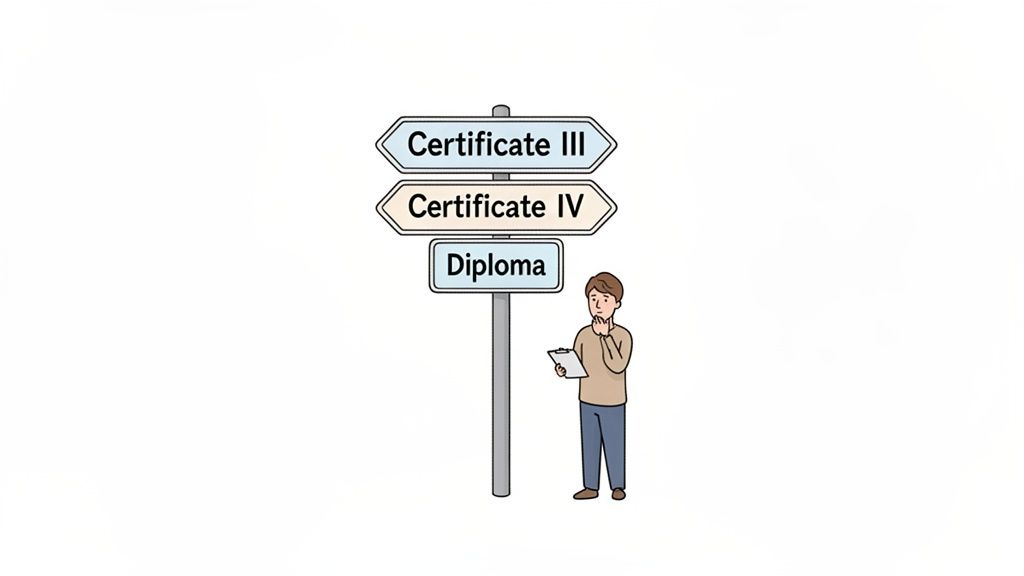
Feeling a bit lost in the sea of community services online courses? That’s completely normal. With a whole range of options out there, from certificates right through to diplomas, just figuring out where to start can feel like the biggest hurdle.
The secret is to look inwards first. This isn't about picking the "best" course on paper; it's about finding the best fit for you and what you want to achieve. Let's break it down by asking a few simple but powerful questions. Think of your answers as a compass, pointing you straight to the qualification that truly lines up with your goals.
Start with Self-Reflection
Before you even glance at a course brochure, take a moment to think about what really drives you. Seriously, grab a pen and paper and jot down your thoughts on these questions. Honesty is key here - your answers will build the foundation for your decision.
- What kind of impact do I want to make? Are you drawn to working directly with clients, offering hands-on support day in and day out? Or do you see yourself in a bigger-picture role, designing and managing programs that benefit entire communities?
- Who do I feel called to help? Is there a specific group you connect with? This could be older Australians, people with disabilities, at-risk youth, or families navigating tough times.
- Where do I see myself in the long run? Are you looking for an entry-level role to get your foot in the door as soon as possible? Or is your ultimate goal a leadership position, like a case manager or program coordinator?
Your answers are more than just words on a page. They act as a filter, helping you cut through the noise and zero in on the qualifications that will actually get you where you want to go.
Matching Your Goals to the Right Qualification
Alright, now let’s connect those aspirations to a specific course. It’s a bit like choosing the right tool for the job - you wouldn't use a hammer to saw a piece of wood.
Choosing a course is less about the title on the certificate and more about what it empowers you to do. The right one gives you not just knowledge, but the confidence to use it in the real world to build the career you've imagined.
If your passion is for hands-on, frontline work, then a Certificate III in Community Services is the perfect place to start. It’s designed to give you the essential, practical skills needed for roles where you’re directly supporting individuals.
On the other hand, if you're aiming higher for roles in leadership and complex case management, a Diploma of Community Services is a much more strategic move. This qualification is built for aspiring leaders who want to oversee programs and handle clients with more complex needs. You can get a better feel for it by reading more about what a Diploma of Community Services online really involves.
How to Compare Course Providers
Once you've settled on the right qualification level, the next job is to pick a provider. Believe me, not all online courses are created equal, and you need to look past the shiny marketing.
Here’s what you should really be looking at when you compare your options:
- Student Reviews and Testimonials: What are past students actually saying? Check out independent platforms for genuine feedback. You'll get an honest picture of the student experience, especially when it comes to tutor support and the quality of the course materials.
- Course Modules and Content: Always ask for a course guide and dig into the specific units of study. Do they line up with the area of community services you’re most interested in? You want to make sure the content is up-to-date and relevant to the Australian sector.
- Support Systems: How will they have your back when you get stuck? Look for clear information on how you can access tutors, student support advisors, and tech help. A solid support network makes all the difference when you're studying online.
By taking this step-by-step approach - reflecting on your goals, matching them to a qualification, and properly vetting providers - you can move forward with total confidence, knowing you’ve chosen a path that truly fits.
Making Your Education Affordable and Accessible
One of the first questions on anyone's mind when looking at a new qualification is, "How am I going to pay for this?" It's a completely fair question. The good news is that studying community services online is probably more achievable than you think, as providers have moved away from making finance a roadblock.
Think of your course fees less as a cost and more as a smart investment in your career. You're putting your money toward a future in a high-growth field with solid job security, something that will pay you back for years. It's an investment in your skills, your confidence, and your ability to genuinely help people.
Flexible Payment Plans Make It Possible
Gone are the days when you needed a huge lump sum of cash just to get started. Most quality course providers know their students have budgets and bills to juggle. That's why they offer flexible payment plans designed for real life.
These plans break down the total course fee into smaller, interest-free weekly or fortnightly payments. This lets you fit your education into your budget just like any other regular expense, spreading the cost out while you study. It means you can kickstart your career goals now, without a massive financial hurdle in your way.
How to Find Fee Information
Finding out what you need to pay shouldn't be a mystery. A reputable provider will always be upfront and clear about costs.
Here’s where to look:
- Course Pages: The course information page itself will usually have a clear breakdown of fees and payment options.
- Download a Course Guide: Most providers offer a free guide you can download. It’s packed with details, including the full cost and payment schedules.
- Chat with a Course Advisor: This is often the best move. A quick chat with an advisor can clear everything up. They can walk you through the options, answer your specific questions, and help figure out a payment schedule that actually works for you.
A conversation with a course advisor isn't a sales pitch; it's about making a financial plan that works for you. They're there to help you find a clear, manageable path forward so that money worries don't get in the way of your career goals.
When exploring your options, it's a good idea to research different types of programs, like these top caregiver training courses, to get a feel for the qualifications available.
A Smart Investment in a Stable Career
Putting your money into a community services qualification is one of the shrewdest career moves you can make in Australia right now. The need for skilled support workers, case managers, and youth workers is consistently high and only set to grow.
By choosing a course with a flexible payment option, you’re not just buying a piece of paper; you're securing your ticket into a resilient and rewarding profession. The skills you learn are always in demand, giving you a level of job security that’s becoming harder and harder to find. That makes the manageable financial commitment a powerful step towards a stable and fulfilling future.
Your Career Path After Graduation
Finishing your community services course isn't the end of the road - it’s just the beginning. With a nationally recognised qualification in your back pocket, you’re ready to step into a sector brimming with diverse, meaningful, and in-demand jobs right across Australia. This is where all that study pays off, and your passion for helping people becomes your profession.
Think of your qualification as a key that unlocks multiple doors. Your career doesn't have to be a straight line. It's more like a branching path that can grow and change along with your skills, experience, and interests. The job you start with today could be the perfect stepping stone to a leadership role you haven't even considered yet.
A Day in the Life of a Community Services Professional
Let’s get real about what these jobs actually look like day-to-day. It’s one thing to read a job title, but it's another to see how your new skills translate into action.
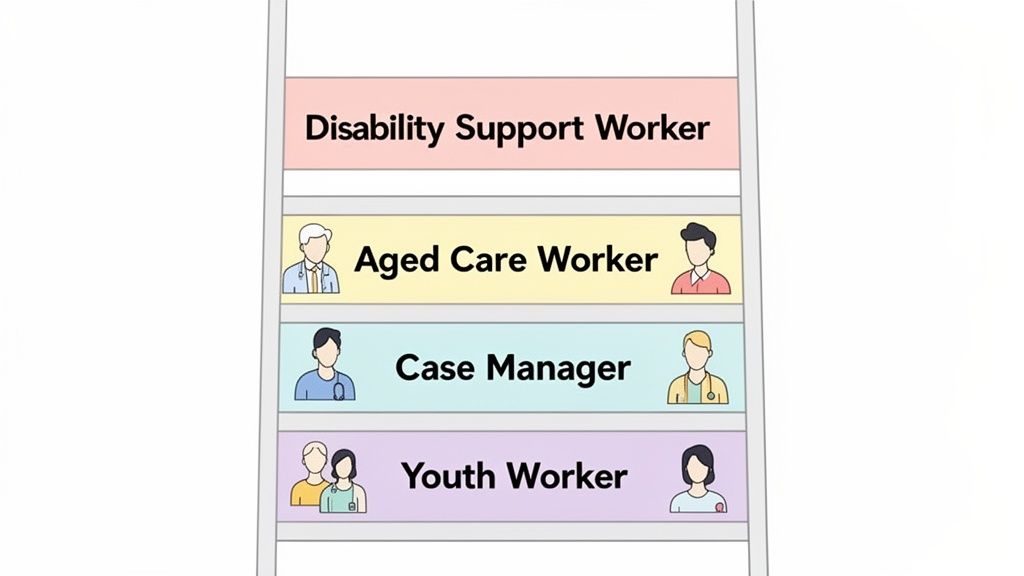
- Disability Support Worker: Your day could start by helping a client with their morning routine, empowering them to live more independently. Later, you might be supporting them at a community art class or a doctor's appointment, making sure their voice is heard and helping them build connections.
- Aged Care Worker: You might find yourself providing compassionate personal care, helping with medications, or simply sharing a cup of tea and a good chat to ease loneliness. Your work is vital in helping older Australians live with dignity and enjoy a better quality of life.
- Youth Worker: One day you could be mentoring a teenager going through a tough time, the next you might be running a life-skills workshop at a local youth centre. You become a trusted guide, connecting young people to housing, jobs, and the support they need to thrive.
- Case Manager: As a Case Manager, your day is all about coordination. You could meet a new client to assess their needs, then spend the afternoon on the phone, weaving together different services - like housing, counselling, and financial aid - into a single, effective support plan.
Each role has its own rhythm, but they all share a common purpose: you are the person who shows up, listens, and makes a real, tangible difference.
Mapping Your Career Progression
Your first job is just the first step. The community services sector is designed to help you grow, allowing you to build on your qualifications and experience as you go.
A Certificate III in Community Services is the perfect launchpad. It gets you into rewarding frontline roles where you’ll gain priceless hands-on experience. From there, your career can branch out in some really exciting directions.
Think of your career like climbing a ladder. A Certificate III gets you on the first rung. A Certificate IV helps you climb higher into specialised roles, and a Diploma gives you the skills to reach the top in management and leadership positions.
After a few years on the job, you might decide to tackle a Diploma of Community Services. This higher-level qualification can unlock senior roles like Case Manager or Program Coordinator, giving you more responsibility for designing and overseeing support programs.
Your qualification can also be a direct pathway to university. Many unis offer credit for VET courses, which can shorten the time it takes to get a bachelor's degree in social work, human services, or another related field.
Job Security in a High-Demand Sector
One of the best things about building a career in this field is its incredible stability. While other industries can be a rollercoaster, the need for skilled community services professionals is constant - and it’s growing. With Australia’s ageing population and the expanding NDIS, the demand for aged care and disability support workers is especially high.
This demand means fantastic job security and a wide range of opportunities, no matter where you are in Australia. When you invest in a community services online course, you’re not just training for a job. You’re building a secure, long-term career in a sector that will always be essential, ensuring your skills stay valuable for years to come.
Your Top Questions Answered
Diving into a new area of study always brings up a few questions. When you're looking at community services online courses, it's completely normal to want to know how it all works in practice. Let's walk through some of the most common queries so you can feel confident about taking the next step.
This section is all about tackling those practical concerns head-on, giving you clear, straightforward answers to help you decide if a career in community services is the right move for you.
Do I Need Any Experience to Get Started?
This is a big one for many people. The great news is, for a course like the Certificate III in Community Services, you absolutely don't need any prior industry experience.
Think of this qualification as your foundational building block. It's designed from the ground up to be the perfect entry point, whether you're fresh out of school or making a complete career change. The course curriculum starts with the basics and builds your skills and knowledge from there. All you really need are the right language, literacy, and numeracy skills to get going.
Is a Work Placement Part of the Deal?
Yes, and it's arguably the most important part of your training. A mandatory work placement is a core component of pretty much every nationally recognised community services course. This isn't just about ticking a box on a form.
A work placement is where the theory you learn in your online classroom truly comes to life. It's your chance to apply your new skills in a real-world setting, start building your professional network, and gain that hands-on experience employers are always looking for.
Don't worry, you won't be thrown in the deep end. Your course provider will help you find and arrange a suitable placement, making sure you're ready to put your knowledge into action. This is what makes graduates truly job-ready.
How Long Does an Online Course Actually Take?
The timeline for finishing your qualification really depends on two things: the course level and how much time you can put in. That's the real beauty of online learning - it fits around you.
As a rough guide, you can expect:
- A Certificate III to take about 12 months.
- A Diploma to take closer to 24 months.
But remember, these are just estimates. Since these courses are self-paced, you're in the driver's seat. If you have more hours to dedicate to your studies each week, you could definitely finish sooner. It’s all about making your education work with your life, not the other way around.
Ready to start a career that genuinely makes a difference? At Get Course, we connect you with the right community services course to match your goals. Explore your options today and take the first step towards a truly rewarding future. Find your community services course on Get Course.
Find Your Course
Compare courses across every field we write about, and enquire in under a minute.